


AMD is reportedly preparing its own answer to NVIDIA DLSS 5, with a next-generation neural rendering technology described as “Neural Lighting.” According to well-known hardware leaker Kepler_L2, AMD intends to move neural networks deeper into the graphics pipeline with its next GPU generation, potentially replacing or enhancing parts of traditional lighting and shading. AMD has not officially announced Neural Lighting or confirmed RDNA 5 exclusivity, but recent AMD research into real-time generative illumination makes the report particularly interesting.
NVIDIA changed the direction of the graphics industry earlier this year with DLSS 5. Rather than simply reconstructing a higher-resolution image or inserting generated frames, DLSS 5 introduces Generative Neural Rendering, allowing a neural model to influence lighting, materials and other aspects of the final image.
Now AMD appears to be working toward a similar destination.
The information originates from Kepler_L2, who stated during a discussion about next-generation AMD graphics that the company will have its own version of “Neural Lighting” similar to DLSS 5. When asked whether the technology would require RDNA 5, Kepler replied that this was “probably” the case because of how computationally demanding the workload is.
That is an important distinction: AMD has not announced Neural Lighting, confirmed the name or stated that it will be exclusive to RDNA 5. Those details currently come from a leak rather than an AMD product announcement.
What Is AMD Neural Lighting?
At the moment, Neural Lighting should be viewed as a description of AMD’s reported next-generation neural rendering technology rather than a confirmed commercial name.
Kepler’s original comment was brief. He described neural rendering as techniques in which neural networks replace traditional shaders and said:
AMD will have their own version of “Neural Lighting” like DLSS5 next-gen.
This is significantly different from claiming that AMD has formally named a future FSR feature “Neural Lighting.” The important part is the underlying concept.
Modern graphics engines traditionally use shaders and physically based rendering algorithms to calculate how materials, lighting, shadows and other visual properties should appear. Neural rendering introduces machine-learning models capable of reconstructing, approximating or even generating parts of that process.
NVIDIA has already pushed this considerably further with DLSS 5.
AMD’s reported next step would therefore move beyond simply using AI for upscaling or frame generation and allow neural networks to participate more directly in creating the final appearance of a scene.
Why This Is Being Compared With DLSS 5
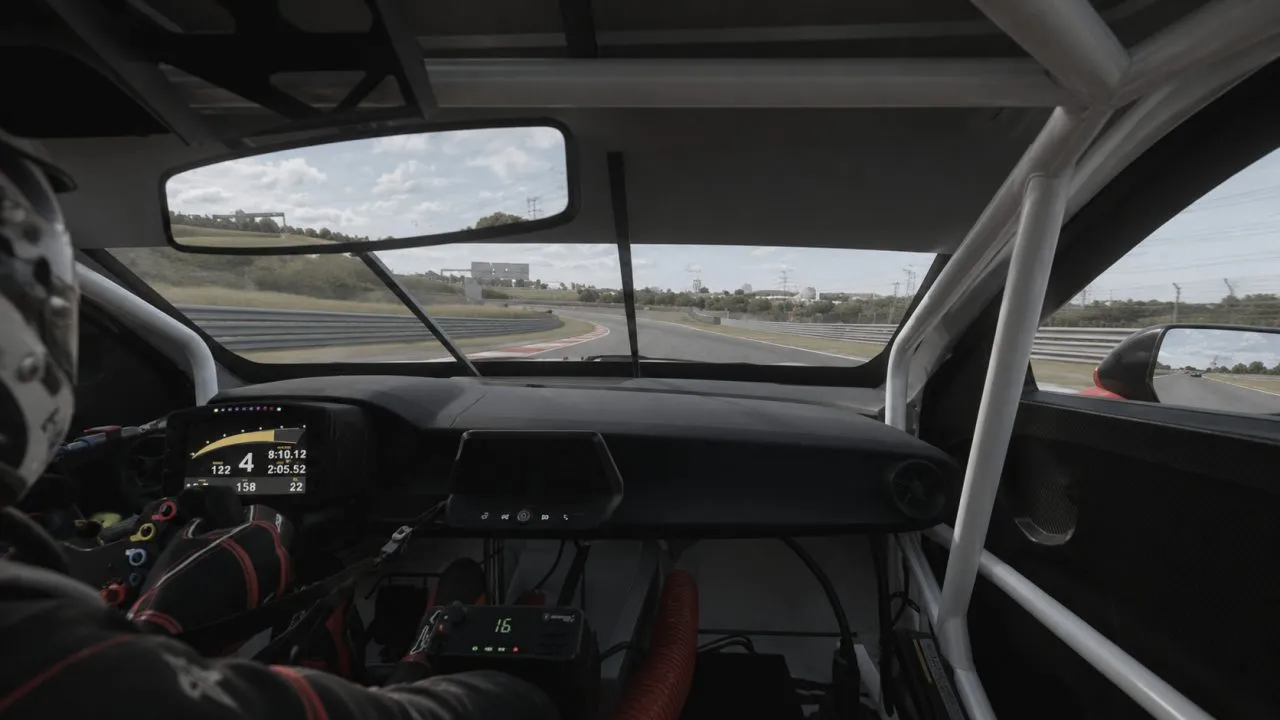
NVIDIA officially unveiled DLSS 5 in March 2026 as a new real-time generative rendering stage.
Previous DLSS technologies largely concentrated on reconstructing information that could theoretically have been rendered conventionally with a larger computational budget.
DLSS 5 is different.
NVIDIA says its model uses appearance knowledge learned from real-world visual data to help create complex effects involving lighting and materials that are difficult to represent accurately within normal real-time rendering budgets.
This includes areas such as:
- Complex indirect lighting
- Material appearance
- Subsurface scattering
- Skin and hair shading
- Light interaction with vegetation
- Additional scene and surface detail
That makes DLSS 5 considerably more ambitious than conventional Super Resolution.
For a deeper explanation of the technology and its implications for racing games, see our DLSS 5 for Sim Racing guide.
The reported AMD Neural Lighting project appears to be targeting the same broader transition: using trained neural networks inside the rendering process rather than only using AI to reconstruct the final frame.
AMD Is Already Moving in This Direction With FSR Redstone
The rumor does not appear in isolation.
AMD has already transformed FidelityFX Super Resolution from a relatively conventional upscaler into a wider suite of machine-learning rendering technologies called FSR “Redstone.”
The current platform consists of four major components:
| AMD Technology | Purpose |
|---|---|
| FSR Upscaling | ML-based reconstruction of higher-resolution frames |
| FSR Frame Generation | Predicts and inserts additional frames using machine learning |
| FSR Ray Regeneration | Reconstructs ray-traced detail from sparse samples |
| FSR Radiance Caching | Learns and predicts how light propagates through a scene |
FSR Radiance Caching is especially relevant to the Neural Lighting discussion.
Rather than repeatedly calculating every aspect of indirect lighting, AMD’s system can dynamically learn how radiance propagates through a scene and use that information to predict global illumination more efficiently.
It remains a different technology from DLSS 5 Generative Neural Rendering, but it demonstrates that AMD is already introducing neural networks directly into lighting calculations.
AMD Has Now Demonstrated Generative AI for Real-Time Lighting
There is an even more interesting connection.
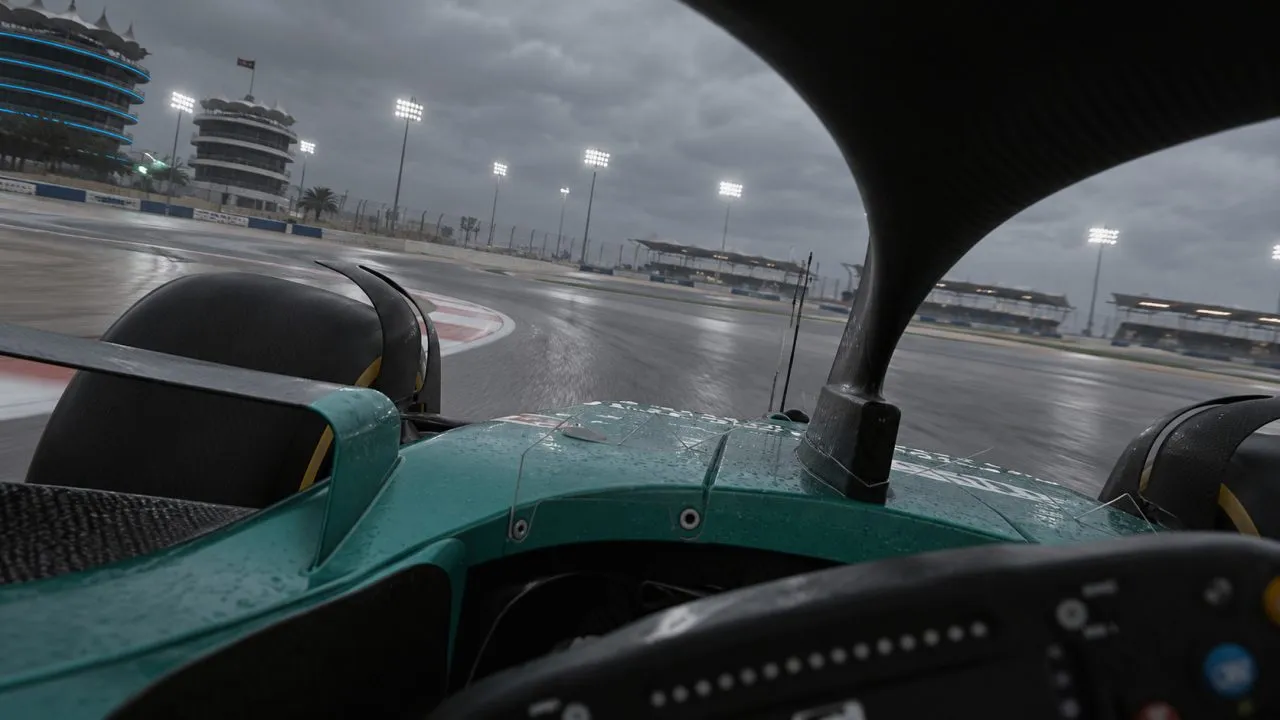
On September 9, 2026, AMD’s GPUOpen team published research titled Temporally Stable Generative Illumination with a One-Step Diffusion Model. The research presents a generative method for global illumination capable of producing indirect lighting using a single-step latent diffusion model.
Instead of using an expensive multi-step diffusion process, AMD’s model receives information from the scene together with sparse lighting information and generates indirect illumination while attempting to maintain temporal consistency between frames. That last part is particularly important for gaming.
Generating an attractive individual screenshot is relatively easy compared with producing lighting that remains stable while a camera moves rapidly through a scene. Temporal instability can produce flickering, changing shadows or details that appear and disappear between frames.
AMD specifically describes its research as being suitable for real-time rendering use cases. This research does not confirm that the leaked Neural Lighting technology is the same system or that it will appear commercially in RDNA 5. But the timing is notable.
AMD is publicly researching exactly the kind of generative real-time illumination that would be required for a more ambitious neural rendering platform.
Would Neural Lighting Be RDNA 5 Exclusive?
Possibly, but this remains unconfirmed.
After Kepler_L2 mentioned AMD’s next-generation Neural Lighting technology, another user asked:
RDNA5 only?
Kepler responded:
Probably, this stuff is pretty heavy.
That is the entire basis for the current claim that Neural Lighting could be restricted to RDNA 5.
AMD itself has not announced such a limitation.
There is nevertheless a technical reason why a future implementation could require new hardware. Neural rendering models can demand considerable matrix-processing performance, memory bandwidth and dedicated AI acceleration.
AMD already increased its machine-learning capabilities significantly with RDNA 4 and the Radeon RX 9000 series. Those GPUs contain second-generation AI accelerators and support lower-precision formats such as FP8 and INT4 that are useful for neural workloads.
A future RDNA 5 architecture could expand those capabilities further specifically to execute larger neural graphics models in real time. We’ve already seen a similar pattern with AMD’s existing technologies. Complete FSR Redstone functionality is primarily targeted at Radeon RX 9000 hardware, while AMD has gradually expanded certain components such as ML-based FSR Upscaling to older Radeon RX 7000 GPUs.
Therefore, even if Neural Lighting initially requires RDNA 5, that would not automatically tell us whether later implementations could eventually reach other architectures.
AMD Neural Lighting vs NVIDIA DLSS 5
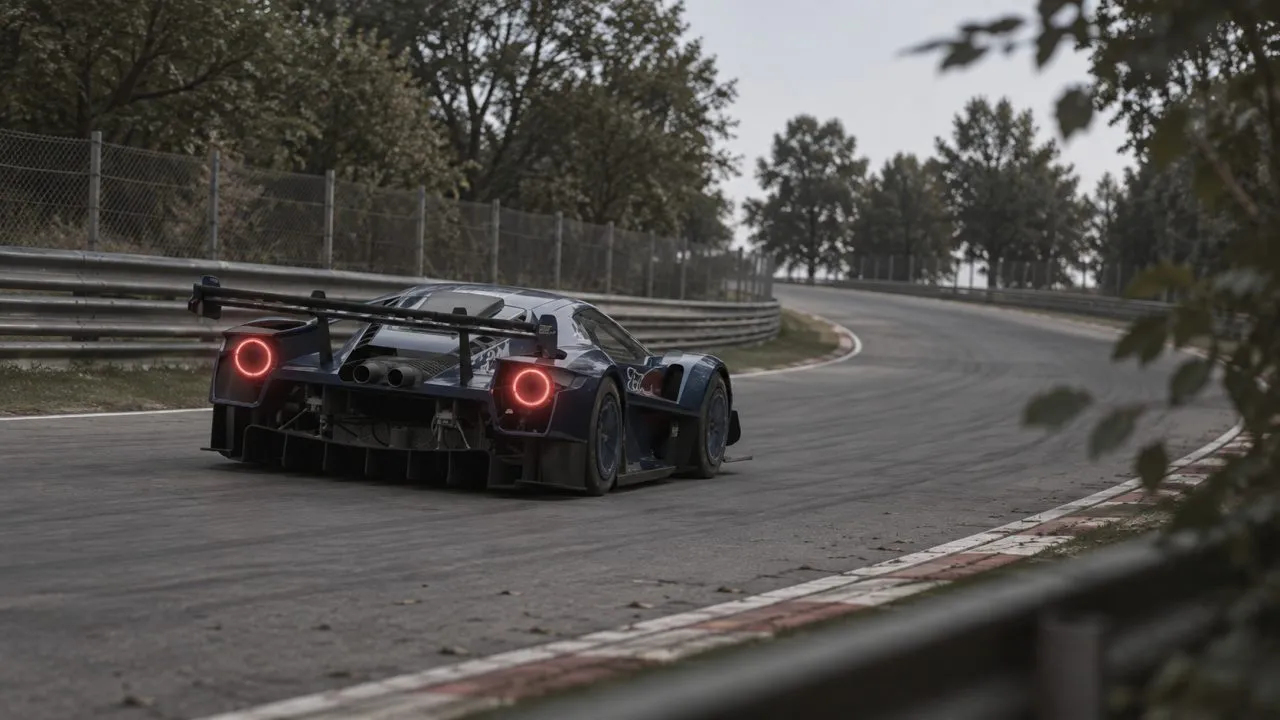
At this stage, a direct specification comparison is impossible because NVIDIA has released detailed information about DLSS 5 while AMD Neural Lighting remains a leak.
The current situation can be summarized like this:
| Technology | NVIDIA DLSS 5 | AMD Neural Lighting |
|---|---|---|
| Status | Official | Rumored |
| Generative neural rendering | Confirmed | Reported |
| Neural lighting/material enhancement | Confirmed | Reported |
| Architecture | Current NVIDIA implementation | Next-generation AMD; RDNA 5 reportedly likely |
| Commercial name | DLSS 5 | “Neural Lighting” not officially confirmed |
| Release date | 2026 | Not announced |
| Supported games | Official ecosystem underway | None announced |
There is also no evidence yet that AMD’s implementation will reproduce DLSS 5 feature-for-feature.
AMD could instead use a different architecture that concentrates specifically on lighting while retaining conventional or separately neural approaches for materials and other rendering stages.
Until AMD publishes technical documentation, describing Neural Lighting as an answer or competitor to DLSS 5 is more accurate than calling it an AMD version of DLSS 5.
Some reports about the Neural Lighting rumor have gone considerably further, claiming that AMD’s model will directly use geometry, BVH information, ray data, material information and depth buffers from the game engine.
That should currently not be treated as a leaked AMD specification.
The original discussion surrounding Kepler’s comments included suggestions about how an ideal neural rendering system should operate, including giving the model direct world-space information rather than forcing it to infer everything from a completed two-dimensional image.
That is an important technical discussion, but it is not the same as confirmation that AMD’s implementation uses that exact architecture.
A native neural rendering system having access to engine information would make considerable sense. It could potentially produce more consistent results because the AI would know more about the scene rather than attempting to interpret everything from pixels.
But until AMD explains Neural Lighting itself, those details remain speculative.
The development is particularly interesting from a sim racing perspective
Racing simulators present several unusual graphics challenges. Cars use highly reflective paint, carbon fiber, glass, metal and complex interiors, while circuits contain enormous amounts of vegetation, fencing, trackside objects and rapidly changing lighting.
The player’s viewpoint also moves through the environment at very high speed.
A successful neural rendering system could potentially improve:
- Vehicle reflections and material response
- Indirect lighting around cars and garages
- Interior and cockpit shading
- Trackside vegetation
- Night-race lighting
- Shadows underneath and around vehicles
- Lighting transitions during dynamic weather
We already have an early example of what this could mean.
Community developers have managed to get DLSS 5 Neural Rendering running experimentally in Automobilista 2, despite the simulator having no official DLSS 5 integration. The results can noticeably change lighting and how cars appear connected to the surrounding environment.
However, they also demonstrate the biggest problem facing this technology: performance. Current experimental implementations can cause substantial frame-rate reductions. That is particularly problematic for sim racing, where high refresh rates, triple-screen configurations and VR can already place enormous demands on a GPU.
An attractive lighting improvement becomes far less useful if it cuts the frame rate needed to maintain smooth and responsive driving. A future AMD implementation therefore needs to solve not only image quality but efficiency. And for sim racing, where convincing lighting has to coexist with extremely high performance requirements, the competition between NVIDIA DLSS 5 and AMD’s next generation of neural rendering could become considerably more important than another traditional battle over upscaling quality.
For more on what NVIDIA’s technology already means for racing simulators, see our DLSS 5 for Sim Racing: Games, Mods and Support and our early analysis of Neural Rendering in sim racing.
See you on the track!
This website uses affiliate links which may earn a commission at no additional cost to you.