

Assetto Corsa EVO Update 0.9 fundamentally changes how racing slicks generate and lose grip. Some players are reporting slower GT lap times, more understeer and easier brake lock-ups, while others believe the cars now feel more stable and realistic. KUNOS says old setups may need to be rebuilt.
Assetto Corsa EVO’s Update 0.9 introduced far more than three new cars and online leaderboards. One of its most significant changes is hidden inside the physics engine: KUNOS Simulazioni has substantially reworked the racing slick tyre model used by the simulator’s GT and Cup machinery.
The change has immediately divided players. Some are reporting GT cars that feel slower, more prone to understeer and easier to lock under braking, while others describe 0.9 as a major improvement that makes the rear axle more stable and punishes unrealistic driving beyond the tyre’s limit. Both reactions can make sense once the changes underneath the simulation are understood.
The key detail is that KUNOS did not simply reduce or increase overall grip. The studio has revisited how slip angle, camber, combined lateral and longitudinal forces, contact-patch behaviour and differential-driven rotation interact with each other. That means driving techniques and setups developed around previous versions of EVO may no longer produce the same result.
What Assetto Corsa EVO 0.9 Actually Changed
The official 0.9 patch notes describe the update simply as an “updated tyre model for racing slicks” deployed on GT racing cars. However, professional sim racer and Assetto Corsa EVO vehicle handling tester Nils Naujoks subsequently provided a much more detailed explanation of the work behind it.
According to Naujoks, the changes currently apply specifically to GT racing slicks, covering cars from the Mazda MX-5 Cup through machinery such as the GT2, GT3 and GT4 classes, Cup cars and the Ferrari F40 LM. Formula 1 tyres and road-car compounds have not received the same tyre-model update.
This distinction is important when comparing impressions after installing 0.9. A road car feeling largely unchanged does not contradict someone reporting a dramatically different GT3 experience. KUNOS has deliberately deployed this version of the tyre work to racing slicks first rather than changing every tyre compound in Assetto Corsa EVO simultaneously.
Naujoks also revealed that some of the behaviour seen before 0.9 came from compromises introduced around Early Access 0.4. At that stage, KUNOS had improved an inherent understeer problem without being able to solve its underlying causes, producing a tyre that could instead feel sensitive on throttle and unusually “floaty” near the limit.
One consequence was that the previous slicks required comparatively high slip angles to reach their peak grip. Drivers therefore had to apply more steering and allow the tyres (particularly at the rear) to move further laterally before maximum grip developed. The result could make the car feel slow to respond initially but surprisingly permissive once it began sliding.
With 0.9, KUNOS has been able to reduce the slip angle required to reach peak grip. In principle, this should make the initial response to steering sharper. At the same time, however, continuing to add steering after the front tyres have exceeded their optimum slip angle is now more likely to cost grip rather than generate additional cornering force.
That distinction may explain part of the current understeer discussion. A driver accustomed to adding more steering when a GT car starts running wide could previously benefit from a tyre model that remained unusually tolerant beyond its ideal operating range. With 0.9, the same additional steering input can simply push the front tyres further past their useful grip peak.
KUNOS has also changed the way grip disappears. Naujoks says the previous calibration could remain too forgiving beyond the limit, effectively allowing the tyre to continue generating significant grip as the driver increased slip. This also reduced the importance of systems such as traction control because excessive wheel slip was not always penalised strongly enough.
The new model reshapes those slip-versus-grip relationships. KUNOS is attempting to make the transition beyond peak grip more meaningful, meaning drivers should have a clearer incentive to remain close to the tyre’s optimal operating window rather than relying on exaggerated steering angles or sustained sliding to maintain speed.
Why GT Cars Can Feel Slower, More Understeery or Harder to Brake
The first community reports show that the change is large enough to affect both driving technique and lap times. One Porsche GT3 R Rennsport user reported noticeably less front-end grip, increased understeer and more frequent front and rear locking after 0.9, despite having completed hundreds of laps with the car previously.
The same driver reported losing roughly two seconds at the Red Bull Ring, while a Steam discussion describes GT3 cars being approximately two to three seconds slower at Watkins Glen using previous references. These are individual player reports rather than controlled benchmarks, so they should not be interpreted as proof that every GT car has universally lost several seconds.
Other drivers are seeing a much smaller effect. In one multiplayer discussion, a wheel user said their own lap times were broadly unchanged, although the fastest GT3 qualifying times they were observing at Spa had moved from approximately 2:16 to around 2:20. The poster speculated that controller users may have been affected differently, but there is currently no evidence from KUNOS confirming a controller exploit or specific physics correction.
That variation makes sense because 0.9 does not merely adjust maximum grip. It changes how a driver accesses that grip. Two players using different steering inputs, brake techniques, traction-control settings and setups could therefore experience very different changes in lap time even when driving the same car.
Braking complaints may also be connected to one of the most significant changes in the new model: camber now involves a more meaningful compromise between lateral and longitudinal performance. KUNOS corrected a problem that allowed a heavily cambered inside tyre to generate too much longitudinal friction, while also separating camber’s influence on lateral and longitudinal grip.
In practical terms, additional negative camber can improve cornering performance and tyre response, but it can now carry a more noticeable cost in braking and traction. Naujoks specifically contrasts the system with Assetto Corsa Competizione, where running maximum negative camber frequently became the obvious setup direction without the same trade-off.
That has major implications for existing EVO setups. A configuration developed around 0.8 may contain camber values that previously maximised cornering grip without sufficiently compromising braking performance. Using that same setup in 0.9 could therefore leave the driver with less longitudinal grip during braking and a greater tendency to activate ABS or lock a wheel.
And KUNOS has effectively warned players about exactly this issue. Naujoks says drivers will “likely want to start over with setups”, adding that default setups may also need to be revised as time permits. That is perhaps the most important piece of information for anyone comparing a 0.8 personal best directly with 0.9.
A saved setup loading correctly does not mean it remains optimal for the new physics. Camber, differential settings, mechanical balance and other values were chosen around a different relationship between the tyre and the road. Even if every setup number remains identical, the physical outcome produced by those numbers can now be different.
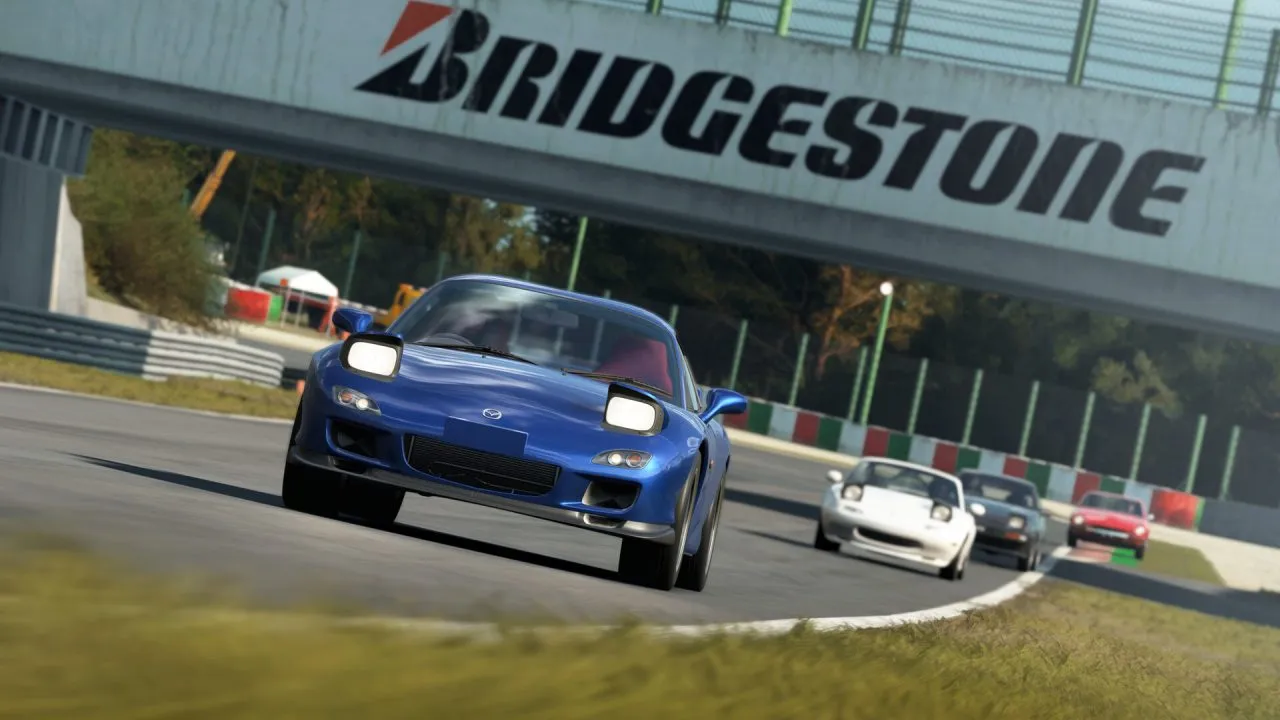
Update 0.9 also includes an improved limited-slip differential simulation and adds LSD friction faces to car setup. Consequently, not every difference in rotation or corner-exit behaviour should automatically be attributed to the tyre model itself. The drivetrain underneath the car has changed as well.
This is particularly relevant in slower corners. Naujoks highlights the yaw moment generated when a limited-slip differential transfers torque through the rear tyres as a critical part of the new work, with the effect especially noticeable through first-, second- and third-gear corners and sometimes fourth gear.
As aerodynamic load rises at higher speeds, the relationship changes because the inside rear tyre is more heavily loaded. This helps explain why one driver might describe a GT car as dramatically different in hairpins and slow exits while noticing less of a transformation through fast, downforce-dependent corners.
Is the New Tyre Model More Realistic?
The early community reaction is clearly mixed, but there is also considerable positive feedback. In the same discussions where some players complain about understeer, others describe GT cars as noticeably more stable and easier to understand, particularly because the rear axle no longer needs to remain in a constant small slide to generate competitive grip.
That outcome is consistent with KUNOS’ stated objective. Under the previous calibration, the rear tyre could require a relatively large slip angle before reaching maximum grip. The rear would begin moving before the tyre reached that peak, leaving the car in what Naujoks describes as a sensitive, floating state that could make catching slides inconsistent.
With the required slip angle reduced, the tyre should respond more quickly to steering input and no longer need as much visible lateral movement to operate effectively. To a driver who enjoyed rotating the car aggressively on the previous model, that can initially feel as though the rear has become unusually planted. To another driver, exactly the same change can feel more natural and predictable.
One Reddit user, for example, complained that the Porsche’s rear now felt almost glued to the road compared with 0.8, while another responded that the car was simply more stable during rotation and considered the overall result an improvement. The disagreement illustrates why subjective impressions alone cannot determine whether the new model is physically better or worse.
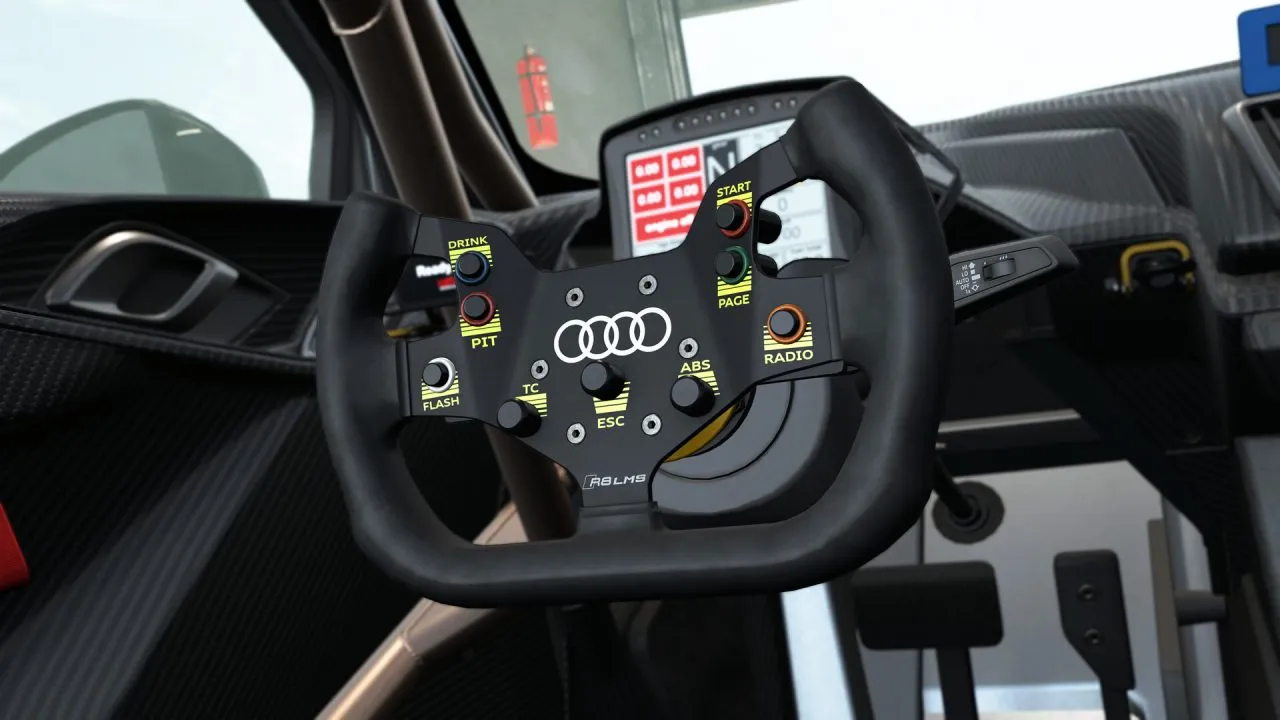
KUNOS has also significantly reworked combined grip, essentially the relationship between the longitudinal force needed for acceleration or braking and the lateral force being requested for cornering. Previously, several effects could shift the peak of the tyre’s grip curve to unrealistically large slip levels, contributing to a sensation that more slip continued to produce more grip.
In 0.9, that behaviour has been redesigned while KUNOS has simultaneously been able to increase the amount of useful combined grip compared with its earlier workaround. The objective is not simply to make the cars harder; it is to give drivers a wider, more coherent operating range approaching the limit while making genuine over-driving less effective.
This should be especially noticeable on corner exit. The previous solution could make power application extremely sensitive because the tyre’s lateral and longitudinal requirements did not interact as KUNOS wanted. The revised combined-grip behaviour is intended to make the transition onto throttle more progressive while still punishing excessive slip once the tyre exceeds its useful range.
Traction control should therefore matter more than before. Naujoks says the previous tyre could make TC feel largely unnecessary because the tyre remained too forgiving when overdriven. With the revised grip-loss behaviour, running without traction control over a race distance should involve more genuine risk and require more precise throttle application.
Contact-patch behaviour has received another substantial revision. The model now better considers how the load is distributed across the tyre’s physical contact area and how that distribution moves the location of peak grip. Camber, vertical load, speed and temperature can therefore alter not only how much grip is available, but where in the tyre’s operating range that grip appears.
One example provided by Naujoks concerns high negative camber. It may make the tyre more responsive, but under lower loads the contact patch may not be fully utilised. Only when load increases sufficiently does tyre deformation allow the contact patch to work more effectively, potentially making the ideal camber setting dependent on the track and its corner profile.
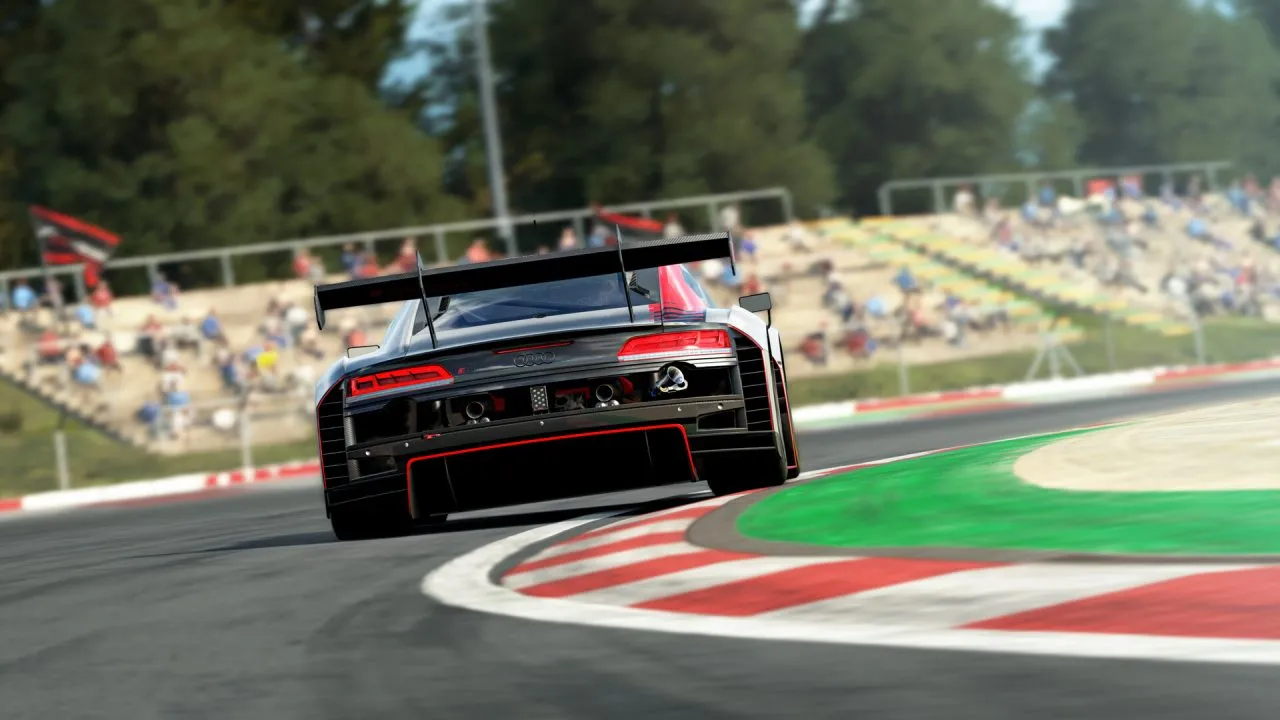
This could make setups considerably less universal. A maximum-camber configuration that works at a high-load circuit may no longer be automatically optimal somewhere dominated by slower corners and heavy braking. KUNOS wants those compromises to become part of setup development rather than allowing one extreme value to dominate across almost every circuit.
Force feedback has changed alongside the tyre physics. Naujoks says KUNOS made a small adjustment to self-aligning torque scaling, making oversteer more noticeable through the wheel while generally producing higher FFB forces. Drivers who feel that 0.9 communicates the car differently are therefore not necessarily imagining the difference.
There are additional device-level FFB changes in 0.9 as well, including revisions affecting TrueForce and FullForce processing and recovery behaviour across several wheel ecosystems. This means anyone comparing steering feel between 0.8 and 0.9 should recognise that both the underlying tyre forces and parts of EVO’s force-feedback pipeline have changed.
The 0.9 Tyre Model Is Still Not Finished
Perhaps the most important conclusion from KUNOS’ technical explanation is that 0.9 is not presented as the final tyre model. Naujoks says the development has gone deeply into the fundamentals of EVO’s tyre simulation, but also acknowledges that several areas still require further review, debugging, decisions and implementation.
Among the areas still being evaluated are tyre pressures, temperature behaviour and temperature build-up, wear, graining, blistering and flat spots. Those systems can have a major effect on race-distance behaviour, meaning the slick model players are testing today should be considered another substantial Early Access milestone rather than the finished specification for version 1.0.
KUNOS is also continuing work beyond tyres. Naujoks mentions further experiments with differential modelling and drivetrain components, together with future adjustments to aerodynamic behaviour and slipstreaming. Different vehicles may require bespoke systems for technologies such as torque vectoring or adaptive dampers, adding another layer to EVO’s continuing physics development.
For players testing 0.9 now, the fairest comparison is therefore not simply loading a previous setup and measuring the difference against an old personal best. Starting with a fresh setup, allowing tyres to reach comparable conditions, using appropriate ABS and TC settings and then adapting driving inputs to the new slip behaviour should provide a more meaningful comparison.
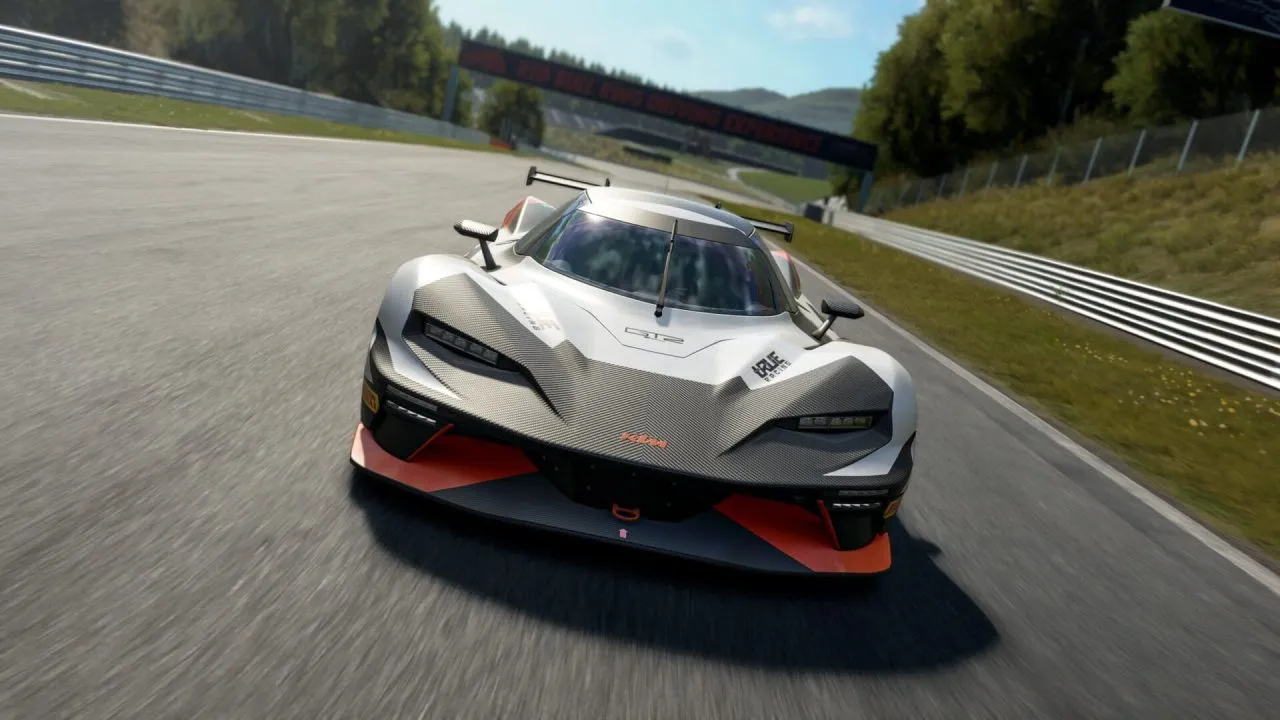
That does not mean every complaint should be dismissed as a setup issue. Reports of excessive understeer, unusual lock-ups or other behaviour remain valuable Early Access feedback, and KUNOS explicitly asks players to continue reporting what they experience. The new model itself is still being tuned, and the studio acknowledges that further adjustments are expected.
What 0.9 does establish is that the slower lap times being reported by some drivers are not necessarily evidence that KUNOS has simply reduced GT grip. The simulation now rewards a different relationship between steering angle, braking, camber, traction and slip, while setups built around earlier physics may no longer exploit the tyre in the same way.
That is also why the current community reaction can appear contradictory. A driver who relied heavily on rotation, large slip angles or an aggressive old setup may experience considerably more understeer and slower laps, while another using smoother inputs and a revised setup may find the new GT cars more stable, responsive and believable.
For GT drivers, the practical message is simple: Update 0.9 should be treated as a physics reset rather than a minor balance patch. Old setups and old driving references may need to be reconsidered, and the first wave of slower lap times should be judged only after players have adapted to what is effectively a substantially different slick tyre underneath the same cars.
If you do not own the game yet, Assetto Corsa EVO is available on PC, and the original Assetto Corsa Ultimate Edition remains the reference point for what a mature modding scene looks like.
This website uses affiliate links which may earn a commission at no additional cost to you.