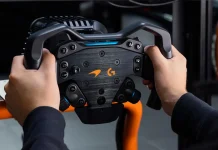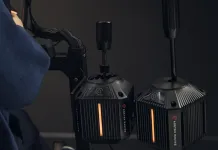

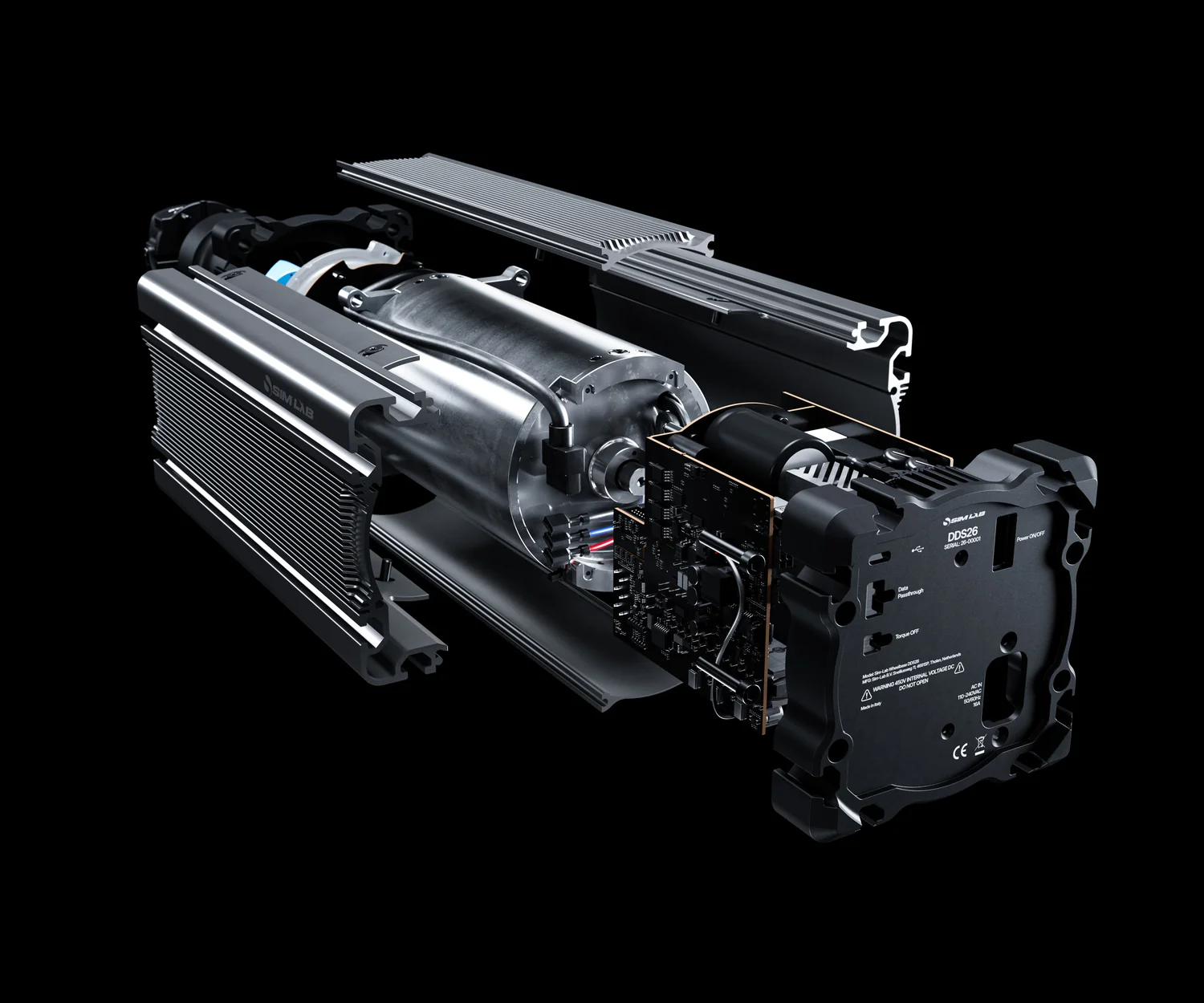

In twelve years, the torque output of sim racing wheel bases has multiplied nearly twentyfold. The real cars they are meant to simulate still produce exactly what they produced back then.
On 1 August 2026, Sim-Lab opened reservations for its first two direct drive wheel bases. The smaller one delivers 26 Nm. The larger one delivers 39. That is the highest figure a consumer wheel base has ever carried, four above the previous ceiling, and the reaction online was immediate and predictable. Somebody asked who exactly they were planning to murder.
The joke conceals a legitimate question the industry has spent a decade avoiding: at what point did we stop chasing realism and start chasing a number?
The starting point: two newton metres and a gearbox
To grasp the scale of the jump, it helps to remember where we came from. A consumer-grade geared wheel, the kind Logitech still sells today for a couple of hundred euros, produces a little over two newton metres. Belt-driven systems, one rung up, push that to three or four. For nearly two decades, that was the ceiling of what an enthusiast could have at home.

The problem was not just the force. Between the motor and the driver’s hands sat gears, belts and pulleys, and every one of those components ate part of the information. What reached the wheel was a filtered, flattened, slightly delayed version of what the simulator had calculated. Kerb strikes arrived rounded off. Loss of grip arrived late.
2013: the people who removed the belt
The idea of bolting a steering wheel straight onto a motor shaft did not come from the games industry. It came from industrial automation.
In Tampere, Finland, a company called Granite Devices had been building control electronics for servo motors since 2006. Its founder arrived there by way of building a CNC milling machine: there were excellent AC servo motors on the market, but the electronics to command them were expensive or hard to source. So he built his own.

That combination, powerful industrial servos and accessible controllers, was everything the category needed. All that remained was for somebody with electronics knowledge and a simulation habit to put the pieces together.
In late 2013 the first serious commercial product appears, built around a stepper motor rather than a servo. That was a cost decision, and in the years that followed it is what allowed direct drive to slip below the psychological barrier of a thousand euros.
In early 2014 the other route arrives. An electronics engineer based near Silverstone puts a direct drive system on sale for a little over three thousand euros, built around a German-made Kollmorgen AKM servo motor. He does not explain how it works internally and does not license the technology. You pay, or you stay out.
The bricolage years
Between those two options sat an enormous gap, and the community filled it.
The Open Sim Wheel project began as a home build: you bought an industrial motor, usually a Chinese Mige in either the small or large variant, added a controller board and a power supply, and assembled your own direct drive base for a fraction of the commercial price. It required soldering, firmware configuration, and accepting that if something failed, you were the support department.

It was, by some distance, the most interesting period in this story. For three or four years the technological frontier of sim racing sat in the hands of hobbyists with engineering backgrounds rather than manufacturers. Almost every company that dominates the market today came out of it. We told that story in full in our history of direct drive in sim racing.
2019: professionalisation
The decisive jump comes when those solutions turn into closed products with a box, a warranty and proprietary software. Simucube’s second generation set the scale that would govern the decade: 17 Nm in the entry model, 25 in the middle, 32 at the top.
That 32 remained the industry ceiling for years. And there is a figure from that launch which went largely unnoticed at the time and explains a great deal today. Alongside torque, the manufacturer published slew rate, the speed at which the base can change force, measured in newton metres per millisecond. It was 4.8 on the small one, 8.0 on the middle one, 9.5 on the big one.

Slew rate is technically far more decisive for what you actually feel than peak torque. It is what determines whether you sense the exact instant the rear steps out or whether you sense it a tenth of a second later. But it is not a number that fits in a headline, and it never caught on.
2020 to 2024: democratisation
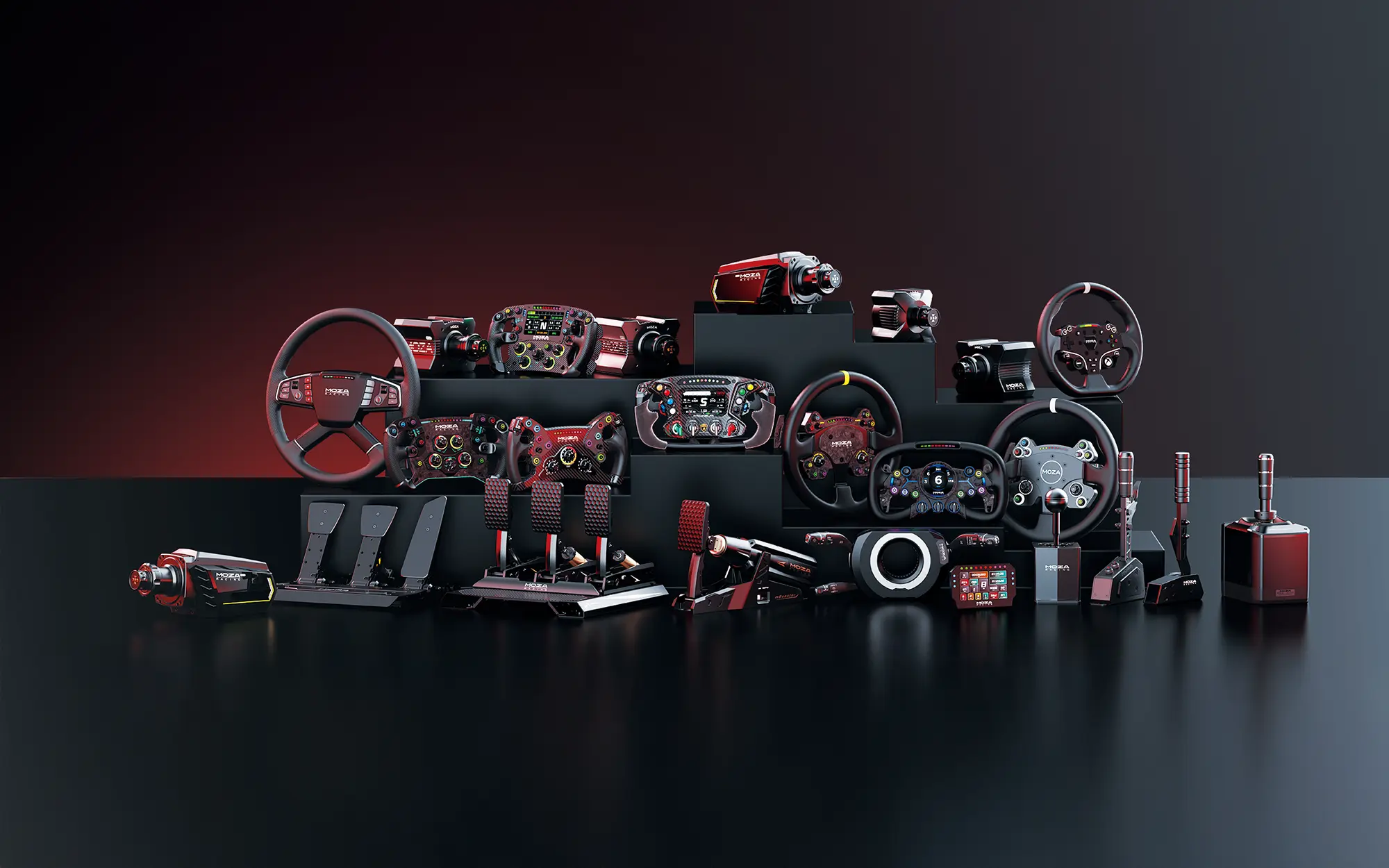
What follows is a textbook commoditisation story. Manufacturers from Germany, China, Denmark and the United States enter the segment and collapse the prices. Direct drive stops being a three thousand euro eccentricity and starts at three hundred. Our piece on direct drive becoming the standard covers that shift.
The range stratifies along a clear logic. Five to eight newton metres for anyone stepping up from a belt drive, which is where the MOZA R5 and the Fanatec CSL DD live. Ten to twelve for the intermediate tier, occupied by the Conspit Ares and the Asetek La Prima. Fifteen to eighteen for the committed user, which is MOZA R16 and Asetek Forte territory. Twenty and above for anyone who does not want to ask further questions.
One of the largest manufacturers in the sector even published a table explaining what each rung corresponded to in the real world, and the table is revealing. Its 12 Nm model, it said, matches the forces found in many GT3 and touring race cars.
Twelve.
2025 to 2026: escalation
And then, in the space of ten months, the ceiling breaks three times.
In October 2025 Simucube’s third generation raises the summit to 35 with the 3 Ultimate, alongside a 15 Nm Sport and a 25 Nm Pro. Asetek lands on 27 with the Invicta and a 9.4 Nm/ms slew rate. MOZA pushes its Ultra line to 25. An Italian firm known for steering wheels enters the base business with a range topping out at 32.
And on 1 August 2026, Sim-Lab posts 39.
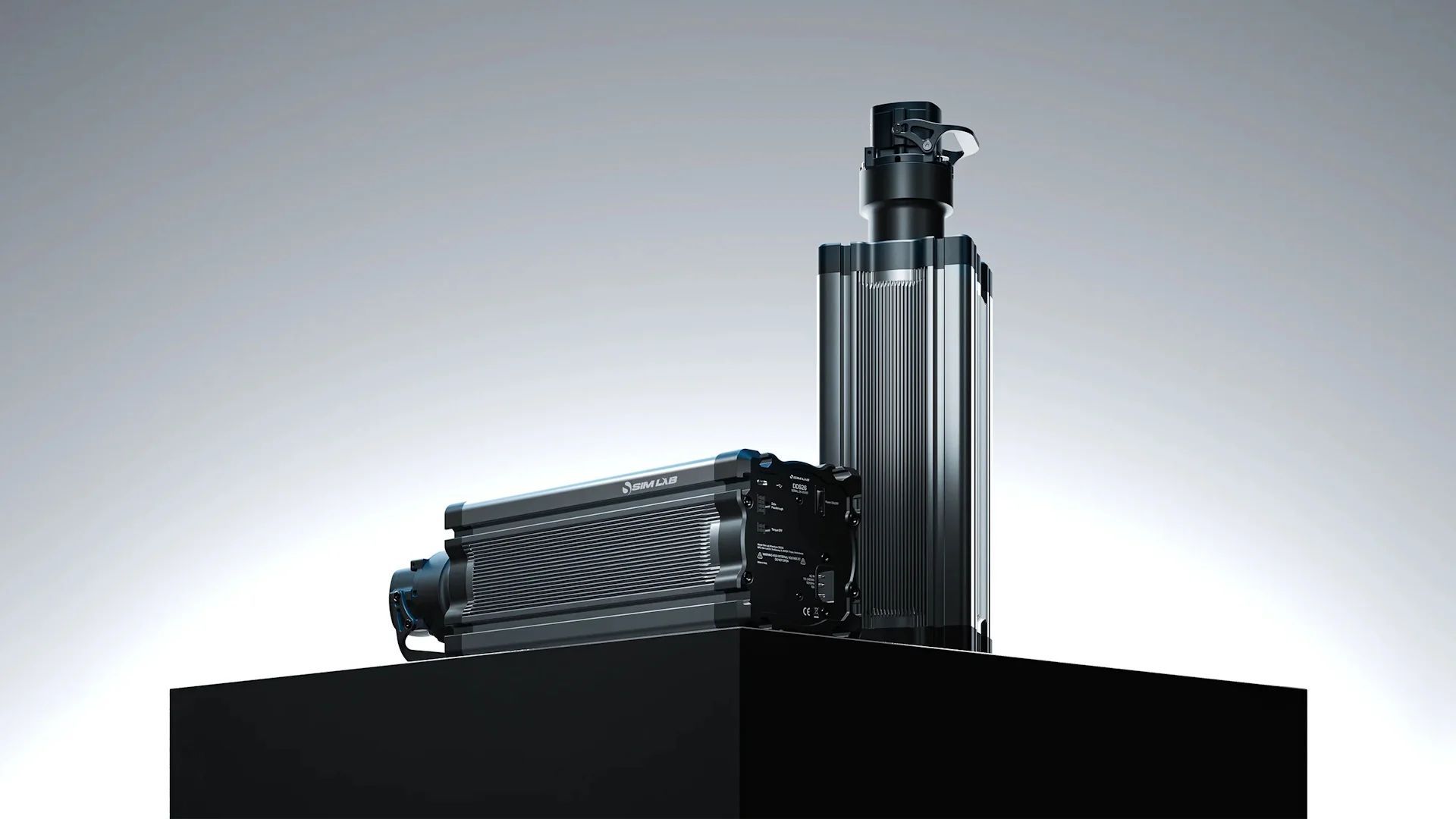
In twelve years, the figure has multiplied almost twentyfold.
What a real car actually does
This is where the conversation gets uncomfortable, because the data is public and has been for years.
A normal saloon with electric power steering exerts two to three newton metres at the wheel. A sports car, five to seven. A high-performance sports car with limited assistance can demand ten to twelve while stationary, dropping to somewhere between two and eight once moving, depending on speed and grip.
And race cars? A GT3 is typically capped between six and eight newton metres, although some drivers prefer settings closer to ten or twelve. An LMP2 has a reported limit of eleven at every circuit. Average competition forces sit between eight and fifteen, with occasional peaks above that under heavy braking or over kerbs.

These figures, it is worth underlining, do not come from a hostile critic. They come from technical documentation published by one of the largest sim racing hardware manufacturers in the world.
Move to historic single-seaters without power assistance and the published measurements are humbler still: four to four and a half newton metres in a lightweight sixties formula car, five and a half to eight and a half in a seventies sports prototype.
The only territory where the real world approaches these modern figures is grand prix machinery and the senior feeder categories, where torque can exceed thirty. Which means the 39 Nm base replicates a car that ninety-nine percent of its buyers will never drive, not even in the simulator. Our guide to finding your ideal torque range goes deeper into the numbers by car category.
The technical defence, which exists and is valid
It would be unfair to present this as pure chest-beating, because there is an engineering argument underneath and it is sound.
Peak torque is not meant to be used. It is meant not to be used. It is called headroom, and it works like this. When the simulator asks for a force greater than the base can deliver, the signal is truncated. The peak vanishes, flattens, and what reaches your hands is a censored version of what was happening. In English it is called clipping and it is the number one enemy of fidelity.
A 25 Nm base running at 12 never clips. A 15 Nm base running at 12 clips over every kerb. And here is the key: you do not notice the difference as more strength. You notice it as cleaner peaks and better definition.
There is a second argument, less often cited. A motor working well below its limit is more efficient and more linear. It reproduces fine detail better precisely because it is not straining.
The counter-argument, which also exists
The trouble is that the headroom argument has very obvious diminishing returns, and past a certain point it stops holding up.
The consensus among people who have tested most of these bases puts the genuine sweet spot between ten and fifteen newton metres of constant force for an average adult. Beyond fifteen or sixteen, what you are buying is psychological reassurance rather than functional benefit. And the most uncomfortable data point of all: most professional sim racers do not use anything close to the peak torque available to them.
There is also an inverse phenomenon almost nobody discusses. An oversized base running at moderate settings can feel worse than a base optimised for that range. The bigger motor carries more rotational inertia, and that inertia has to be overcome on every direction change. A well-executed 12 Nm base can transmit more information than a 20 Nm base fighting itself.
The detail nobody wants to underline
The most eloquent thing about this whole affair is the position of the manufacturer that set the record.
In its own communications, Sim-Lab states plainly that its 26 Nm base is the correct answer for the overwhelming majority of sim racers, and that it is not remotely a close call. The 39, it says, makes sense for a much narrower group: commercial simulation centres, professional teams doing driver-in-the-loop work, and enthusiasts who simply want the biggest number available and have the budget for it.
In other words, the brand that has just broken the market ceiling is telling you, in writing, not to buy the one that broke it.
And it adds the argument that closes the circle: those extra five hundred euros would do far more for you in pedals, because pedals actually lower lap times. If that lands, our guide to active pedals is the place to start, and the Asetek Invicta pedals or Heusinkveld Ultimate+ are where that money goes furthest.
What to look at instead of torque
If peak torque has stopped being a useful purchase criterion above a certain threshold, the question is what replaces it. There are three candidates, and none of them fits on an advertising banner.
- Slew rate, the rate of force change, which determines whether you feel the moment the car goes or its echo.
- Encoder resolution and, more importantly, the frequency at which the control loop uses that information.
- Electrical architecture, because bus voltage determines how much force the motor can keep delivering once the wheel is already turning quickly, which is exactly the moment you need it to respond.
None of those three numbers appears on the box. Torque does. Our 2026 sim racing hardware guide works through how to weigh them against each other.
Twelve years after an engineer soldered the first controller board in a Finnish garage, sim racing has a problem that is not technical but commercial. It has trained its customers to compare products by the one metric that has stopped mattering.
The number thirty-nine is neither dangerous nor ridiculous. It is simply an answer to a question almost nobody was asking.
See you on the track!
This website uses affiliate links which may earn a commission at no additional cost to you.