

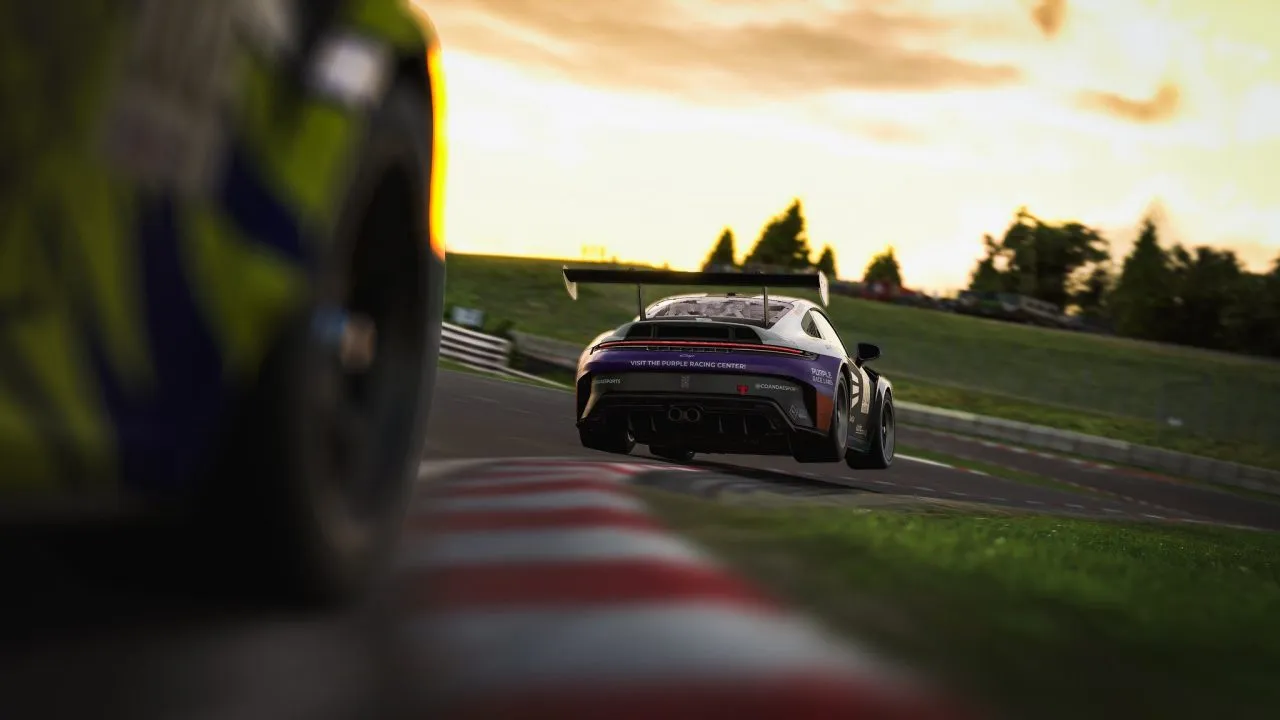

There is a moment, just after an accident, when everything seems to happen too quickly. The car spins, the wall gets closer, hours of work disappear, and for a few seconds nobody is thinking about regulations, protests, or sporting codes. You think about everything that has been lost. The preparation, the driver changes, the practice laps, the strategy, and the time invested by everyone involved. Then the anger arrives. And sometimes, with it, come the words.
The scene could belong to almost any online competition, but in iRacing it carries a particular weight. The simulator presents itself as a serious competitive environment, with licences, categories, protests, detailed rules, and a sporting structure designed to resemble real motorsport. It is not simply a quick match that everyone forgets as soon as they click a button. For many users, every race represents an investment of time, money, and concentration. In an endurance event, that investment becomes even greater. An avoidable accident does not merely damage a virtual car. It can wipe out days of preparation and destroy the effort of an entire team.
That is what sparked the discussion. One driver moves aside, another misreads the situation, gets too close, and makes contact at an angle. There does not appear to be any malicious intent. Nobody seems to be deliberately trying to take another competitor out of the race. It is more likely a combination of poor judgement, impatience, and a lack of awareness. The kind of mistake that looks painfully easy to avoid when watched again afterwards.
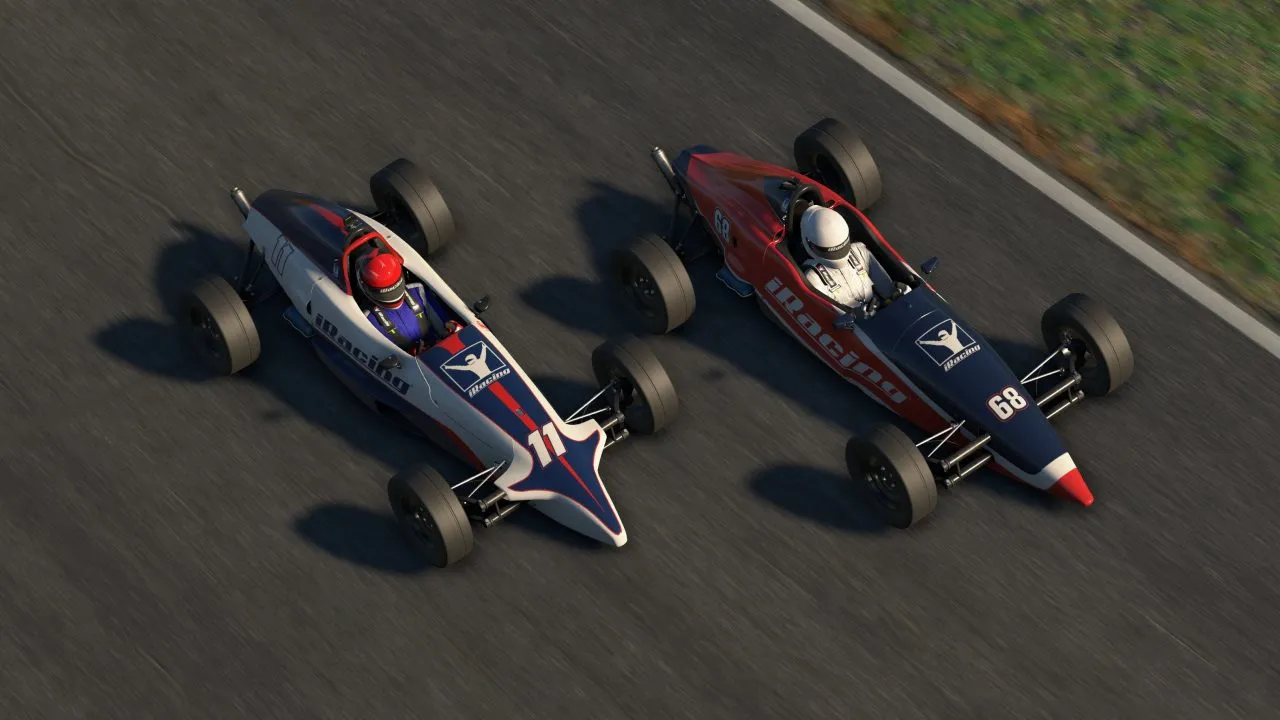
Its consequences, however, are enormous. The car spins, suffers damage, and the race is effectively over while almost the entire event still lies ahead.
The affected driver loses his temper and writes in the chat. He uses offensive language, mentions filing a protest, and makes comments that could be interpreted as a threat to expose the other driver publicly. He is not threatening physical violence. Nor is he speaking calmly. It is an emotional outburst from someone who has just watched all that preparation disappear because of a completely unnecessary mistake.
That reaction should not have happened. It still needs to be understood in context.
The response from the system is clear. Three months without access to the chat and two weeks without being allowed to compete online. The verbal conduct is recorded, reviewed, and punished. There is very little technical debate involved. The words are there in writing. Nobody needs to interpret a racing line, calculate a braking distance, or ask what each driver could see on their screen. The message exists, it can be read, and it falls within a rule prohibiting offensive, disrespectful, or threatening communication.
That is where the discomfort begins.
Words leave clean evidence. Bad driving almost always arrives surrounded by doubt.
A message can be quoted. A racing incident has to be reconstructed. Was the contact intentional? Was it a miscalculation? Did the driver lose a braking reference? Did he fail to see the car ahead? Did he expect the other driver to move differently? Did he run out of space? Was there a connection issue? On track, even a disastrous decision can often be given a plausible explanation.
That uncertainty protects honest mistakes, and rightly so. Nobody should receive a severe punishment for making a single error. Racing involves risk, and mistakes are inevitable. The problem begins when the absence of intent becomes the only question that matters. If a driver did not mean to cause an accident, the investigation often seems to end there.
But an action can be unintentional and still be irresponsible.
It can be avoidable, reckless, or the result of a driving style that constantly forces everyone else to take evasive action.
Every regular online racer knows this type of driver. They are not necessarily aggressive in the chat. They do not insult people, make threats, or wait for someone on track to take revenge. They simply attack gaps that do not exist, brake too late, rejoin without checking, or place the car in positions where contact is almost inevitable. When the move works, they gain a place. When it fails, it is described as an unfortunate mistake.
Technically, it usually is.

Taken individually, each incident may seem relatively minor. A small touch in one corner, a late defensive move in another, a careless rejoin, or an overtaking attempt that never had a realistic chance of succeeding. None of these actions looks as obvious as a driver deliberately waiting for another car and crashing into it.
Yet when the incidents are viewed together, a pattern becomes visible. A different person keeps paying for the same type of error. There is always an explanation. There is always some uncertainty. There is never quite enough evidence to prove that the driver wanted the accident to happen.
That creates a difficult impression: the system punishes most confidently what it can prove with the least effort.
Not necessarily what causes the most damage, but what leaves the clearest evidence.
An unfortunate sentence can lead to an immediate sanction. Repeatedly negligent driving can dissolve into a long series of ambiguous incidents, each one treated as an isolated mistake.
This does not mean the chat should become a place without rules. The intensity of competition does not justify harassment, abuse, or threats. Being taken out by another driver does not give anyone the right to humiliate them. Anger can explain a reaction, but it does not automatically make that reaction acceptable. Verbal sanctions may be necessary, especially when frustration turns into intimidation.
What is harder to understand is the difference in force and consistency.
If the system can issue weeks of suspension for a written reaction, it should also be capable of dealing with drivers who repeatedly ruin races without ever crossing the line into clearly intentional misconduct. Otherwise, the message received by the community is an uncomfortable one: what people say is monitored with precision, while what they do on track is not always treated with the same urgency.
Intent matters, of course. A mistake is not the same as deliberately causing an accident. But intent cannot be the only standard.
The system should also consider whether the risk was predictable. Did the move have any realistic chance of succeeding? Could the driver have lifted or braked earlier? Was there enough room? Has the same person been involved in similar incidents before? Did they take a risk whose consequences would be suffered almost entirely by someone else?
A single incident may be an error. Five similar incidents begin to describe a pattern of behaviour.
Recognising that pattern requires more effort. Reading a sentence takes seconds. Reviewing races, examining previous protests, and identifying repeated behaviour takes time and resources. Yet that is precisely where the quality of a disciplinary system is tested. Not by how quickly it can identify a swear word, but by whether it can distinguish between an unavoidable accident, an isolated mistake, and a habitual way of racing that repeatedly turns other drivers into victims.
Proportionality matters as well.
Not all verbal offences are equally serious, just as not all accidents are equal. A driver who spends an entire race insulting others should not necessarily receive the same treatment as someone who loses control for a minute after being removed from an endurance event. A serious threat is not the same as an offensive phrase written in frustration. Likewise, one misjudged braking point is not equivalent to a repeated pattern of reckless driving.
Without transparent criteria, however, every decision begins to look arbitrary.
The punished driver tells one version of the story. The other competitor may tell another. The person who filed the protest might never learn what action was taken. The wider community sees only fragments. The discussion then becomes a matter of perception. Some believe the platform prioritises polite communication over competitive quality. Others think dangerous driving is tolerated as long as no obvious malicious intent can be proved.

The deeper consequence cannot be found in a suspension notice. It appears in the loss of trust.
When drivers believe that a protest about dangerous driving will disappear into silence, they stop reporting incidents or begin to assume they must protect themselves. They avoid certain series, surrender positions they might otherwise defend, and enter races expecting to survive rather than compete. Gradually, the quality of the racing declines. Not because there are no rules, but because users stop believing those rules protect what matters most: the ability to share a track without every lap becoming an unnecessary gamble.
Perhaps iRacing does not truly punish words more harshly than bad driving. Perhaps words are simply much easier to punish.
For the driver who loses a race because of an avoidable move, that distinction offers little comfort. What they see is an accident being dismissed as unintentional, while their emotional response is preserved as objective evidence of a rule violation. One action destroys a race. The other may temporarily destroy access to the simulator.
Sporting justice should not depend on how easy a case is to review.
A platform that wants to be taken seriously must protect both the quality of competition and the behaviour of its community. It should restrict harassment and threatening language, but it must also recognise that repeated negligence is a form of conduct, even when there is no clear desire to cause harm.
Driving badly once is human. Driving repeatedly on the edge of irresponsibility, while leaving everyone else to deal with the consequences, is no longer just a mistake.
And if the system knows how to punish a sentence written in anger, it should also learn to recognise everything that happened before someone decided to write it.
Remember, you can join iRacing by clicking here.
See you on the track!
This website uses affiliate links which may earn a commission at no additional cost to you.






Really well put! Punishing repeated bad behaviour is something that could be the perfect task for AI review agents.