


By this point in the summer, we would normally be talking about F1 26: what changed, which features are new and whether another full-price release is worth it. Instead, it is August 8, 2026, there is no standalone F1 26, and the current Formula 1 season has been running inside F1 25 for more than two months. The obvious question now is whether the series ever needed a new game every year.
Electronic Arts and Codemasters broke with one of the franchise’s longest-running habits. Rather than replacing F1 25 with a new release, the 2026 season arrived on June 3 through the 2026 Season Pack, a paid expansion that added the new cars, drivers, teams, regulations and MADRING to the game already on the market.
At BoxThisLap, we already covered what the 2026 Season Pack included when it launched. Two months later, the more interesting part is what happened afterwards. F1 25 is still the official Formula 1 game, the virtual season has continued, and the lack of a standalone F1 26 has not stopped the title from being updated.
F1 26 Never Arrived, and Nothing Fell Apart
For years, a new Formula 1 season almost automatically meant buying a new game. Every spring brought the same cycle of announcements, trailers, feature reveals and comparisons with the previous entry, followed by another full-price release a few weeks later.
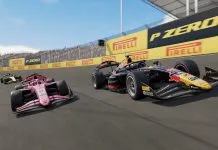
2026 has shown that updating a sports game no longer requires replacing it. F1 25 received cars built around the new regulations, Audi, Cadillac, updated driver line-ups, revised vehicle behaviour and MADRING without requiring players to install and buy a separate game.
Codemasters also continued working on the 2026 season after the expansion launched. EA released versions 1.22 and 1.23 during June, followed by update 1.24 on July 13, with fixes affecting the 2026 cars, circuits, ERS behaviour and several peripherals.
That is normal post-launch support for a modern game. What is unusual for this series is that it happened without a new number on the cover.
So What Would F1 26 Actually Have Been?
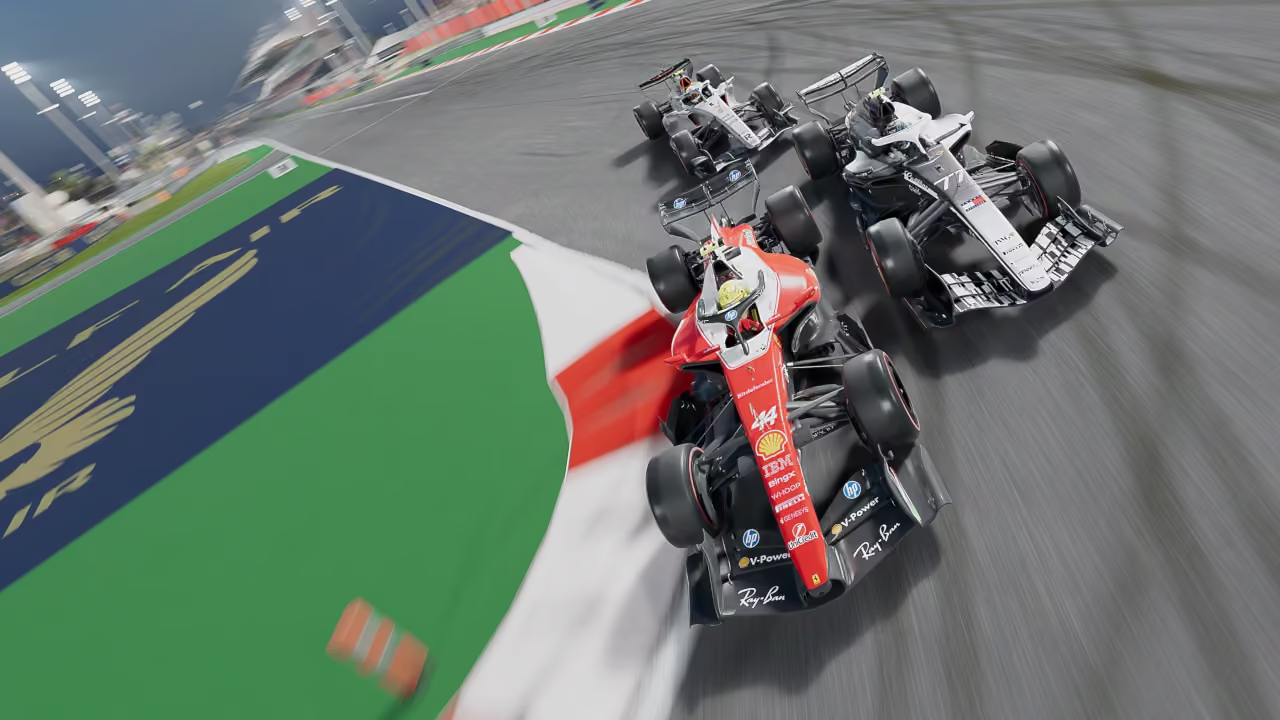
If most of what defines the 2026 season could be added to F1 25 through an expansion, it is fair to ask how different a hypothetical F1 26 would really have been.
Codemasters could have added extra features, interface changes, another mode or a set of technical improvements. But based on the recent history of the series, there is also a reasonable chance that the new game would have shared almost all of its foundations with F1 25.
When we reviewed F1 25 at BoxThisLap, we found real improvements over F1 24, particularly in driving feel and some visual areas. We also found inherited systems, familiar problems and an online experience that had changed very little.
F1 25 was better than its predecessor, but still difficult to recommend at full price to someone coming directly from a recent entry.
The same concern had already surfaced a year earlier, when we asked whether F1 24 was really what the community wanted. The problem had been building for years: the games could improve from one season to the next without changing enough to make another full-price purchase easy to justify.
Maybe We Have Been Paying for the Calendar
Formula 1 is not unique here. Sports games have spent decades selling a new product for every new season, even when the most visible changes were updated squads, kits, drivers, sponsors, vehicles, stadiums or circuits.
That model made more sense when console games launched and then remained largely unchanged. Major post-launch updates were difficult or impossible, so buying the next edition was also how players got the current version of the championship.
That limitation disappeared years ago. Modern games can receive new cars, tracks, regulations, physics changes, competitions and major systems after launch. Rosters and statistics can change several times during the same season.
Sports games have had the technical ability to last longer than twelve months for years. The annual business model has been slower to move.
The Season Pack Is Still Paid Content
The 2026 model is cheaper than another full-price release, but it is not free. EA set a recommended price of €29.99 on console and €24.99 on PC for existing F1 25 owners.
The relevant comparison is between paying for a season expansion and paying for an entirely new game built on largely the same foundation.
If the new season can be integrated properly into the existing game, an expansion is easier to justify than restarting the commercial cycle every twelve months.
There is another advantage for multiplayer. Annual releases split players between the old and new games. Some move immediately, others stay behind, and online populations get divided in the process. That matters even more in games where some modes and categories already struggle to maintain healthy participation.
The Real Test Starts Now
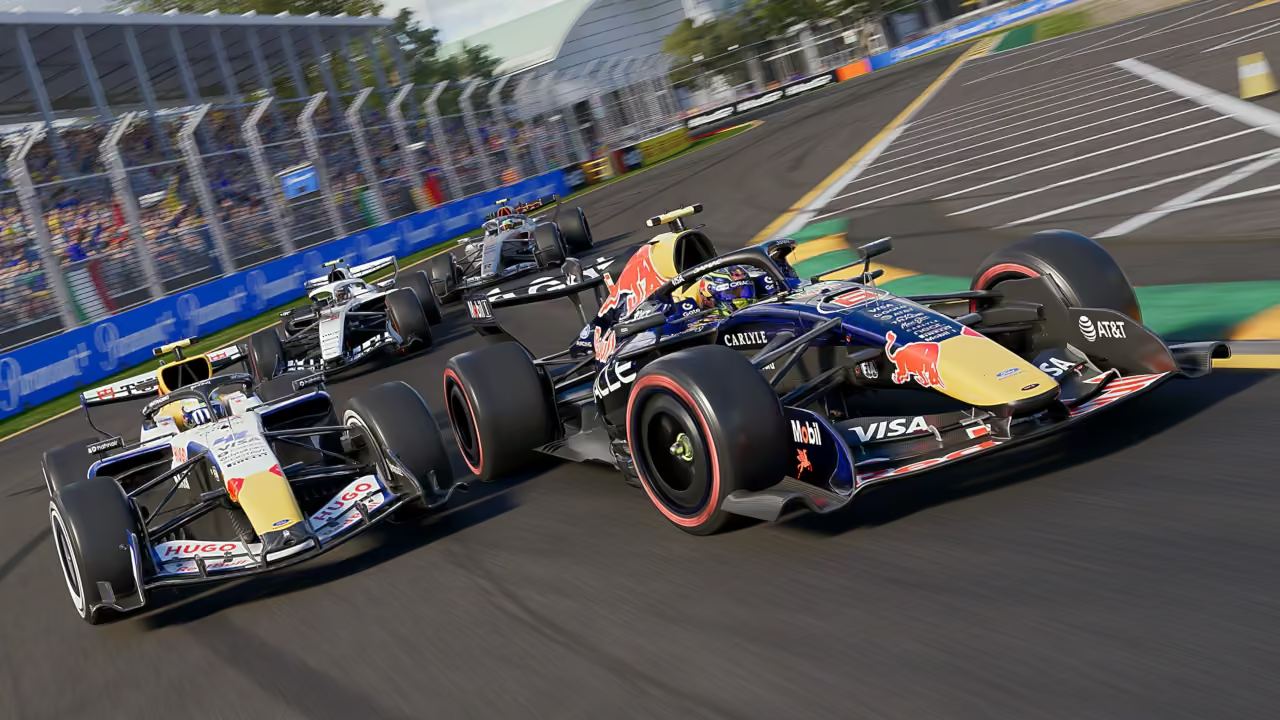
The success of this strategy will depend on what happens next.
Electronic Arts did not describe the absence of F1 26 as a simple year off. In its franchise announcement, the company called it part of a “strategic reset”, confirmed that F1 25 would cover both the 2025 and 2026 seasons and said the series would return in 2027 with a broader new experience.
That gives Codemasters more development time, but it also raises expectations.
Skipping an annual release makes sense if the extra year is used to address structural problems, rethink systems that have barely changed and build features that would have been difficult to deliver within the usual schedule.
If the 2027 game arrives with minor changes, familiar menus, the same multiplayer structure and long-standing problems carried over again, the obvious question will be what the extra development time achieved.
F1 2027 Can No Longer Be Just “The Next One”
The annual schedule always gave Codemasters a reasonable limitation to work around. With roughly twelve months between releases, nobody could expect a complete rebuild every year, especially from a licensed game tied to a real-world championship calendar.
That excuse will be weaker in 2027.
EA and Codemasters chose to keep F1 25 alive for a second season and publicly positioned the next game as something more ambitious. A new number, a few headline features and another set of updated cars will be judged against that promise.
The extra time should be visible in areas where the series has moved slowly: competitive online structure, ranked racing, support for wheel users, physics, artificial intelligence, the interface and other systems that cannot be refreshed by changing cars and driver line-ups.
EA no longer had to sell F1 26. In return, F1 2027 now has to show what the additional development cycle was used for.
Should Other Sports Games Copy This Model?
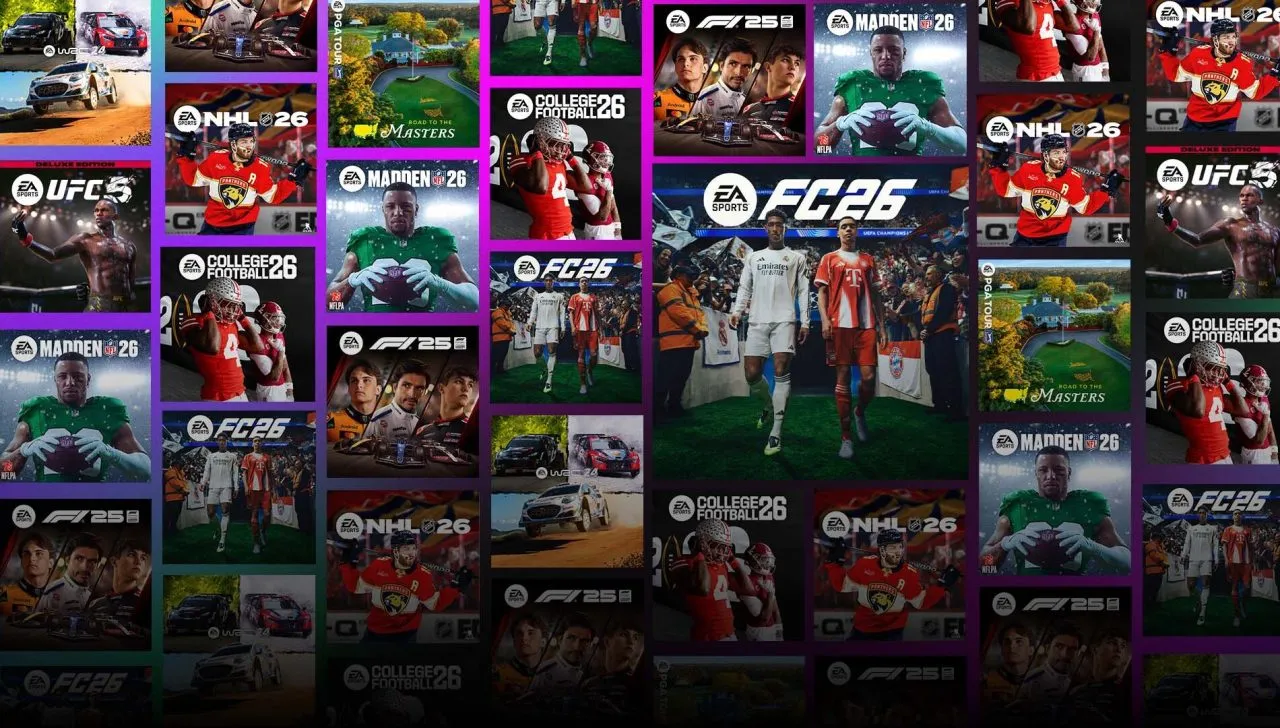
That does not mean every sports game should abandon annual releases.
There will be seasons where a new engine, a major physics overhaul, a new generation of hardware or a substantial redesign of the main modes justifies a separate product.
The part worth questioning is the automatic release of a new game because the calendar changed.
If most of a season’s work consists of new content running on technology that still works well, an expansion may be better for both the studio and the player.
It could also make full releases easier to understand. Instead of finding a handful of new features every year to justify another purchase, publishers could release a new game when the underlying product has changed enough to need one.
Two Months Later, the Question Has Changed
When we learned in November 2025 that F1 26 would effectively be replaced by an expansion, the discussion centred on whether EA had made the right decision and what players would get in return.
As of August 8, 2026, the Season Pack has been out for more than two months, F1 25 continues to receive updates and the current championship is running without a standalone F1 26.
That does not prove that this model should become the default for every sports game. It does show that a new season does not automatically require a completely new product.
So the absence of F1 26 is no longer the interesting part.
What matters now is what Codemasters does with the development time it would previously have spent building and selling another annual release.
You can purchase the base game by clicking here:
F1 26 never had to justify itself because it never became a standalone game. F1 2027 has a harder job: it has to show why breaking the annual cycle was worth it.
This website uses affiliate links which may earn a commission at no additional cost to you.