


As you already know, many professional racing drivers use simulation to train at home. Over the last decade, there has been an important shift in understanding that simulators can do much more than evaluate aerodynamics and vehicle models. You can partly learn and feel what a professional racing driver experiences in real life, right from your home.
Before the last Brazilian Grand Prix, Max Verstappen and Gabriel Bortoleto shared a very insightful point of view about this on the Brazilian podcast “Pelas Pistas.”
Sim racing is no longer just a game. For modern Formula 1 drivers, it is a serious training tool that helps them learn tracks, refine racecraft, and stay sharp between race weekends. Max Verstappen and Gabriel Bortoleto have both explained how they spend hours in professional-style simulators at home, preparing for real races with highly customized car and track models.
Why F1 Drivers Rely on Simulators
Real-world testing is tightly limited in F1 and the junior formulas, so drivers cannot simply do endless laps on track. Simulators fill this gap by offering virtually unlimited running with no tyre bills, no risk of damage, and instant access to any circuit on the calendar. Drivers can experiment with different setups, race strategies, and weather conditions in a controlled environment long before they arrive at the circuit.
Verstappen has described how he uses a heavily modded version of Assetto Corsa at home to prepare for Grands Prix, with car physics and circuits adjusted by his group to match reality better. He also uses iRacing for long endurance races, which helps him learn tracks like the Nürburgring Nordschleife in extreme detail before driving them in real life.
What Skills Sim Racing Develops
Sim racing builds the same core skills that real drivers need on track. High-speed laps demand precise steering, throttle, and brake control, which trains hand–eye coordination and fine motor control. Drivers constantly process visual information from braking boards, apexes, and rivals around them, improving spatial awareness and reaction times in the process.
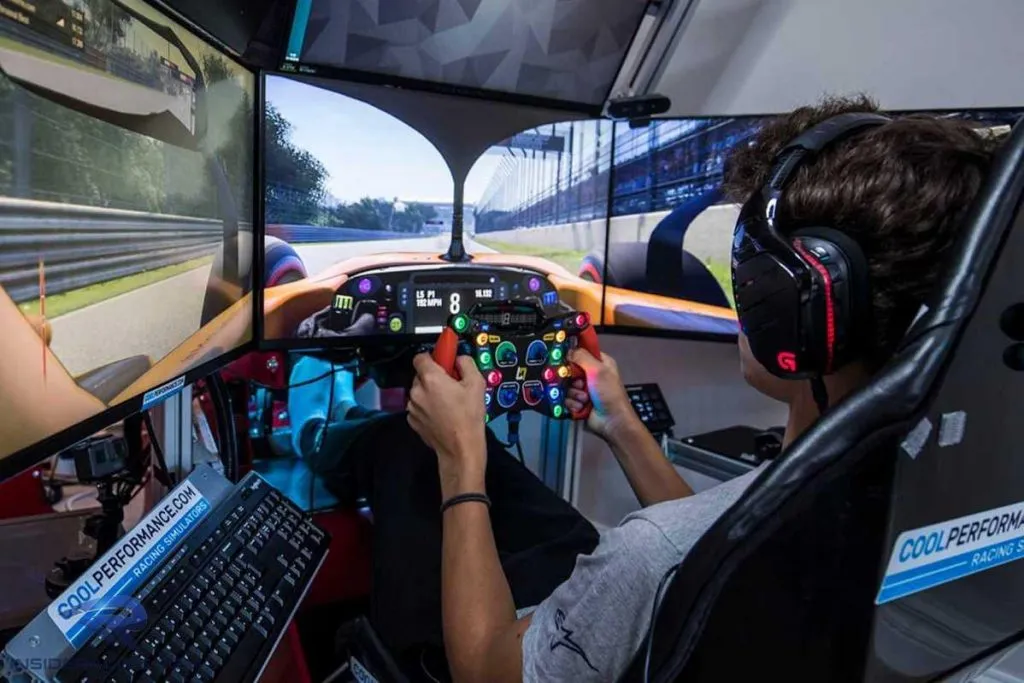
Simulators are especially valuable for racecraft. Verstappen and Bortoleto focus less on hotlaps and more on full races in the sim, practicing overtakes, defending, and surviving chaotic starts. This mirrors what happens in real competition and keeps their decision‑making and race reading sharp, without the consequences of real crashes or contact.
How Close Is Sim Racing to the Real Thing?
No simulator can perfectly reproduce G‑forces, fear, or the physical punishment of a real race car, but at the cognitive and technical level the gap is now surprisingly small. Laser‑scanned tracks in platforms like iRacing reproduce bumps, camber changes, and kerbs with high accuracy, so braking points and lines often transfer almost one‑to‑one to the real circuit.
Verstappen has said that after running several 24‑hour races at the Nordschleife in the sim, his first laps in a real GT car there felt natural: he already knew every corner, crest, and kerb. What changed was the grip level and the physical violence over bumps, not the track knowledge itself. Bortoleto reports a similar effect when arriving at new F1 circuits, such as Suzuka, after extensive sim preparation.
Replicating the F1 Training Experience at Home
The striking part for many fans is that the core of this training is built on consumer hardware and software. Verstappen’s home preparation uses a PC, a strong direct‑drive wheelbase, load‑cell pedals, and a cockpit—expensive but still within reach of dedicated sim racers. The software side is built on widely available titles such as Assetto Corsa and iRacing, customized with high‑quality mods and carefully tuned setups.
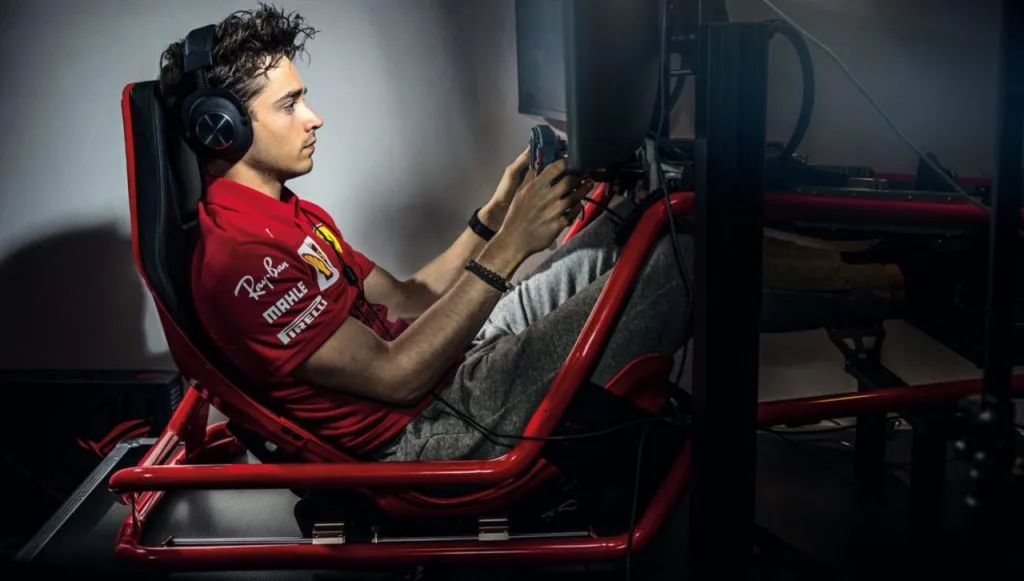
At home, a user can follow the same logic even with a more modest budget. A mid‑range wheel and pedals mounted to a stable rig or desk, a gaming PC or current‑gen console, and serious use of the right sims already bring you very close to the workflow used by real drivers. The goal is not to copy every detail of an F1 car, but to build a consistent, realistic environment where you can repeat laps, analyze mistakes, and improve.
Practical Tips to Train Like an F1 Driver in Sim Racing
- Treat it like real practice: Set fixed “sessions” instead of casual jumping in. Plan stints, fuel loads, and goals (race runs, qualifying pace, racecraft drills) just as a real driver would.
- Focus on races, not only hotlaps: Run full race distances with AI or online lobbies, work on starts, tyre management, and clean overtakes. This is exactly where Verstappen and Bortoleto put much of their simulator time.
- Use realistic cars and tracks: Choose laser‑scanned circuits and cars that behave like real GT, formula, or prototype machinery. Avoid “arcade” mods that reward unrealistic drifting or divebombs; they build bad habits.
- Analyze your data: Save telemetry or replays and compare laps to faster drivers. Look at braking points, minimum corner speeds, and throttle traces to understand where you are losing time, just like a real race engineer would do.
- Train your vision and mindset: Practice looking far ahead, using reference points, and staying calm during slides or mistakes. Working on concentration and mental reset after errors is one of the biggest benefits of sim training.
Living the Competition Feeling from Home
For a fan at home, sim racing offers something unique: the chance to experience a stripped‑down version of what professional drivers live every race weekend. When you strap into your rig for a league race, manage tyre temperatures over a stint, and fight for position into the last corner, you are tapping into the same mental processes that F1 drivers use on Sundays. The physics might not be perfect and there is no real danger, but the focus, pressure, and satisfaction are very real.
That is why so many professional drivers keep returning to their simulators even after long days in the car. Sim racing lets them experiment, compete, and keep learning without burning fuel or tyres. For sim racers, the message from Verstappen and Bortoleto is clear: if you approach your sim like a serious training tool, you are much closer to the real thing than you might think.
This website uses affiliate links which may earn a commission at no additional cost to you.