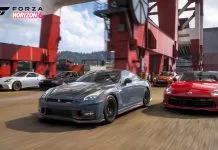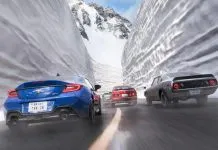

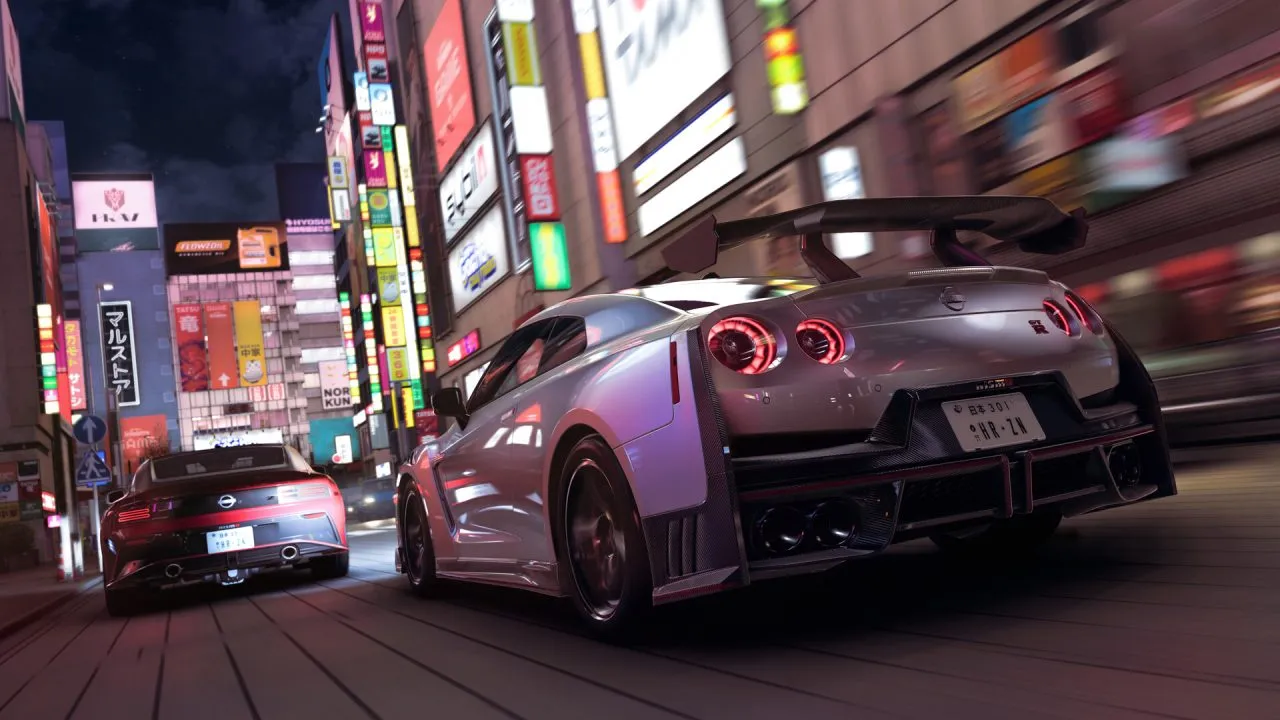
There is a fairly common trap when talking about open-world games: measuring them in kilometers. A bigger map, more roads, more cars… more of everything. It is an easy way to understand evolution, but it is also misleading. Because there comes a point where growing stops being interesting if what grows does not change how the game feels. And that is precisely what Forza Horizon 6 is beginning to suggest: this is not a scale expansion, but a quiet transformation of its own system.
What is interesting is not found in a spectacular trailer or an endless list of cars, but in small details that, taken together, change the internal logic of the game. It is like walking into a new city and not knowing exactly what is different, but everything flows in a different way. Suddenly, you do not have to force things to happen. They simply do. And that is where one of the key elements of this new installment appears: the world no longer presents itself as a set of activities you choose, but as a system that reacts and generates situations on its own.
In this context, the introduction of the R Class is not a simple technical addition, nor just another letter to memorize within the performance rating system. It is, in reality, a statement of intent. Defining cars as track-focused does not merely classify them, it also gives them direction. It signals what kind of experiences the game wants to push, where it wants to take competition, and how it expects players to interact with their vehicles. This is not just about organizing cars, but about building a deeper layer of specialization that influences events, builds, and competitive dynamics. It is a small conceptual shift that could have an enormous impact on how the game is played.
A World That Breathes
But where the evolution is most clearly felt is in what we might call the breathing world. So-called dynamic spawns may sound like technical jargon, but they actually describe something far more tangible: the game’s ability to introduce events, cars, or situations without the player having to explicitly activate them. It is the difference between selecting an activity from a menu and stumbling upon it while driving. Special cars appearing organically, challenges arising on the road, encounters that do not follow a fixed script… all of it points to a design where the player stops consuming content in a linear fashion and begins discovering it naturally.
To this is added another change that, at first glance, seems purely technical but carries far deeper implications: the elimination of loading screens in certain contexts, particularly in social activities and encounters. This is not merely about speed, but about continuity. Every interruption, however brief, breaks the illusion of a world. Removing those pauses makes everything feel more cohesive, more believable, more alive. Activities stop being separate blocks and become part of a continuous flow where it is hard to tell where one thing ends and another begins.
When you connect these pieces, namely the R Class, dynamic spawns, and the absence of loading screens, a clear pattern emerges: the game is no longer simply offering content, but reorganizing how that content is accessed. It changes the relationship between player and world. Before, we opened the map, dropped a waypoint, and drove in a straight line as if following an emotional GPS. Now, everything suggests that what is interesting will not lie only in the destination, but in what happens along the way. And that, however simple it sounds, is quite a significant paradigm shift.
This is where the comparison with Forza Horizon 5 becomes inevitable. That installment had already reached a level of scale and content where continuing to grow was relatively straightforward. But it also revealed a limitation: adding more did not necessarily make the experience richer. The truly difficult challenge was rethinking the structure without breaking what already worked. And that is what this new iteration appears to be attempting, with understated but highly significant moves.
There is even a slightly ironic dimension to all of this. For years, many players have optimized their experience to the point of turning it into a kind of task list: go from point A to point B, complete events, unlock rewards. Efficient, yes, but also predictable. If the system genuinely pushes toward a more dynamic and unpredictable world, it may gently compel players to abandon that mindset. To drive without a clear objective. To leave room for the unexpected. And, curiously, that could restore to the game a sense of freshness that does not depend on adding more content, but on reorganizing what already exists.
Sometimes it lies in how things connect, in how the experience flows without you having to think about it. If all of this comes to fruition, we will not simply be looking at a bigger world, but one that works differently. A world that does not need to be constantly activated by the player, because it is capable of generating moments on its own. And perhaps that is the true ambition behind this change: not to make a more extensive game, but one that, at last, genuinely feels alive.
You can purchase the game on Instant Gaming with a discount:
See you on the track!
This website uses affiliate links which may earn a commission at no additional cost to you.