
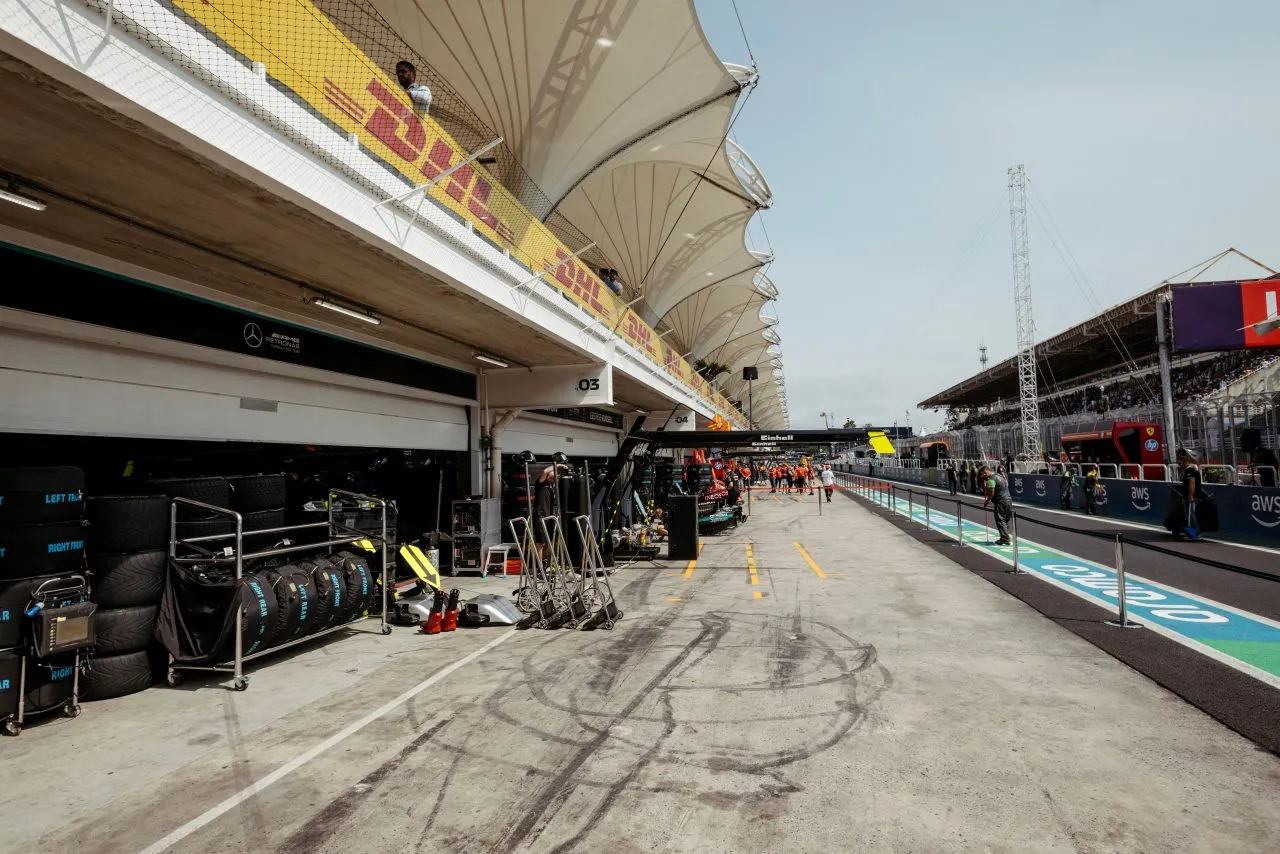

Horse racing and F1 or NASCAR look completely different, yet in both sports we can see the same principles.
Obviously, both of them are about speed and reaching the finish line faster than anyone else, but the parallels go deeper than that.
Both involve adapting to changing track conditions, interpreting huge amounts of performance information, and making split-second decisions. To the surprise of most people, both of them are also about data. F1 mechanics always look at even the smallest data points, and the things are the same with horse racing, especially with modern GPS and movement sensors.
But let’s dive deeper into the strategic and technical parallels between motorsport and thoroughbred horse racing.
Winning Is Not the Same as Going Fastest Immediately
This is the first major connection. A racing car capable of producing its fastest lap does not necessarily want to produce that lap immediately. There is something called strategizing, especially in the world of Formula 1, where drivers need to worry about protecting their tires, making sure they last till the end of the race, managing fuel, and strategic opportunities like a safety car for a quick pit stop.
Basically, Formula 1 is more about controlling the pace than going as quickly as possible.
If we ask professionals in the horse racing industry, we have a similar thing. A thoroughbred has a finite amount of energy and asking them for maximum effort too early can leave very little to the most important parts of the race.
This is exactly why sectional times are important. A horse that travels the opening part of a race too quickly almost always falls back later in the race, while another horse that conserved energy at the start might be very quick at the final stretch.
On some of the biggest horse racing events like the Breeders’ Cup Championships, horses now wear special GPS systems that measure that performance data, and trainers analyze speed, position, sectional times, and stride information during races. Even we as spectators and bettors want to know those numbers because when we bet on horse racing, knowing how the horse’s power is deployed may be the thing that separates a winning ticket from a lost one.
Track Position Can Be Worth Almost as Much as Raw Speed
Formula 1 fans know how powerful track position can become.
At circuits where overtaking is difficult, being ahead may be valuable enough that teams alter their entire race around keeping that position. The undercut exists partly because a driver can use fresh tires to jump a rival through the pit-stop sequence without physically passing them on track.
Thoroughbred racing has no pit lane, fortunately.
Imagine the paperwork.
But position matters just as much.
A jockey has to decide whether to settle behind horses, stay outside, save ground near the rail, or move early before traffic develops. Getting trapped behind a slowing rival can compromise a horse with plenty of energy remaining. Racing too wide can provide a clear path while requiring extra ground.
The parallel is not exact, but the strategic principle is.
Sometimes the shortest theoretical route is not the fastest practical route.
Telemetry Has Changed Both Sports
This is where the comparison becomes surprisingly technical.
Modern Formula 1 cars are rolling data centers. F1 says its cars carry more than 250 sensors and can generate more than a terabyte of data across a race weekend. Engineers use that information alongside driver feedback to refine setup, understand tire behavior, and diagnose problems.
Horse racing obviously cannot attach 250 sensors to a Thoroughbred.
The horse would object.
But it has begun moving in the same direction.
Equibase’s GPS tracking collects information throughout a race and can report sectional and cumulative times, average speed, stride count, average stride length, and stride frequency. When Equibase introduced GPS-enhanced charts, data was being captured every half-second for each horse.
Practice Is Really Data Collection in Disguise
Formula 1 practice sessions may look like drivers simply driving around before the race.
They are actually elaborate experiments.
Teams alter setup, try different tire compounds, vary fuel loads, and compare telemetry with driver feedback. Formula 1 defines setup as the combination of equipment and settings adjusted to suit the car, circuit, driver, and conditions.
Horse trainers perform a much less mechanical version of the same process.
Morning workouts provide information about fitness, responsiveness, and how a horse is progressing toward a race. Equipment, training workload, race distance, and surface are all selected around the individual animal.
Technology is making those sessions measurable too.
Both Sports are becoming obsessed With Predicting Problems Early
Motorsport telemetry is not used only to make a vehicle quicker.
It can also identify trouble.
Formula 1 engineers can see abnormalities in real time and begin investigating failures before a car has even returned to the garage. Former Ferrari engineer Rob Smedley has described how teams can know almost immediately that something has gone wrong because of the telemetry arriving from the car.
Horse racing technology is beginning to pursue a similar goal with welfare.
StrideSAFE uses a lightweight sensor containing GPS and motion-measuring technology to analyze a horse’s movement during racing. The aim is to detect changes in gait and movement patterns that may help identify horses requiring closer veterinary attention.
Final Thoughts
Motor sport and Thoroughbred racing share more than traveling from point A to point B as quickly as possible. Both are all about strategy, pace, and squeezing all the performance in sections where it matters the most.
On top of that, both winners celebrate with champagne after the race. The only difference is that in F1, cars return to the garage, while horses return to the stables.
This website uses affiliate links which may earn a commission at no additional cost to you.