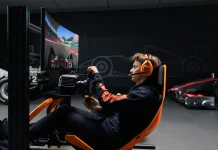


For Gabriel Bortoleto, sim racing is not just a hobby between race weekends; it is one of the main tools he uses to prepare for Formula 1 and compress the learning curve of every new circuit he visits.
From gaming with Verstappen to a serious training routine
In a recent podcast with Max Verstappen, Bortoleto explains that their friendship really deepened once he reached FIA F3 and started spending serious time racing together on the simulator at home rather than just hotlapping alone. They focus far more on racing each other than on pure time‑attack, using long multiplayer sessions to practice overtakes, defending and race situations that are hard to reproduce in limited real‑world running.
Bortoleto notes that because they race so much together in the sim, he already knows how Verstappen will position the car in certain corners and how to respond, which later translated directly to real F1 battles such as their fight in Budapest. This close‑quarters, wheel‑to‑wheel practice is one of the key reasons he considers the simulator a fundamental part of his development.
Learning new F1 tracks before ever arriving
Bortoleto has been very clear that his home simulator has been crucial for learning new circuits like Montreal, Shanghai and Suzuka before he ever turns a real‑world lap there. He describes doing 400–500 laps at home on a given track, then another 80–90 laps on the Sauber team simulator, so that when free practice begins he feels as if he has already driven there many times.
At Suzuka, a track he had never visited before 2025, Bortoleto says his first laps in F1 were already “spot on” compared with his team‑mates, and that he felt like he had been there in the past thanks to the sheer volume of sim mileage he had done beforehand. He reports a similar sensation in Montreal and China: on his first real runs, instead of spending laps trying to remember where the track goes, he can immediately work on details such as braking references, curb usage and tyre management.
Customising virtual tracks to match reality
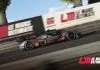
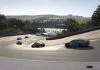
To make that preparation as realistic as possible, Bortoleto works with friends and modders to fine‑tune the virtual versions of F1 circuits he uses at home. Using Assetto Corsa with custom physics and track mods similar to the set‑up Verstappen mentions in the podcast, they adjust curbs, bumps and surface profiles so that the sim behaves much closer to the real track than default content would allow.
Bortoleto explains that if, for example, a real curb is harsher or a bump exists in reality but not in the sim, he asks his modding friends to modify the track file until it matches his real‑world references as closely as possible. That way, when he arrives at an F1 weekend he is not surprised by the car’s reactions over kerbs or compressions and can commit with more confidence from the very first push laps.
Home sim vs. factory simulator: different jobs
In this podcast and later interviews, Bortoleto clearly separates the roles of the home simulator and the team’s professional simulator at Hinwil. At Sauber, the factory sim is “work”: he uses it to evaluate set‑up changes, test new aero packages and prepare run plans together with engineers, often without chasing ultimate lap time.
At home, the focus is different. There, he spends full days on the rig from early afternoon until late evening, mixing F1 cars, GT3s, hypercars and even rallying, usually racing friends online and constantly trying to beat each other’s laps. He stresses that this informal but intense environment keeps his racecraft sharp, forces him to analyse why he is slower in specific corners and effectively trains his brain to think like a driver all day long, even when he is not at the track.
A new‑generation approach to driver development
Bortoleto openly contrasts his routine with that of older drivers such as Nico Hülkenberg, who admits he never really “clicked” with games or home sims and prefers to restrict his virtual work to the team simulator only. The Brazilian believes that for his generation, growing up with high‑quality sim software means that in 10–15 years almost every professional driver will have a strong simulator background and that skipping sim work will become rare.
Importantly, he does not claim that sim training alone guarantees success, but he is convinced that it gives him an extra edge: when he sits in the real car he wastes less time adapting, already understands the logic of the circuit and can focus sooner on set‑up and tyre preparation. In his words, spending “days and days” in front of the rig is simply what fills the gap between the gym and the track, and it has become one of the pillars of how he prepares to compete at the highest level of motorsport.


Very few pictures of his setup have been made public, and what we have is probably already obsolete, but we can infer what a resourceful driver like him might be using now. Let’s guess a bit!
| HARDWARE | COMPONENTS |
|---|---|
| Base | Simucube 3 Pro |
| Wheel | Sim-Lab Mercedes AMG-Petronas F1 |
| Pedals | Simucube Pedals |
| Shifter | Sim-Lab SQ1 Sequential Shifter |
| Handbrake | Sim-Lab SQ1 Sequential Shifter |
| Monitor | LG 32G600A-B'' |
| VR | NA |
| Cockpit | Sim-Lab P1X Ultimate Cockpit |
| Seat | Sparco GP Gaming Seat |
| PC | March 2026 Sim Racing PC Build |
| Headsets | Logitech G PRO X 2 Lightspeed |
| Keyboard and Mouse | Asus ROG Strix Scope II 96 |
As you can see, we are guessing almost the top, as an F1 driver would.
This season will be interesting, with a new set of regulations for every manufacturer and driver. The rapid adaptation to the rules and the car could be determinant in finding a new champion this year.
Other F1 driver simulators:
- Lando Norris
- Charles Leclerc
- George Rusell
- Carlos Sainz
- Checo Perez
- Fernando Alonso
- Antonio Giovinazzi
- Max Verstappen
- Oscar Piastri
Happy Racing!
This website uses affiliate links which may earn a commission at no additional cost to you.