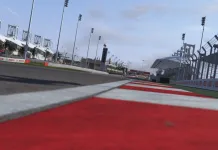


Next-generation hardware has pushed racing titles closer to real-world driving than many players expected, closing the gap between simulation and sport at remarkable speed. Not long ago, most people were working around the limits of mid-range GPUs, ageing monitors, and gear-driven wheels that delivered the essentials but little else. Today’s landscape is almost unrecognisable. Cards like Nvidia’s RTX 4080 Super and AMD’s RX 7900 XTX deliver crisp images and handle demanding effects with ease. Spotting texture changes on laser-scanned circuits in Assetto Corsa Competizione and seeing headlights bounce off damp kerbs in iRacing does more than look impressive; it sharpens your reactions.
Sharper Visuals and Better Decision-Making
The skill of reading data quickly is not limited to the track, yet it strongly shapes how racers handle rapid turns. Players often consult trusted sources before making decisions in any gaming field. The same pattern shows up in online casino and poker environments, where people rely on independent guidance to understand how different markets work—especially those operating across borders. In that setting, players might also learn from PokerScout experts who break down how reputable offshore platforms operate and what factors demand strategic thinking. Independent reviewers act as a compass, highlighting operators with clear advantages, reliable support, and proven track record, much like a finely tuned race car gives a driver confidence. A solid, dependable foundation makes split-second choices easier, whether you’re adjusting your setup or committing to a late-braking move at Stowe.
When we crank up the frame rate, the picture sharpens and the fog lifts. Running ACC, iRacing, or F1 24 at 144Hz or above doesn’t just smooth the image; it tightens input response, reducing the delay between a driver’s action and what appears on-screen. Tackling sequences such as Maggots and Becketts becomes noticeably easier when the view remains stable, rather than blurring under load. During fast straightaways or damp races, older graphics cards falter, leading to hiccups exactly at the moment accuracy is vital. Modern cards hold their flex on a blustery day, allowing players to zero in on grip shifts and avoid getting distracted by a drop in output.
Advanced Processing Power Behind Modern Physics
The jump in CPU power produces just as bold a result. BeamNG.drive, known for its extraordinary soft-body physics, relies on powerful multi-core processors to handle suspension movement, chassis flex, and crash calculations. With a chip like the Ryzen 7 7800X3D, you get the power to run demanding scenes smoothly, letting the graphics stay lush while the hardware stays comfortably cool.
Today’s tyre sports use clever engineering that wasn’t possible a decade ago. iRacing updates its contact patch constantly, adjusting grip, temperature, and pressure in real time. If you run the code on an older chip, the numbers lag and the frame rate flickers. Because today’s CPUs move data in a steady stream, a driver can actually feel the precise tick when the car starts to swivel and the instant the tyres bite again at the corner’s end.
Displays That Keep Up With the Action
As with other devices, monitors have recently made a big jump. The LG 27GR95QE and Samsung Odyssey G8 OLED panels deliver rapid response and strong contrast, so drivers can more clearly sense delicate movements, whether it’s a mild under‑turn or a barely felt wheel lock. If you played on an older LCD, swift corners would get blurry, and you’d have a tough time reading the direction shift. The latest displays keep motion crisp, giving players the confidence to push deeper into technical sections.
Ultrawide monitors and triple-screen arrangements expand peripheral vision, bringing a more natural field of view to tracks with sweeping corners like Suzuka or Interlagos. The rise of VR has tracked the speed of modern tech. The Meta Quest 3 and Pimax Crystal both offer razor‑sharp graphics, expansive field‑of‑view choices, and foveated rendering that keeps the GPU humming without losing detail. The experience is immersive and surprisingly rooted, leaving behind the vague, unsteady feeling that plagued the earliest headsets.
The Rise of Direct-Drive Wheels and Smart Pedals
Direct-drive wheel bases have arguably delivered the single biggest improvement to realism. Models like the Fanatec DD1, Moza R12, or Simucube 2 Sport connect the motor straight to the wheel rim, removing the belts and gears that once absorbed fine detail. With direct drive, drivers feel micro-adjustments: the moment a GT3 car breaks traction through Eau Rouge, the instant the rear steps out in a Porsche Cup car, or the tiny ripples on Sebring’s notoriously rough surface. With the current tuning tools, you can now shape torque curves, set damping levels, and rebuild forces exactly how you want them.
Motion, Haptics, and a More Connected Driving Experience
If you’ve ever wanted a shaking seat but dreaded the size, modern motion rigs give you that feeling in a compact package. Devices such as the Next Level Racing Motion Plus or PT-Actuator systems replicate traction loss, kerb impacts, and elevation changes with surprising nuance. Paired with haptic gear powered by SimHub, like Buttkicker transducers or the HF8 haptic pad, drivers receive extra feedback through vibration patterns that mirror engine notes, surface changes, and wheel slip.
Hardware That Enables True Competition
In tournament play, the gradual upgrades stack up, making the difference unmistakable. If you watch the Porsche TAG Heuer Esports Supercup or SRO Esports, you’ll notice the drivers trust gear that never varies from one session to the next. Direct-drive wheels deliver predictable self-aligning torque, hydraulic pedals offer stable braking points, and high-refresh displays keep everything clear during intense wheel-to-wheel battles. The tech stopped being a mishmash of gadgets and turned into a smooth platform. Drivers can now sharpen their technique rather than wrestling with wobbly inputs.
Conclusion
Next-gen hardware has transformed racing games, delivering clarity, precision, and lifelike feedback that older systems could not match. With powerful GPUs, fast displays, direct-drive wheels, advanced pedals, motion systems, and smarter processors working together, sim racers can push limits on a level of immersion once reserved for professional simulators.
This website uses affiliate links which may earn a commission at no additional cost to you.