
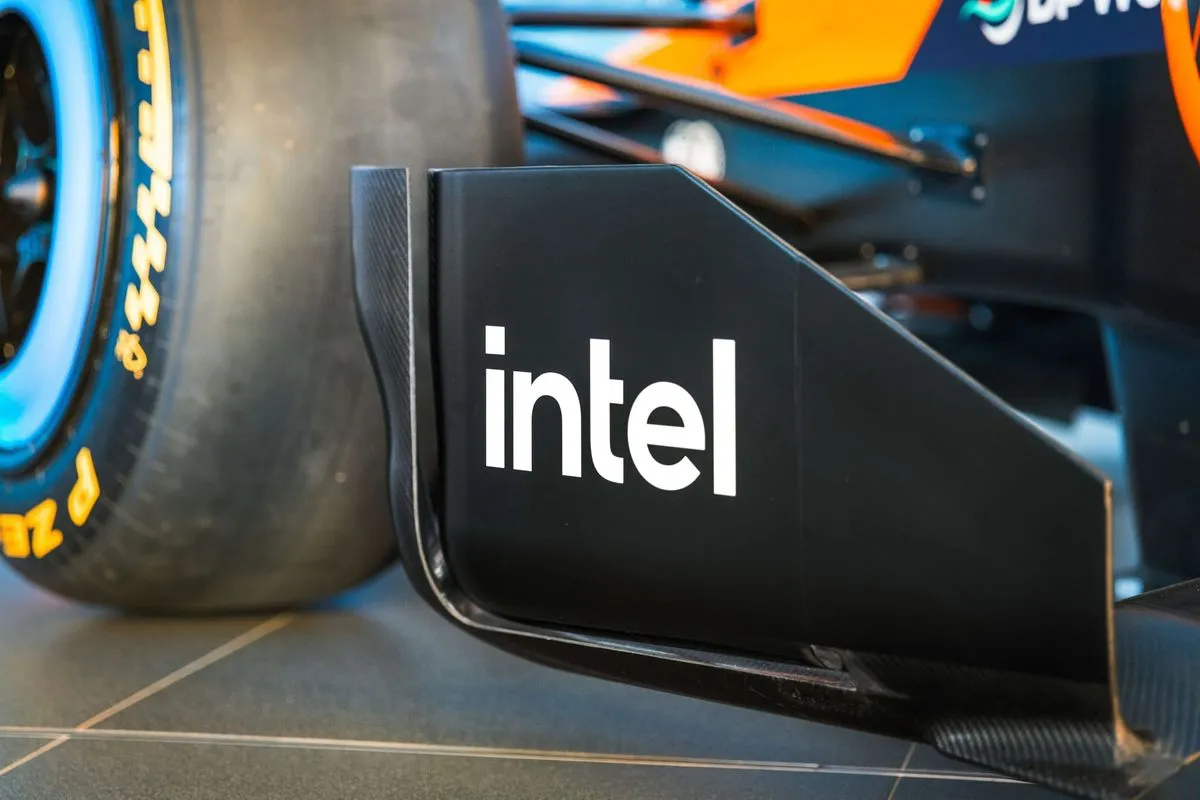

I’ll admit it, the news made me smile. After watching Intel take hit after hit in the processor market for years, with AMD eating away at its server share and NVIDIA dominating the AI conversation, it turns out the money generated by artificial intelligence is giving the company enough breathing room to indulge in something it had been avoiding for a long time: jumping into Formula 1. And not in just any way, but as Official Compute Partner of McLaren Racing.
When I first read the announcement, I thought we were looking at one of those textbook sponsorships: logo on the car, photo with the driver, and move on. But the agreement goes considerably further. The alliance is multi-year and extends not only to the F1 team, but also to Arrow McLaren in IndyCar and even to the F1 Sim Racing squad.
The interesting part lies in the technical content. McLaren is going to use Intel Xeon and Intel Core Ultra processors for workloads that, honestly, are where a race is decided long before the engines fire up:
- Aerodynamic simulation and CFD
- Vehicle dynamics
- Telemetry analysis
- Tyre degradation prediction
- Pit stop strategy
- Real-time decision making from the pit wall
In other words, Intel doesn’t want to be a sponsor, it wants to be part of the workflow, from the McLaren Technology Centre in Woking all the way to the garages during race weekends.
Why This Move Makes All the Sense in the World
This is where the context gets juicy. For months now we’ve been reading that Intel is selling more server CPUs than ever, and the reason is fairly obvious: the AI gold rush has triggered an explosion in compute demand. With that fresh cash in the bank, the company can finally afford to play a game its competitors had been playing for quite a while.
Because let’s be honest: Intel was arriving late to the paddock. Let’s review who was already inside:
- AMD signed with Mercedes-AMG Petronas back in 2022, bringing its EPYC chips to aerodynamic simulation.
- Qualcomm has Ferrari as a Premium Partner via Snapdragon, though more focused on road cars and connectivity.
- HP also with Ferrari, Oracle with Red Bull, Google (Gemini) with McLaren, and Anthropic (Claude) with Williams.
- And as technology partners of F1 itself: Lenovo and AWS.
Wherever you look, the grid feels more like a Computex on wheels than a sporting championship. Intel simply couldn’t afford to keep watching from the sidelines.
F1 Is No Longer Won on the Track Alone
This is the part of the analysis that fascinates me the most. Twenty years ago, an F1 team won with a strong engine, a competitive chassis, and a fast driver. That trio still matters today, but the real margin lives somewhere else: in how many simulations you can run before the Grand Prix, how quickly you close the aerodynamic iteration cycle, and whether your digital twin of the car predicts better than your rival’s what’s going to happen with the tyres on lap 32.
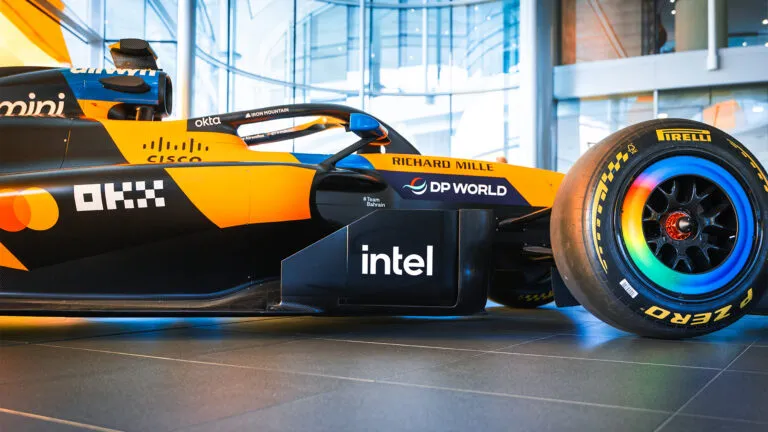
Intel talks about edge computing trackside, AI platforms to accelerate design cycles, and advanced computing for digital twins. Translated into plain English: process more data, react faster, and turn information into useful decisions over the course of a race weekend.
And no, Intel isn’t arriving to sweep away the existing ecosystem. Dell, for example, has been deeply integrated with McLaren for years, boasting figures such as decision cycles up to 90% faster compared to manual analysis and design update deliveries 30% quicker. Intel joins as a specific layer: processors, AI, high-performance computing, and low latency. A reinforcement, not a replacement.
When Will We See the Logo?
In terms of pure visibility, mark these dates on your calendar:
- Canadian Grand Prix (late May): debut of the logo on the F1 McLarens.
- Freedom 250 in Washington D.C.: presence on the Arrow McLaren IndyCar entries.
- 2027 Indianapolis 500.
- Next F1 Sim Racing season: logo on the virtual car and on the simulator rig.
Looking at the deal coldly, I think Intel needed this more than McLaren did. The Woking outfit already had Google, Dell, and a solid technology ecosystem behind it. Adding Intel is welcome, but it isn’t transformational.
Now all that’s left is to see whether all this compute muscle translates into something more important: that Norris and Piastri can find the tenths they’re missing to fight for the championship once again.
See you on the track!
This website uses affiliate links which may earn a commission at no additional cost to you.