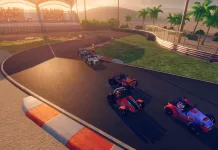


There’s an idea we repeat a lot in any competition: “if it’s fair, it’s fun.” It sounds simple… until you find yourself in a race where someone decides that rules are optional. In that moment, you understand that fair play isn’t a pretty phrase it’s a system. And, above all, it’s work.
What surprised me about this context wasn’t just the number, but what it implies: 300,000 protests processed in 2025, with peaks of 1,000 per day. That scale doesn’t describe a “support team.” It describes an operation. A sustained commitment to make competing feel more like a sport and less like a jungle.
In competitive racing, there’s an enemy that doesn’t always make noise: the normalization of chaos. I’m not talking only about obvious cheating I’m talking about the everyday stuff:
- The nudge “just because” during a braking zone,
- The late close-off “because nothing ever happens anyway,”
- The automatic excuse of “it was an accident.”
In an environment like that, the fast people are still fast… but the experience becomes fragile. And when trust breaks down, competition loses meaning.
That’s why this point is so powerful: it’s not just about punishing. It’s about protecting the quality of the environment.
Here’s the interesting twist: many platforms get stuck at one of two extremes:
- Heavy-handed (ban and done), or
- Hands-off (report it, but nothing ever happens)
This approach, by contrast, introduces a third path: coachable feedback.
Having a response that can be formative changes the entire tone. Because the message isn’t just “that was wrong” it’s:
“That was wrong, and here’s why, so you don’t do it again.”
That difference seems small, but at a community level it’s enormous. It’s a shift from the logic of “cops and robbers” to “competitors learning to coexist.” When you read 300,000 protests, you might think, “wow, that’s a lot of conflict.” I read it differently: it means there’s a clear route to channel the problem, and that someone on the other end actually responds.

And when you see 1,000 per day at peak times, it becomes obvious that this isn’t improvised. It requires:
- Processes,
- Criteria,
- Consistency,
- And a standard that’s maintained even when volume is at its highest.
That’s what I call “industrialized fair play”: not relying on chance, or on the luck of “today happening to be a good crowd,” but having a structure that makes doing the right thing the default.
There’s something that often gets overlooked: in competition, almost everyone sees themselves as “the good guy.”
“I was just defending my line.”
“He left me no room.”
“I didn’t see him.”
“I was ahead, but he was too.”
In that grey area, an educational system carries more weight than punishment. Because it doesn’t just correct an action it corrects an interpretation. And if you change how people interpret what’s acceptable, you reduce the problem at its source.
That’s why the most valuable part of this approach isn’t the occasional suspension. The most valuable part is the silent accumulation of learning.
I’ll say it plainly: competing seriously is a privilege. Not out of elitism, but because it requires an implicit agreement:
“I respect you on track; you respect me on track.”
When that agreement holds, the race becomes a place where you can push yourself, take calculated risks, and improve. When it doesn’t, everything is reduced to survival.
That’s why I find it so meaningful that there’s a dedicated investment in keeping the environment clean and fair. In a world where many competitive experiences resign themselves to the noise, this is a bet on something harder: trust.
If I had to sum it up in one sentence, it would be this:
“Fair play doesn’t appear by magic. It’s built.”
And building it at scale with 300,000 cases per year, peaks of 1,000 per day, and a coachable feedback approach is a statement of intent: the competition matters just as much as the technology that makes it possible.
- Remember, you can join iRacing clicking here.
And, honestly, you feel it on track. Because when you know the environment is being looked after, you compete differently too.
This website uses affiliate links which may earn a commission at no additional cost to you.