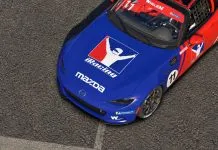



There are cars that teach you with patience. There are cars that teach you the hard way. And then there was the old BMW M2 from iRacing, a car that seemed designed by a driving instructor with a drill-sergeant complex and a worrying enthusiasm for watching you suffer.
You’d enter a corner with too much confidence and the car would tell you, in essence, “perfect, I see you’ve chosen to meet your maker today.” Brake a little late, load the weight wrong, open the throttle with more enthusiasm than talent, and suddenly you’re staring at the wall with the dignity of a washing machine tumbling down a staircase.
But there was something to it. Something important. Uncomfortable, yes, but valuable.
The old M2 didn’t coddle you. It didn’t tell you everything would be fine. It forced you to understand that driving fast isn’t about turning the wheel and hoping the car works magic. It taught you, by force, that a car is driven with your hands, your feet, your sense of balance, and that small part of the brain we normally use to avoid saying something stupid at family gatherings.
It taught you trail braking. It taught you weight transfer. It taught you respect for the throttle and the brake.
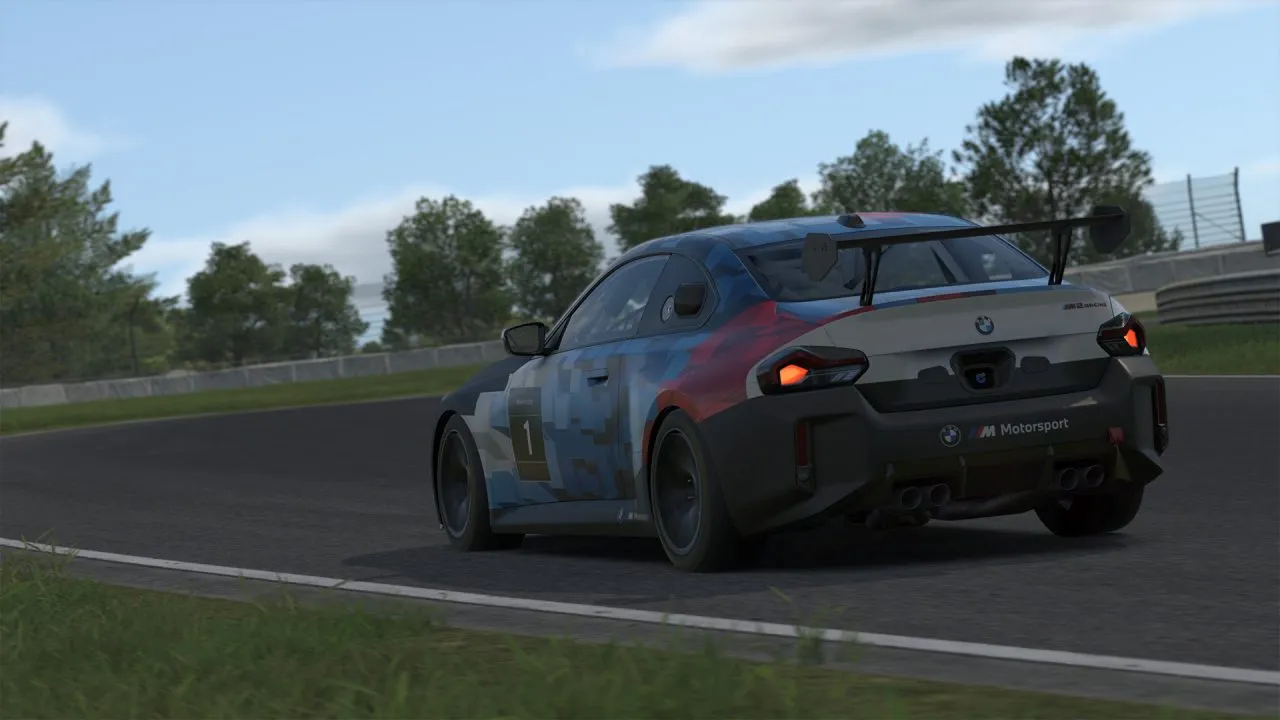
A rookie car isn’t designed for people who’ve spent years shaving tenths off their Nürburgring lap times while debating tire pressure as if solving Europe’s energy future. It’s designed for someone who just got started, who’s still trying to remember where the braking point is, how not to lock up, how not to take out three cars in the first corner, and why their steering wheel is vibrating as if it had a colony of bees inside it.
For that driver, the new M2 can be a blessing. It lets you get on track. It lets you race. It lets you learn traffic awareness, patience, spacing, rhythm, and basic survival. And that’s no small thing. Because before you learn to dance with the car’s weight, maybe you first need to learn not to step on everyone else’s toes on track.
Are We Training Drivers, or Just Keeping Them From Quitting?
These are two very different philosophies. The first says: “I’m going to teach you to drive well, but you’re going to suffer a bit.” The second says: “Let’s make sure you don’t crash every three minutes, and you’ll learn the rest later.”
This isn’t about terror. It’s not about every corner feeling like a game of roulette with tires. It’s about that small sense of respect that makes you think before you act. The moment your right foot asks permission before flooring the throttle. The instant you understand that the brake isn’t an off switch, but a tool for shifting the car’s weight forward, loading the front axle, and helping it turn.
The old M2 had plenty of that. It didn’t let you be careless. Well, it did but only once. Then it punished you publicly, in front of everyone, like a TV host pointing out your mistake with a cruel smile and an unnecessary slow-motion replay. And that’s why some drivers miss it. Not necessarily because it was perfect. Maybe it wasn’t. Maybe it was exaggerated. Maybe it was more caricature than car. But it had character. It had teeth. It had a very clear way of saying: “Learn this now, because otherwise a GT3 is going to feel like a spaceship with self-esteem issues.”
The new M2 doesn’t give that same feeling. It’s easier to turn in, brake, steer, accelerate, and stay alive. That probably produces cleaner racing. It also reduces frustration. But it might leave some fundamental lessons untaught.
Forgiving too much can create false confidence. It’s like learning to cook using only pre-made meals. Sure, you eat. Sure, you don’t burn the kitchen down. But the day someone asks you for a risotto, you end up sweating over a pot as if defusing a bomb.
Driving fast comes with a necessary dose of discomfort. You have to make mistakes. You have to feel the car protest. You have to discover that not everything is fixed by turning more. In fact, often turning more is exactly how you make the problem worse one of those cruel truths of motorsport, right alongside “braking late doesn’t always mean braking well” and “expensive pedals don’t make you Verstappen.”
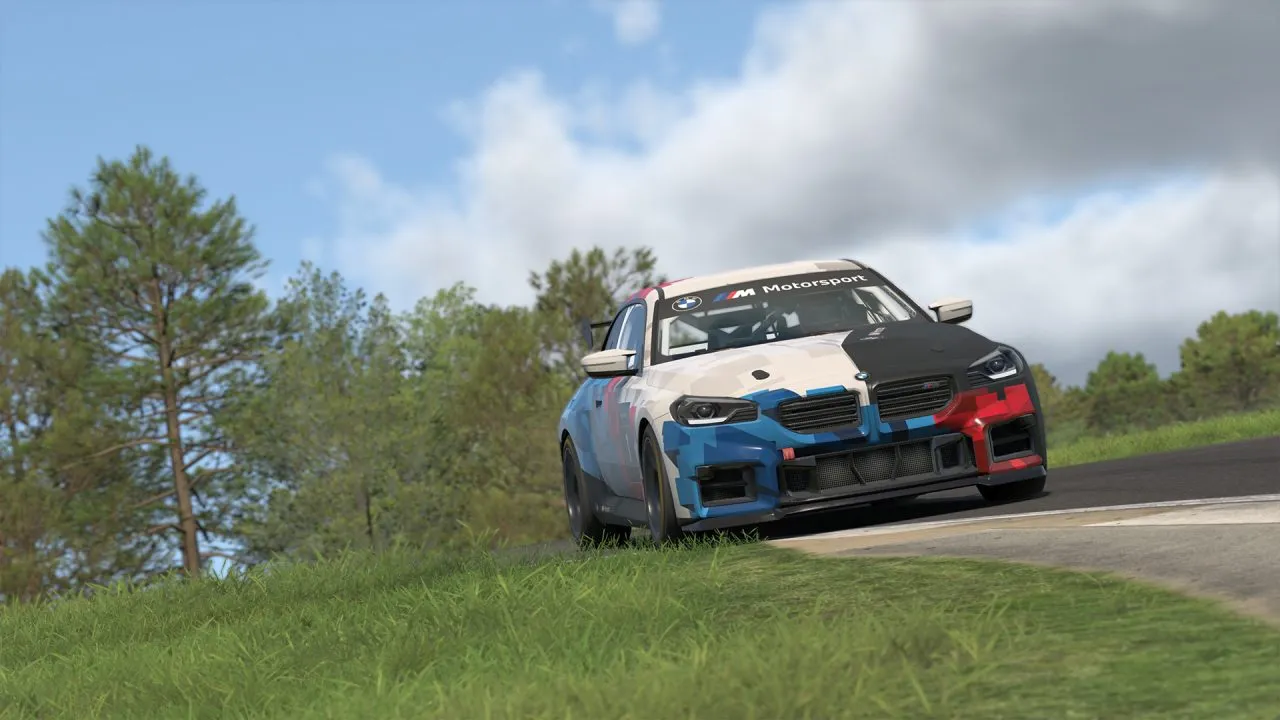
A rookie needs to learn how to race, not just how to control a nervous car. They need to learn to leave space. To check mirrors. To not try to win the race in the first corner. To understand that a three-lap battle is worth more than a suicidal overtake that smells like a stewards’ report. They need to finish races, build experience, and discover that raw pace means nothing if you end up parked in the gravel staring into the void.
If the new M2 helps more people finish races, maybe it’s doing its job. Because a clean race also teaches. It teaches patience. It teaches consistency. It teaches risk management. It teaches something many fast drivers forget: that the other car isn’t a moving obstacle, but a person trying to survive just like you.
So Which One Is Better?
It depends on what iRacing wants a rookie category to be. If the goal is to filter, toughen up, and prepare drivers for more demanding cars, then the car needs some bite. It should demand technique. It should teach that weight shifts, that the brake also helps turn the car, and that the throttle isn’t a reward lever.
If the goal is to attract, retain, and reduce chaos, then the new M2 makes complete sense. It’s friendlier, cleaner, easier to understand. It might not make you a better driver as quickly, but it keeps you in the game long enough to want to keep learning. Maybe the problem isn’t that the new M2 exists. Maybe the problem is that it emotionally replaces the old one.
Because there’s room for both kinds of learning. Learning shouldn’t be a wall. It should be a slope. The new M2 can be the first step. A good first step, even. So maybe the new M2 isn’t a bad car. Maybe it’s exactly what many rookies need: a place to start, somewhere to make mistakes without every error ending in an embarrassing replay.
But it’s also worth remembering something: good drivers aren’t born from cars that do everything for them. They’re born from cars that, every once in a while, tell them the truth.
- Remember, you can join iRacing by clicking here.
See you on the track!
This website uses affiliate links which may earn a commission at no additional cost to you.