

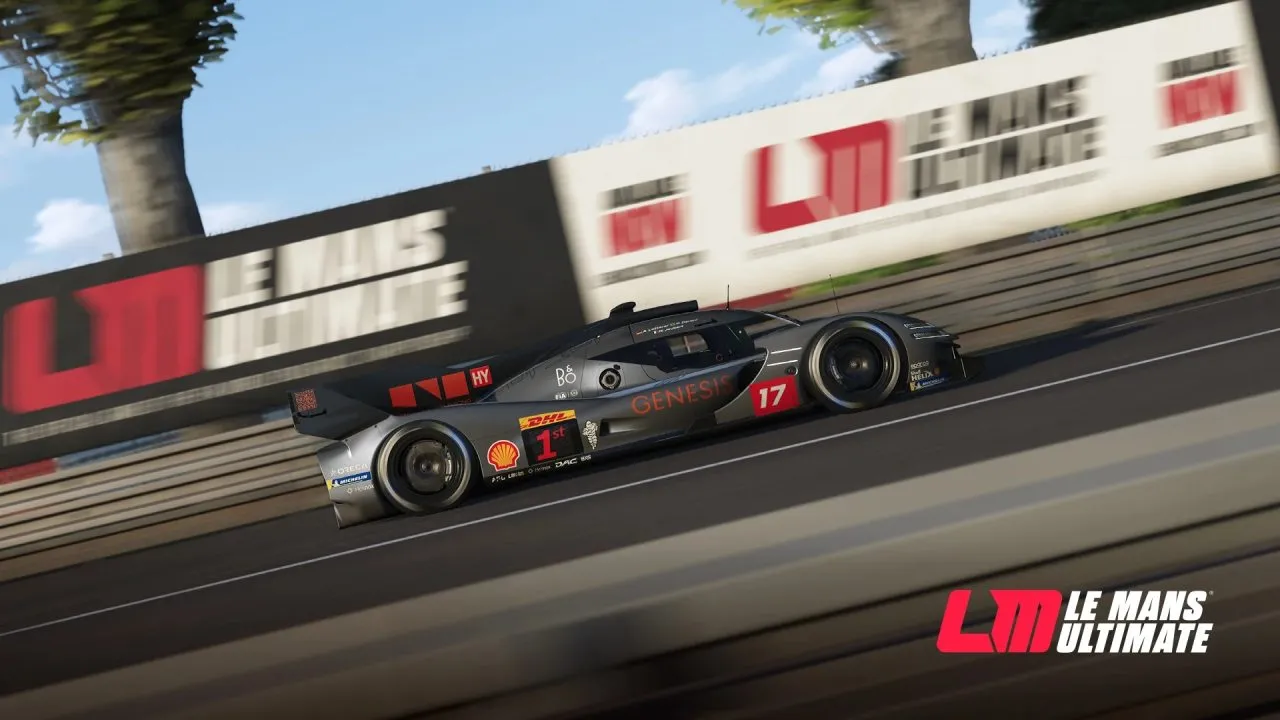
The latest Le Mans Ultimate update introduces the Genesis GMR-001 as a free addition, the only all-new Hypercar from the 2026 WEC season. Beyond its immediate impact for players, the move reinforces the title’s strategy of aligning in real time with the evolution of endurance racing.
A next-generation Hypercar available before hitting the track
The Genesis GMR-001 is not just new content—it’s a digital-first debut. The car has yet to officially compete following the postponement of the Qatar 1812 km, with its real-world premiere now scheduled for Imola in April. However, Le Mans Ultimate players can already experience it in a simulated environment.
This early-access approach highlights a growing trend: turning simulators into parallel platforms for validation and technological showcase for manufacturers and championships. From a positioning standpoint, the title moves closer to a “digital twin” model of the WEC, where content doesn’t just replicate reality—it anticipates it.
LMDh architecture and Genesis’ technical strategy
The GMR-001 is built under LMDh regulations and shares its foundation with other key Hypercars on the grid, such as the Alpine A424 and the Acura ARX-06, all based on an Oreca LMP2 chassis. This standardization reflects the cost-control and competitive balance philosophy that defines the category.
However, Genesis introduces a key differentiation in its powertrain. Instead of the commonly used twin-turbo V6, it opts for a 3.2-liter turbocharged V8. This engine shares approximately 60% of its components with the four-cylinder unit used in the Hyundai i20 N Rally1, showcasing a clear internal technology transfer strategy within the Hyundai group.
From a brand perspective, this decision reinforces Genesis’ identity as a premium division, combining performance with engineering derived from motorsport.
Driving impressions: stability with a narrow margin for error
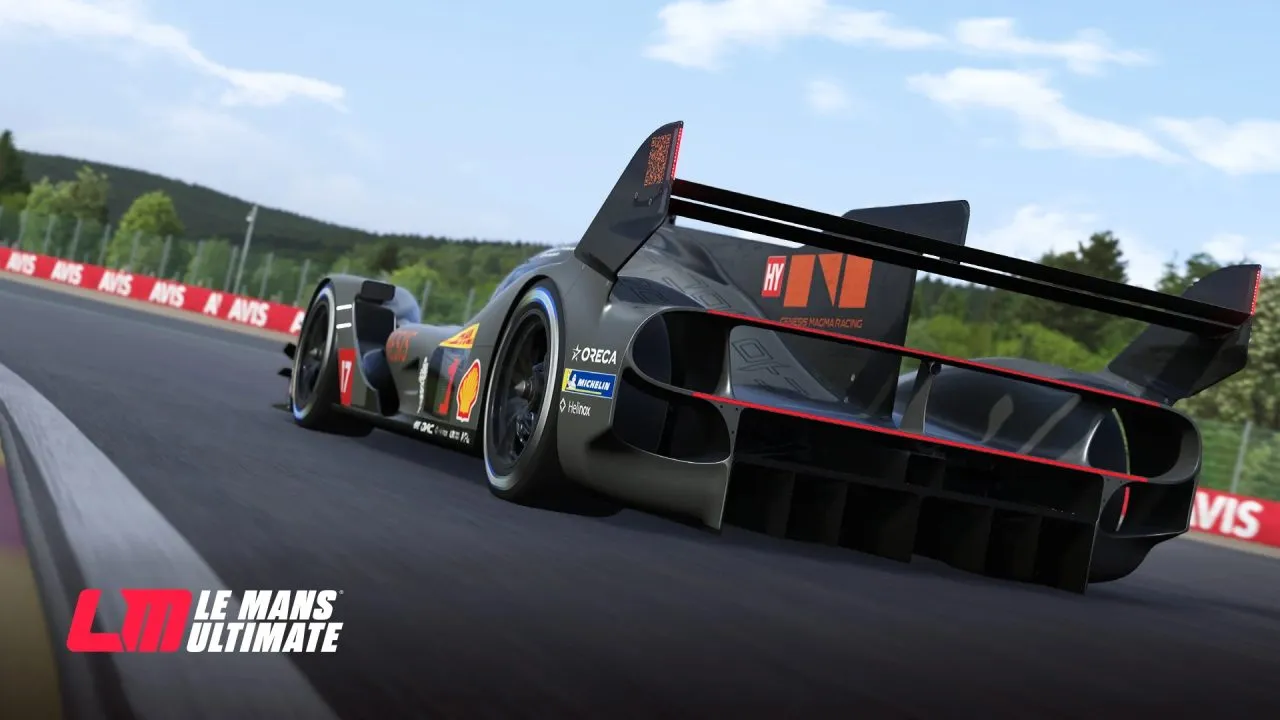
In terms of dynamic behavior, the GMR-001 aligns with Hypercar class standards. With around 670 hp and a weight of approximately 1,030 kg (depending on Balance of Performance), it does not deviate from the category’s overall equilibrium.
The driving experience stands out for its smooth power delivery and solid baseline stability. However, as with other Hypercars, the limit is unforgiving: once rear-end grip is lost, recovery becomes extremely difficult. This is not an anomaly, but rather an inherent trait of high-downforce prototypes operating under regulated power constraints.
Free content as a retention strategy
The addition of the GMR-001 at no extra cost is not an isolated move. Le Mans Ultimate previously introduced cars like the BMW M Hybrid V8 (2024) and the Aston Martin Valkyrie (2025) under the same approach.
This pattern suggests a clear strategy from Studio 397: expand the content base without fragmenting the community through aggressive DLC practices. In a competitive landscape—where titles like iRacing and Assetto Corsa Competizione follow different models—this policy could become a key differentiator for user retention and growth.
Upcoming updates: expanding 2026 season content
The GMR-001 is only the starting point. The roadmap points to a gradual rollout of additional 2026 season elements, including updated liveries, driver lineups, and technical evolutions of existing cars.
Toyota, for instance, has revised its Hypercar—now set to be known as the TR010—while Cadillac has introduced an updated version of the V-Series.R. In the LMGT3 category, both the Ferrari 296 and the Ford Mustang will feature “Evo” variants, which could also be integrated into future simulator updates.
You can buy the game with a big discount by clicking here:
This website uses affiliate links which may earn a commission at no additional cost to you.