

The Mercedes-AMG PETRONAS F1 Team has unveiled its car for the 2026 season for the first time, the Mercedes-AMG F1 W17 E PERFORMANCE, a project that symbolizes the team’s entry into what is set to be one of the most significant technical transformations in Formula 1 history. The release of the first images, followed by its on-track debut at Silverstone, marks the visible beginning of a development cycle that has, in reality, been underway for several years at the team’s Brackley and Brixworth facilities.
A car designed for a new regulatory era
The 2026 season will bring a profound shift in the championship’s technical DNA, with all-new regulations covering the chassis, power units, and fuel. Within this framework, the W17 has been conceived as a smaller, narrower, and lighter car than its predecessor, aligned with a philosophy that prioritizes energy efficiency and active aerodynamics.
Among its key technical features are movable front and rear wings, designed to optimize performance across different phases of a lap, and a power unit that approaches a 50/50 split between electric energy and internal combustion. This is combined with the use of advanced sustainable fuels, developed in close collaboration with PETRONAS, a cornerstone of the new Formula 1 regulatory landscape.
A refreshed visual identity without losing its roots
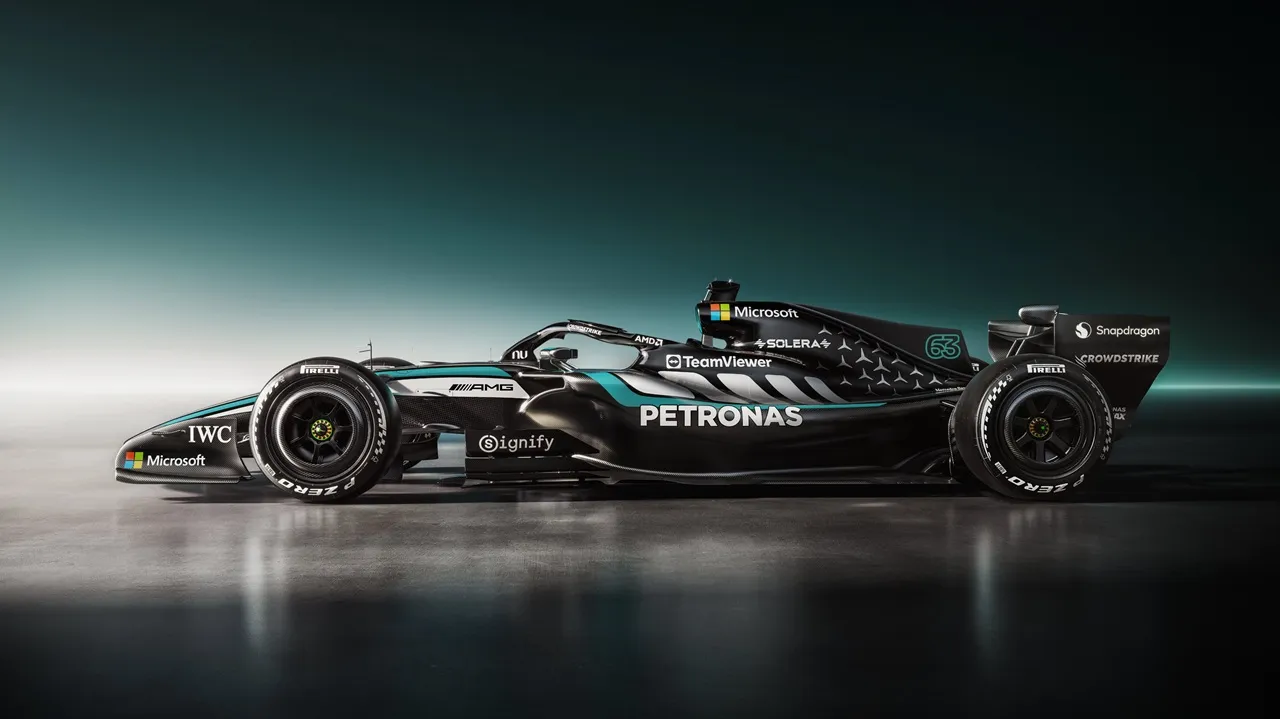
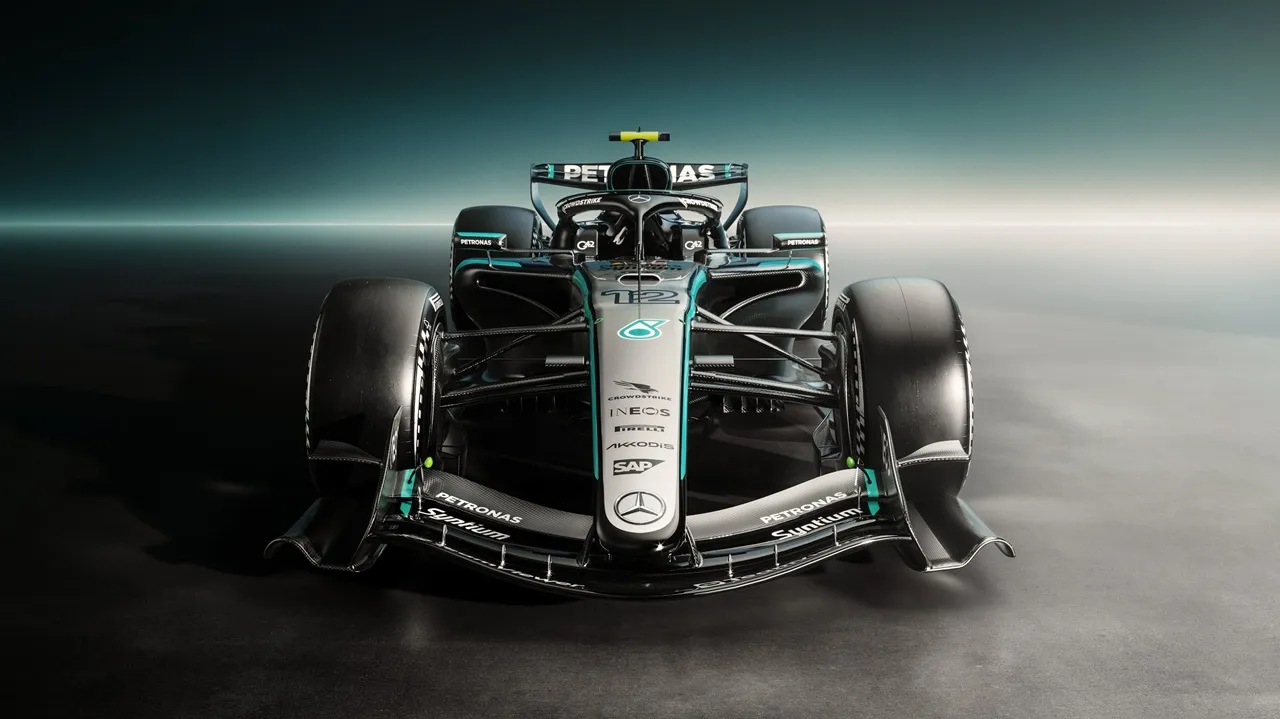
Beyond engineering, the W17 also introduces a notable evolution in visual identity. The new livery adopts a more dynamic interpretation of the team’s branding, with a flowing PETRONAS green line running along the lower section of the car, reinforcing a sense of speed and precision. This element also serves as a visual bridge between Mercedes’ traditional silver and the black that has defined the team’s more recent image.
The sidepods feature a geometric pattern inspired by AMG’s identity, while the engine cover continues to showcase the iconic three-pointed star, blending tradition and modernity within a single visual language.
A long-term project, according to Wolff
For Team Principal and CEO Toto Wolff, the W17 represents more than just a new car; it is the result of a long-term strategy. Wolff emphasizes that the 2026 regulations demand constant innovation and absolute focus across every aspect of performance, from the chassis to the power unit and the fuels themselves. In this sense, the car’s unveiling is simply another step in a process that will intensify in the months ahead.
First miles at Silverstone
The W17 has already completed its first on-track running. Its debut took place at Silverstone, where George Russell and Kimi Antonelli shared driving duties during a filming day. In total, the car completed 67 laps of the International Circuit, covering close to 200 kilometers, with the initial running focused solely on system checks and reliability.
From the pit wall, Trackside Engineering Director Andrew Shovlin described the day as a “sensible” shakedown, with the primary objective being to ensure that all components operated correctly. The fact that both drivers were able to complete the planned program without incident is, according to the team, a reflection of the extensive preparation carried out back at the factory.
Next stop: Barcelona
Following this first taste of the asphalt, Mercedes-AMG will head to Barcelona for the next phase of testing, with three days of running scheduled between January 26 and 30. There, the team will look to deepen its understanding of the W17 and begin extracting more representative data from a car designed to compete in a championship that will differ significantly from the current one.
With the W17, Mercedes officially begins its transition toward the 2026 Formula 1 season—a path shaped by regulatory uncertainty, but also by the opportunity to redefine the competitive order in a new era of the sport.
This website uses affiliate links which may earn a commission at no additional cost to you.