

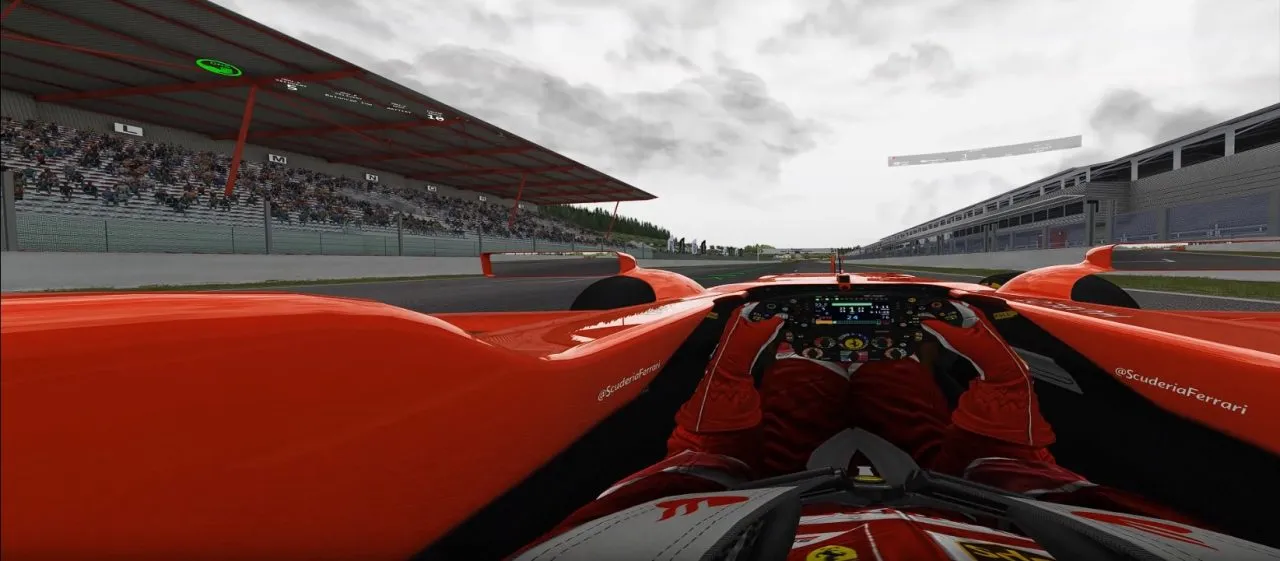

A few months have passed since I first reviewed the Pimax Crystal Light, and Pimax recently asked me whether my opinion had changed after more time with the headset, or whether there was anything that could improve the experience.
That is actually a more interesting question than it may seem.
A first review is usually about surprise: the image quality, the packaging, the setup, the specifications, and the first few sessions. A few months later, the question changes completely. At that point, what matters is not whether the headset impressed me on day one, but whether I still want to use it when I sit in the simulator.
And the short answer is yes.
The Same Strengths, the Same Weaknesses
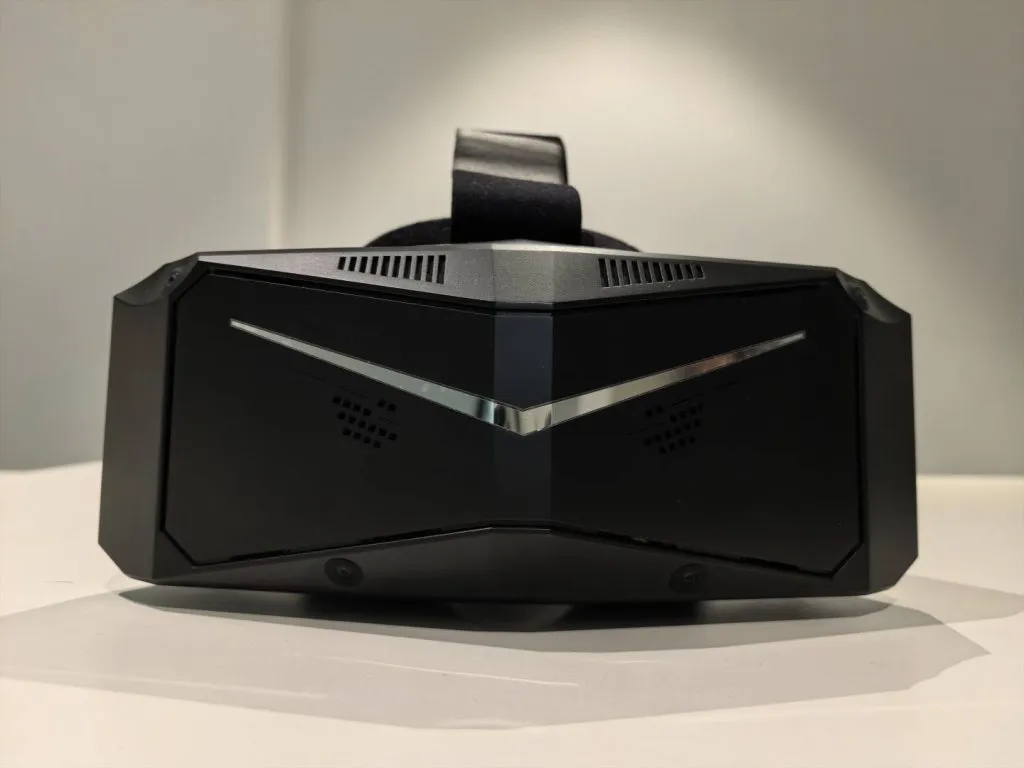
The Crystal Light has not suddenly become a different product. Its strengths and weaknesses remain mostly the same as they were in my original review.
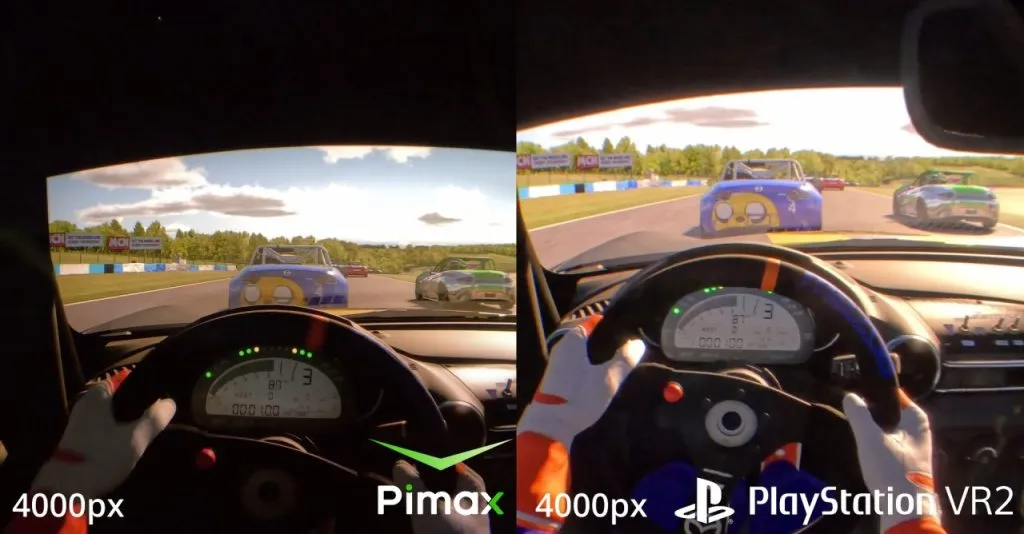
The image quality is still excellent, the immersion in sim racing is still very convincing, and the feeling of depth, distance, and spatial awareness is still something that monitors cannot reproduce in the same way.
At the same time, the headset is still bulky. The housing still feels larger than it needs to be, and the fact that it cannot be lifted like a visor remains annoying when you need to interact with desktop applications outside VR.
But after a few months, I think the most important point is this: The Crystal Light has remained stable.
Stability Is Not a Small Compliment
That may sound like a modest compliment, but for VR it is not. In simulation, stability is not a small detail.
When I sit down to race, I do not want to troubleshoot the headset, restart services, change runtimes, reconnect cables, or wonder whether the software will behave differently from the previous session. I want everything to work exactly as it did the last time, or ideally better.
In that sense, the Crystal Light has done its job.
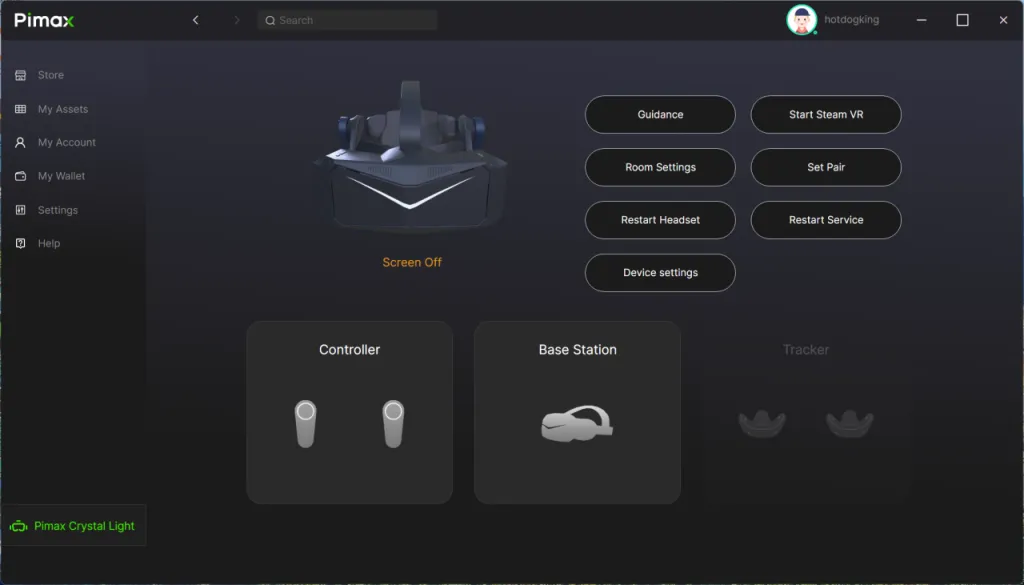
Once configured, it has continued to behave predictably. PimaxPlay still has some decisions I do not fully understand, such as requiring an account just to access settings, but in daily use the software has been reliable. I can switch runtime options, use OpenXR, adjust performance-related settings, and start a session without feeling that the software is fighting me.
What I Appreciate More After Months of Use
This is one of the points I appreciate more now than I did during the first review.
At the beginning, image quality naturally takes most of the attention. After months of use, software reliability becomes just as important. A headset can have very good panels and lenses, but if using it becomes a ritual of small problems, it slowly disappears from the simulator.
The Crystal Light has avoided that.
This also gives some perspective to the flaws I mentioned before. The large casing and front-heavy design are still there. The headset still feels like something designed for continuous VR sessions rather than quick transitions between VR and monitor use.
In sim racing, where you often need to adjust applications, check settings, or manage things outside the headset, that can be inconvenient. You have to remove the headset entirely, then put it back on and find the sweet spot again.
However, the flaws have become predictable. They are not random problems that appear one day and disappear the next. They are design limitations, and once you understand them, you adapt. That does not make them disappear, but it makes them easier to live with.
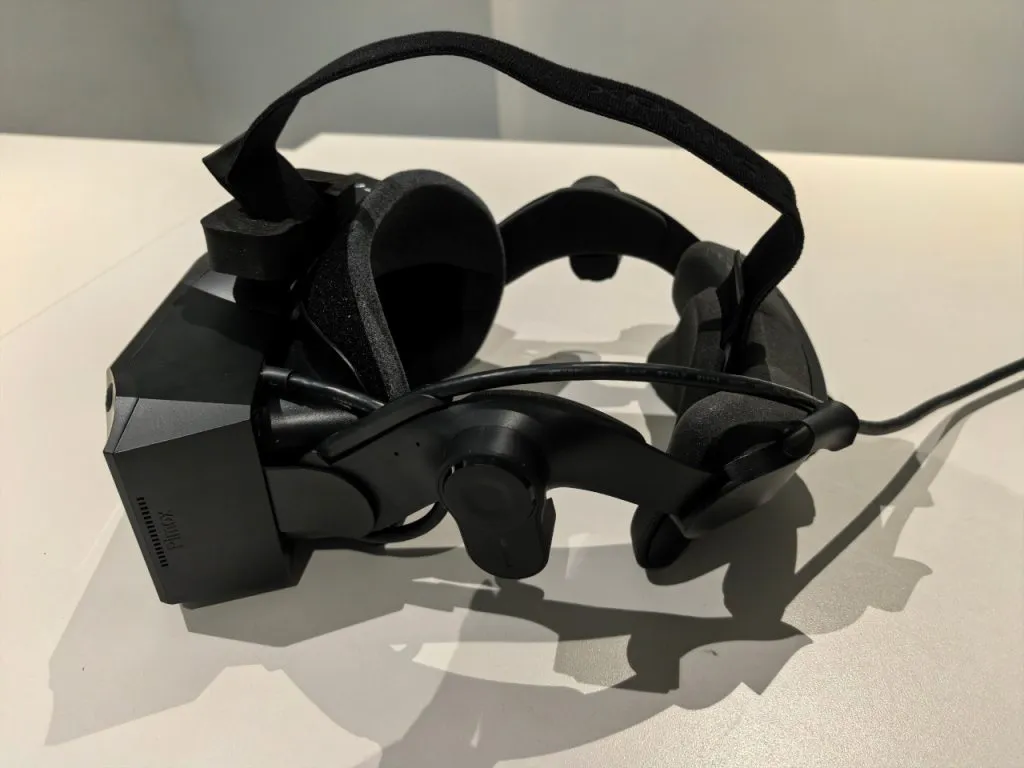
For readers who are interested in the headset used in this long-term review? You can check the Pimax Crystal Light product page here. Use code boxthislap for 2% off.
The Core Experience Still Holds Up
The positive side is that the core experience remains strong.
The display clarity is still the main reason to use it. For sim racing, being able to read details, judge distance, and feel placed inside the cockpit is what makes VR valuable.
The Crystal Light continues to deliver that.
It may not be the lightest or most elegant headset, but it still gives a very convincing PCVR experience.
Why the Dream Air Line Interests Me
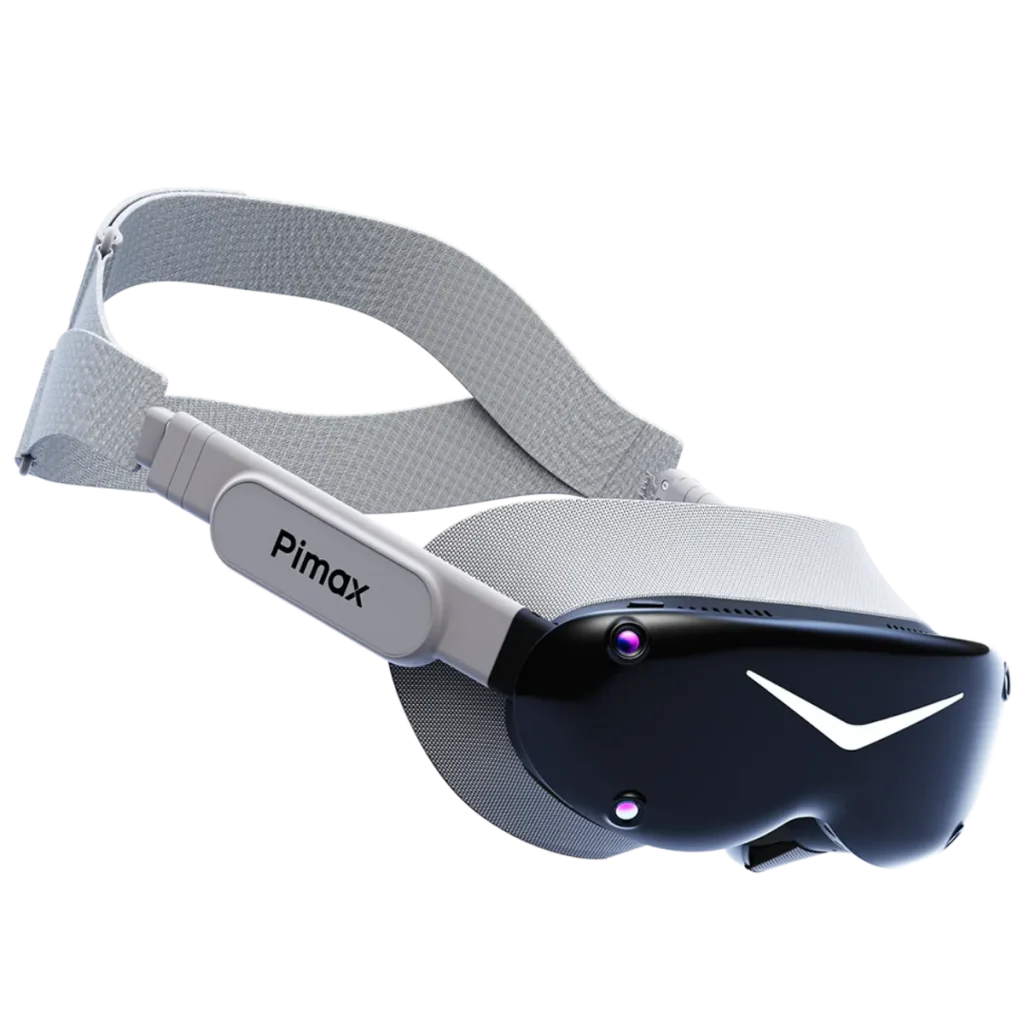
This is also why I am genuinely curious about the Dream Air line.
Dream Air offer: use code BTL25 for $25 off.
In my original review, I said that the main flaws of the Crystal Light were not really the image quality or the performance, but the face and housing design. After several months, I still feel the same.
The Crystal Light works well, and it remains stable, but it is still a large headset. It feels like a product built around visual quality first, with comfort and physical convenience coming second.
That is exactly where the Dream Air and Dream Air SE become interesting.
On paper, Dream Air looks like a very different approach from the Crystal Light. It is expected to use Micro-OLED panels with 3840 × 3552 pixels per eye, a 90Hz refresh rate, and a 102-degree horizontal field of view. It also includes eye-tracking, automatic IPD adjustment, and Dynamic Foveated Rendering.
But the specification that interests me most is not only the resolution. It is the weight.
For sim racers, the question is not only about maximum resolution. Comfort, repeatability, and ease of use are just as important when you are spending long sessions in the cockpit.
Crystal Light vs. Dream Air vs. Dream Air SE
| Model | Crystal Light | Dream Air | Dream Air SE |
| Main Strength | Proven clarity and stability | Highest-resolution lightweight option | Lighter, more accessible Micro-OLED option |
| Resolution | 2880 × 2880 per eye | 3840 × 3552 per eye | 2560 × 2560 per eye |
| Display | QLED + MiniLED | Sony Micro-OLED | Sony Micro-OLED |
| Lens | Glass aspheric | Pancake optics | Pancake optics |
| FOV | 105° | 110° horizontal | 105° horizontal |
| Refresh Rate | 72 / 90 / 120Hz | 90Hz | 90Hz |
| Tracking | Inside-out / optional Lighthouse | SLAM / optional Lighthouse | SLAM / optional Lighthouse |
| Weight | <815g | <170g headset only | <140g headset only |
| Best For | Sim racers who want a proven headset now | Users who want the flagship lightweight PCVR experience | Users who want the lighter, more practical Dream Air option |
Pimax lists the Dream Air as weighing under 170 grams, with a self-adjusting strap. If that works as intended, it could directly address one of my biggest criticisms of the Crystal Light: the physical size and comfort during longer simulator sessions.
Dream Air SE is interesting for a slightly different reason. It does not appear to be positioned as the same high-end visual jump as Dream Air, but it may be the more practical continuation of the Crystal Light idea. With 2560 × 2560 pixels per eye, DisplayPort PCVR, eye-tracking, automatic IPD adjustment, Dynamic Foveated Rendering, and a target weight under 140 grams, it seems to focus less on maximum specifications and more on making the headset lighter, simpler, and easier to live with.
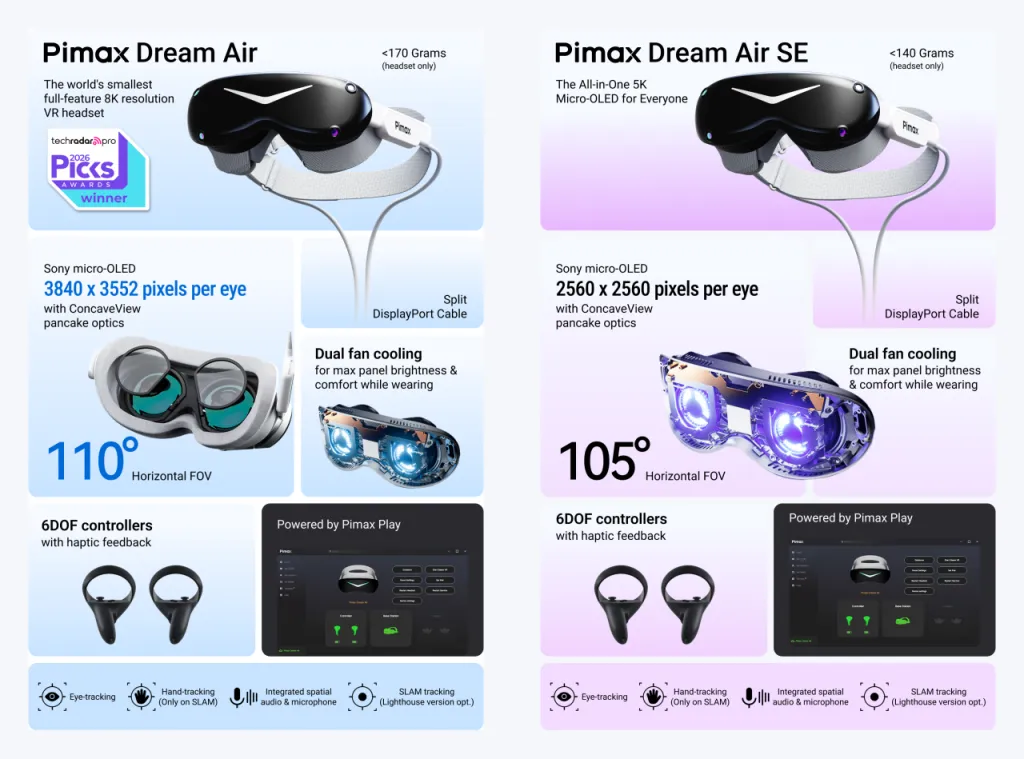
If Crystal Light proves that Pimax can deliver a stable, high-clarity PCVR experience, Dream Air and Dream Air SE ask the next question: can that same PCVR foundation become much lighter and easier to live with?
Specifications Are Only Promises Until Tested
Of course, specifications are only promises until tested.
For simulator users, comfort and clarity matter, but stability matters just as much. A headset can look impressive on paper, but it still has to work every time you sit down to race.
The Crystal Light has earned some trust in that regard. That is why I am especially curious to see whether the Dream Air line can combine the same dependable PCVR foundation with a more refined physical design.
Final Thoughts
So my opinion has not changed dramatically.
The Crystal Light is still an interesting purchase, especially for users who value image clarity and a stable PCVR experience more than having the smallest or most elegant headset. Its flaws are still there, but its strengths have held up over time.
It is not perfect, and I would still like to see a more refined design, better ergonomics, and a more flexible way to handle monitor tasks while in VR.
But after several months, it has proven something important:
It is dependable.
And in VR, especially in simulation, dependable is worth a lot.
If Pimax can take that same stability and combine it with the lighter, more compact, and more modern design promised by the Dream Air line, then the next step could be very interesting.
Check Pimax Crystal Light
If your priority is clarity, stability, and a direct PCVR experience for sim racing, the Crystal Light is still worth considering. Use code boxthislap for 2% off; the $150-value accessories promotion ends June 10.
This website uses affiliate links which may earn a commission at no additional cost to you.





you would be crazy to buy anything from Pimax, scam company…