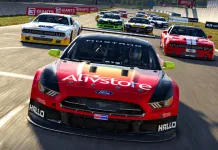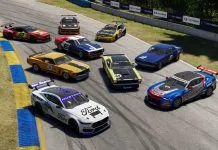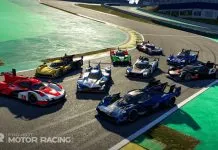



The summer of 2026 July go down as the most important stretch in Straight4 Studios’ short history. After a launch defined by criticism, a heavy loss of players and a credibility crisis, the British studio has begun a transformation that goes well beyond shipping new content. In a few weeks it has changed chief executive, brought in a new creative lead, released one of the largest updates Project Motor Racing has ever received, and given away free cars to the community.
Taken separately, each of these moves could be read as a normal step in any game’s life cycle. Taken together, they map out a clear strategy: rebuild the reputation of Project Motor Racing and prove there is still a serious project behind one of the most controversial sim racing releases of recent years.
The definitive end of the Ian Bell era
The first major change was corporate. After months of uncertainty, and after UK company records confirmed William Ian Bell’s departure as director and secretary of Straight4 Studios, the company confirmed in late July that Kevin Boland previously Chief Development Officer had been appointed Chief Executive Officer with immediate effect.
This is not simply a change of name on a letterhead. Ian Bell drove the project from its earliest days as GTR Revival, assembled former SimBin and Slightly Mad Studios staff, and championed an extremely ambitious technical vision that promised to redefine racing simulation. We covered the full context of his exit in our analysis of the end of the Ian Bell era at Straight4 Studios.
That same strategy ultimately became one of the studio’s biggest problems. The November 2025 release of Project Motor Racing exposed serious shortcomings in fundamentals such as Force Feedback, AI behaviour and tyre modelling, triggering a strongly negative response from both press and players.
Bell’s replacement therefore closes a chapter built on large technological promises and opens a far more pragmatic one, focused on improving the product that already exists rather than announcing new features.
Kevin Boland’s plan: rebuild first, promise later
Boland’s first statements as CEO suggest a genuine shift in the studio’s internal culture. Instead of talking in technical figures and futuristic concepts, he has emphasised giving the team clarity, structure and day-to-day support, listening to players, and building a sustainable long-term roadmap.
Particularly telling was his earlier admission that an internal “echo chamber” formed during the simulator’s development. As he explained it, the team convinced itself that the sophistication of the physics engine was enough to guarantee a good experience, while ignoring problems that players noticed within minutes of picking up a wheel.

Publicly owning that mistake marks a significant departure from the communication style of the months immediately after launch, when much of the criticism was minimised or blamed on outside factors. The message now is different: before thinking about the future, Project Motor Racing needs solid foundations.
Aris Vasilakos brings the technical credibility
If Boland’s appointment represents organisational change, the arrival of Aristotelis “Aris” Vasilakos represents technical change. Straight4 Studios announced him as Chief Creative Officer on 18 May 2026.
With more than a decade at Kunos Simulazioni and a track record spanning netKar Pro, Assetto Corsa and Assetto Corsa Competizione, his hiring was read across the community as a guarantee of rigour. We reported on the move when it was officially confirmed.
His role is not limited to reviewing vehicle dynamics. As CCO, Vasilakos oversees creative direction across the whole studio: the balance between realism and accessibility, the long-term vision of the product, and the evolution of areas such as career mode and the wider user experience.
Perhaps the biggest change, though, has been in communication rather than code. Over recent weeks he has maintained a constant presence in the community, taking part in Q&A sessions, explaining setup concepts and showing the development process openly. In a genre where trust matters as much as technology, that accessibility may prove to be one of the studio’s most valuable assets.
Project Motor Racing Update 2.1 marks a turning point
The other headline of the summer is Update 2.1, released on 29 July 2026 by Straight4 Studios and publisher GIANTS Software. It is arguably the deepest revision the simulator has received since launch, and the full patch notes are published on the official Project Motor Racing site.
A car-by-car rebuild of GT3, GT4 and AUS V8
The GT3 and GT4 classes have been rebuilt using new manufacturer-derived homologation data, with revisions to Balance of Performance, suspension geometry, gearing, inertia, centre of gravity, differentials, turbo behaviour and aerodynamic sensitivity. Tyre simulation has been remade, and tyre wear and brake temperatures now behave far more demandingly over long runs. Naturally aspirated cars gain intake ram-air simulation, and brake ducts have become an adjustable setup element.

The scope was significant enough that the studio recommended players abandon existing mechanical setups and start again from the new defaults the same advice that accompanied the earlier GT3 tyre overhaul in v1.6.0.1 and the 2.0 physics rework.
Online, VR and triple-screen improvements
Update 2.1 also delivers several long-requested quality-of-life features: Join-in-Progress for supported Practice and Qualifying sessions in Custom Lobbies, a Ranked Racing notification system that alerts registered drivers when an event is about to start, refined collision behaviour for closer wheel-to-wheel racing, further PC VR configuration options, and early Alpha support for triple-screen setups on PC. Logitech TRUEFORCE is now enabled across all platforms.
More than a routine patch, version 2.1 is a statement of intent about where the project is heading.
A decisive summer for Straight4 Studios
Despite the progress, Straight4 Studios faces a considerable challenge. The months ahead include further expansions and, in the fourth quarter of 2026, the Endurance Racing Expansion bringing the LMP1 and GTP classes plus the Circuit de la Sarthe, home of the 24 Hours of Le Mans. Alongside that sits the consolidation of the modding ecosystem through ModHub, one of the key competitive advantages inherited from the GIANTS Engine, already used to deliver community tracks and the PMR Test Centre.
Success, however, will depend less on volume of content than on the studio’s ability to sustain a steady rhythm of improvements and transparent communication. Player numbers show a modest recovery after the latest updates, but remain far from the levels needed to call the turnaround complete.
Rarely does a studio concentrate so many strategic changes into such a short period. A new CEO. A new Chief Creative Officer. A deep revision of the simulator. Free content. An ambitious roadmap and a tone of voice completely different from the one used at launch.
It is still too early to say Project Motor Racing has left its crisis behind, but it is fair to say a new chapter has begun one where technological promises have given way to continuous work on the product, and where recovery depends, more than ever, on turning results rather than announcements into the tool that rebuilds lost trust.
In a market as demanding as sim racing, that will be the real test for Straight4 Studios over the coming months.
This website uses affiliate links which may earn a commission at no additional cost to you.