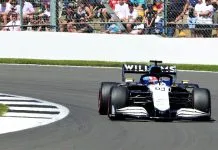


Most people watch a race by following the obvious. They see cars dive into corners. They hear engines rise and fall. They look for overtakes and mistakes and the usual flashpoints that dominate a broadcast. Yet what experienced racers see is something entirely different. They read patterns invisible to the casual eye. They sense opportunity before it forms. They feel danger long before it appears. This ability to interpret a race as a moving story rather than a sequence of incidents is what racers call racecraft and it is as valuable in virtual competition as it is on a real circuit.
In sim racing circles the word gets used often. Players talk about learning racecraft or improving racecraft or lacking racecraft when they misjudge a moment. It has become a shorthand for everything that separates a clean consistent competitor from someone who simply drives fast laps. To understand racecraft though we need to look at what it really represents. Racecraft is not instinct alone. It is the sum of hard earned experience, the quiet intuition that grows from mistakes and the analytical awareness that develops over countless laps. It is the mental lens through which a race becomes something legible.
A skilled racer does not focus solely on their own car. They watch how others react to pressure. They study lines and braking points. They assess who defends aggressively and who leaves the door open. They note small variations in pace and how cars drift on used tyres. Nothing happens in isolation. Everything contributes to the rhythm of the race. What might look like a lucky move to a spectator is often the product of someone anticipating the moment several corners earlier.
This sense of reading probability exists well beyond motorsport and it is familiar to anyone who follows competitive events. I often think about how fans pore over grand national odds before race day because the habit mirrors how racers judge risk and timing during a long stint. The numbers do not dictate what will happen but they give people a feeling for how a field might behave and racers rely on the same principle when they assess patterns on track. They are constantly weighing likelihoods based on how the race is unfolding.
How Drivers Read Space
One of the most overlooked elements of racecraft is spatial awareness. Experienced drivers see space not as static distance but as something that changes shape with speed, momentum and confidence. They can judge a closing gap by feel. They understand when a challenge will force another driver into a poor exit even if no overtake is attempted. They know when not to fight because the cost will be too high later. Good racecraft is rarely dramatic. It is often quiet and subtle.
Sim racers learn this just as real drivers do. The platform changes but the logic does not. The car still communicates balance even through a wheel and pedal set. The racing line still demands discipline. The risk of a mistimed move still carries consequences. And those who excel learn to see the shape of a battle before it fully appears. They begin to sense when a rival is growing impatient or when a mistake is coming. They feel the flow of the race and position themselves accordingly. You can witness this, season after season, the schedule and patterns can always be seen and played back.
The Role of Patience and Pressure
Another hallmark of strong racecraft is patience. Many new drivers push too hard too early. They mistake aggression for opportunity and forget that races are rarely decided in a single corner. Skilled drivers think in longer arcs. They observe how rivals behave under pressure and apply that pressure deliberately. Sometimes they force an error by closing in. Sometimes they back off to cool their tires or reset their rhythm before striking later. Racecraft is conscious and controlled even when it appears instinctive.
What people often forget is that patience in racing is not passive. It is an active skill. It requires restraint in the face of adrenaline, a willingness to trust that the chance will appear and the maturity to accept that forcing a moment may cost the entire race. This is as true for a twenty lap sprint in a sim as it is for a real endurance run. The context shifts but the judgement remains identical.
Translating Racecraft Between Worlds
One of the most interesting developments in motorsport today is how sim racing has pushed the concept of racecraft into new territory. Many drivers now train online and arrive with a sharper sense of traffic management than previous generations. Conversely many sim racers who turn laps on digital circuits are surprised by how naturally their racecraft transfers to real machinery. The equipment differs. The physical pressure changes. Yet the ability to read a race remains constant. The biggest tip in the industry as a beginner to get far is to utilise the digital opening of practice.
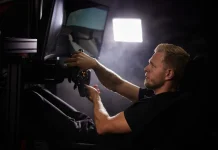
This crossover works because racecraft is ultimately a mental process not a mechanical one. It is built from awareness, decision making and the ability to interpret patterns in live competition. Those habits hold true whether someone is strapped into a physical cockpit or sitting at a rig in their living room. The same instincts apply when it comes to managing risk balancing aggression against restraint and recognising when the race is offering a gentle invitation or a clear warning.
Why Racecraft Matters Now More Than Ever
As both sim racing and real motorsport evolve the value of racecraft only grows. Cars become faster. Fields become tighter. The margins for error shrink. Racecraft acts as the quiet thread holding everything together. It shapes strategy. It guides judgement. It separates those who merely drive from those who truly compete.
Spectators will always follow the spectacle but the deeper story sits within the decisions made long before an overtake is attempted. Those decisions reveal a driver reading the race as a dynamic shifting puzzle. They show an understanding of probability timing and psychology that most viewers never fully see. And that is the beauty of racecraft. It transforms a race from noise and motion into something coherent. Something meaningful. Something that rewards those who learn to look beneath the surface.
This website uses affiliate links which may earn a commission at no additional cost to you.