

In the recent review of the F-GT Elite cockpit, we mentioned that we would soon discuss the Hypercool seat by Next Level Racing.
However, in sim racing, a field far more open to experimentation, we’re beginning to see some interesting developments. If high-end sports cars include heated and ventilated seats, why not introduce fans to solve one of the main problems faced by sim racers? Everyone knows that cold isn’t usually an issue at home, and sim racing is far more physically demanding than it appears. Heat builds up quickly, and sweat becomes a real nuisance that affects performance.
Next Level Racing identified this potential market for those who struggle with heat and sweat, and recently introduced the ERS3 Hypercool seat, whose key innovation is the integration of six fans inside its structure. Let’s look at how they achieved this.
Packaging
As with the F-GT Elite cockpit, the packaging is impeccable. Everything comes doubly boxed, which has become standard practice. A printed manual is included, a much-appreciated detail, showing every possible assembly option for the seat, whether on the cockpit frame or attached through side brackets. All installation materials are clearly labeled and packed separately.


Everything is well-protected and efficiently arranged. The seat is shipped in two parts to save storage and transport space.
Features
The seat carries FIA licensing, meaning it meets higher standards of construction, durability, structure, and comfort compared to traditional sim racing seats. However, it is licensed for sim racing use only, not real-world competition cars.
It includes six sizable fans arranged in two groups of three, one at the back and one beneath the seat base. All are aligned along the center, ensuring you can feel their cooling effect while seated. The seat also includes sliding rails, similar to those in real cars, and a dual reclining mechanism that provides rigidity during braking, especially when using a high-load cell pedal setup.
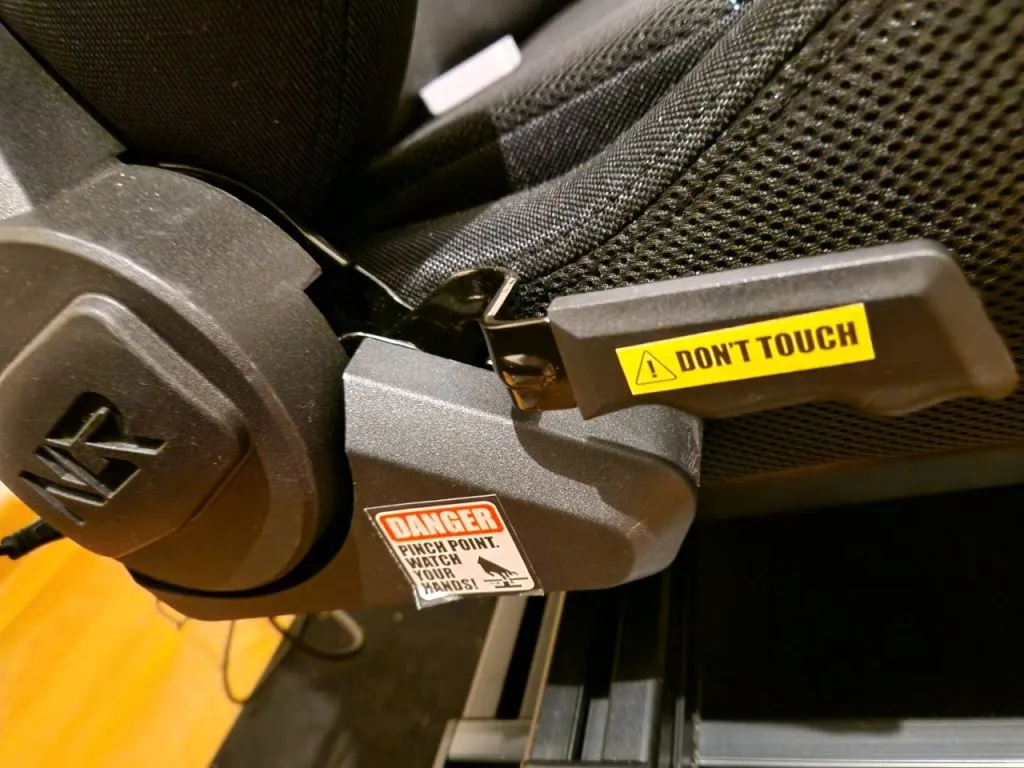
The fabric, called SIMAERO Mesh & Fabric, promotes airflow and prevents heat accumulation. It’s effective both with the fans running and when they’re off, keeping the seat breathable at all times.
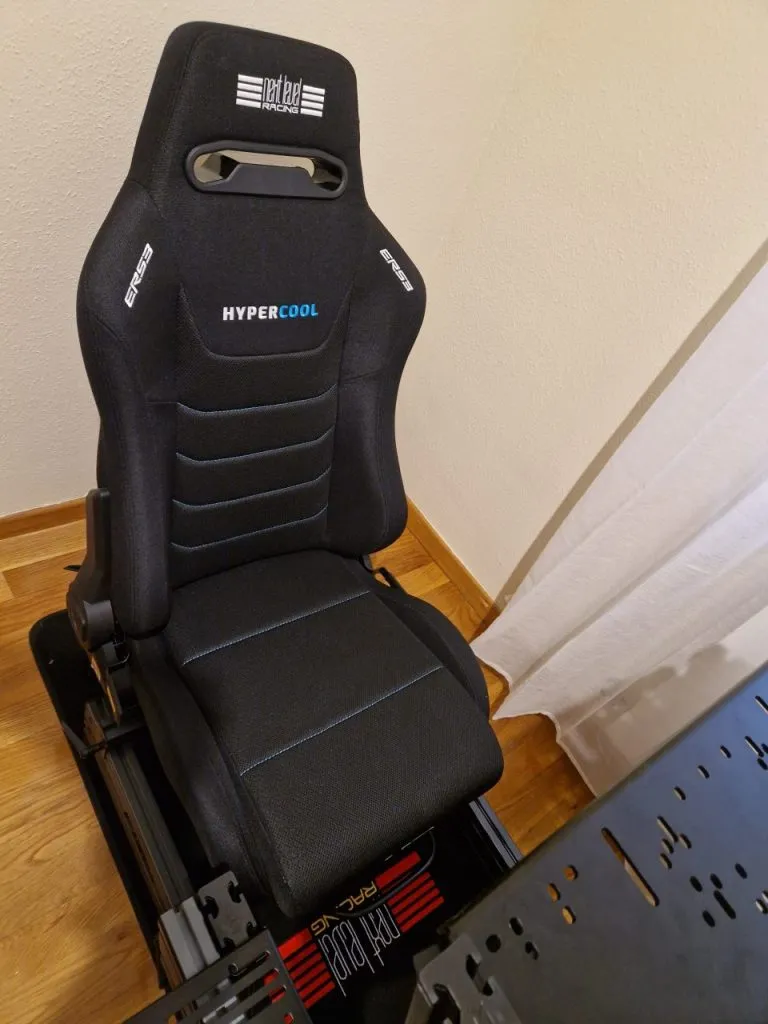
The ERS3 Hypercool supports up to 150 kg and is designed to meet the needs of any sim racer.
Assembly
Assembly is quite straightforward. The backrest connects to the seat base and is then secured with side screws. Once done, you attach the finishing trims. You can mount the seat rails directly on the cockpit frame or on side-mounted brackets if you want to adjust the tilt angle.
I opted for the simplest setup to test it quickly, as this seat’s design is better suited to a classic posture rather than a formula-style seating position. As mentioned in the manual, the main challenge is sliding the seat rails to align and secure the bolts properly.
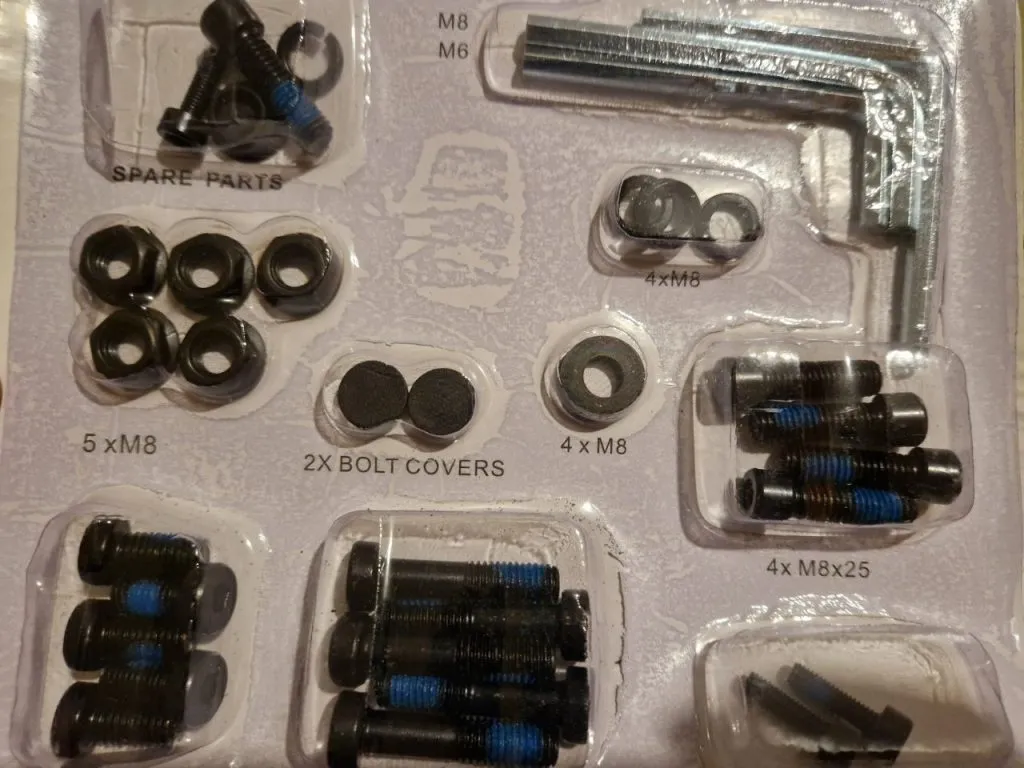
Overall, the installation is easy and largely a matter of personal preference.
Operation
The cooling system is simple to use. The seat offers two fan speeds, both of which provide noticeable cooling. Naturally, higher settings produce more noise, though this is barely noticeable if you wear headphones or have engine sounds playing.
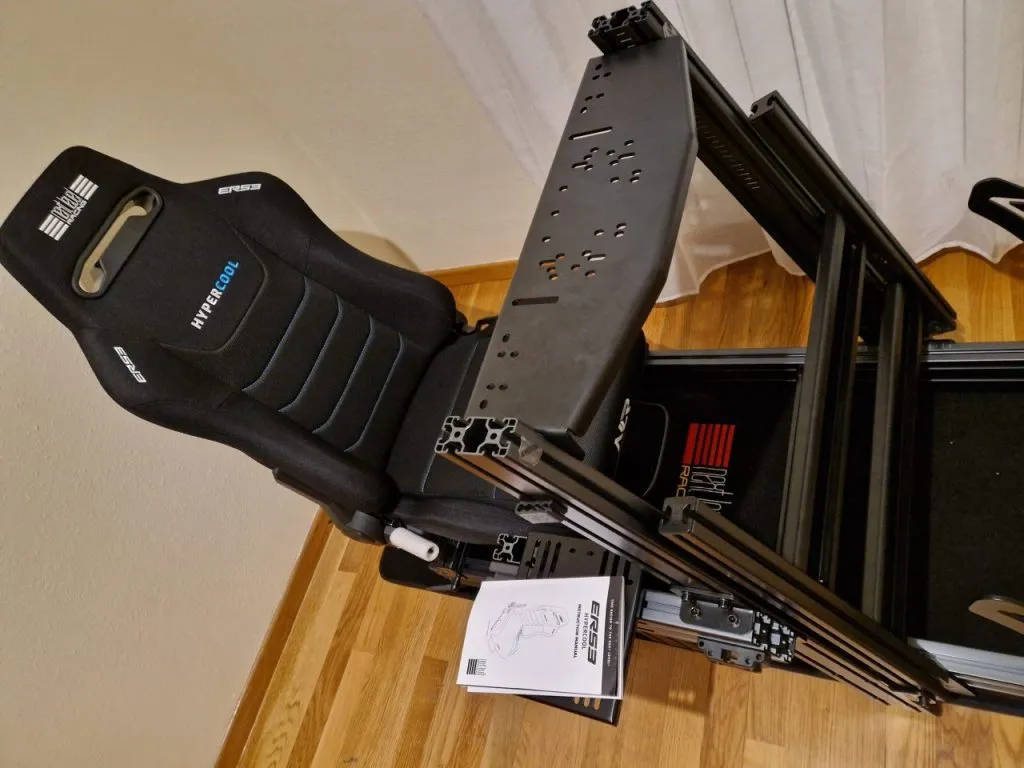
The power button is located on the right-hand side, so it’s easy to reach to adjust speed or turn it off. Note that you’ll need a power outlet nearby since the cable length is only about 1.5 meters.
Comfort
Perhaps the most important aspect is comfort. Even without the fans on, the seat itself is comfortable. Once the fans are integrated, there’s no uncomfortable sensation or pressure at the back or base. This is crucial; sitting on a hard, uneven surface would have ruined the experience. We’ll need to see over time how the foam holds up, since many seats tend to sag with heavy use. Hopefully, Next Level Racing has accounted for this in the seat’s construction.
Practicality
This model exists because it meets a genuine need. Sim racers often finish with sweaty backs, sometimes after just 35 minutes, not just in long sessions or tropical climates. The intensity and focus required quickly raise your body temperature.


Heat and sweat affect both concentration and performance. They dull the senses and lead to fatigue. The Hypercool seat reduces heat buildup and delays sweating, allowing for better performance, especially in long racing sessions where endurance matters most.
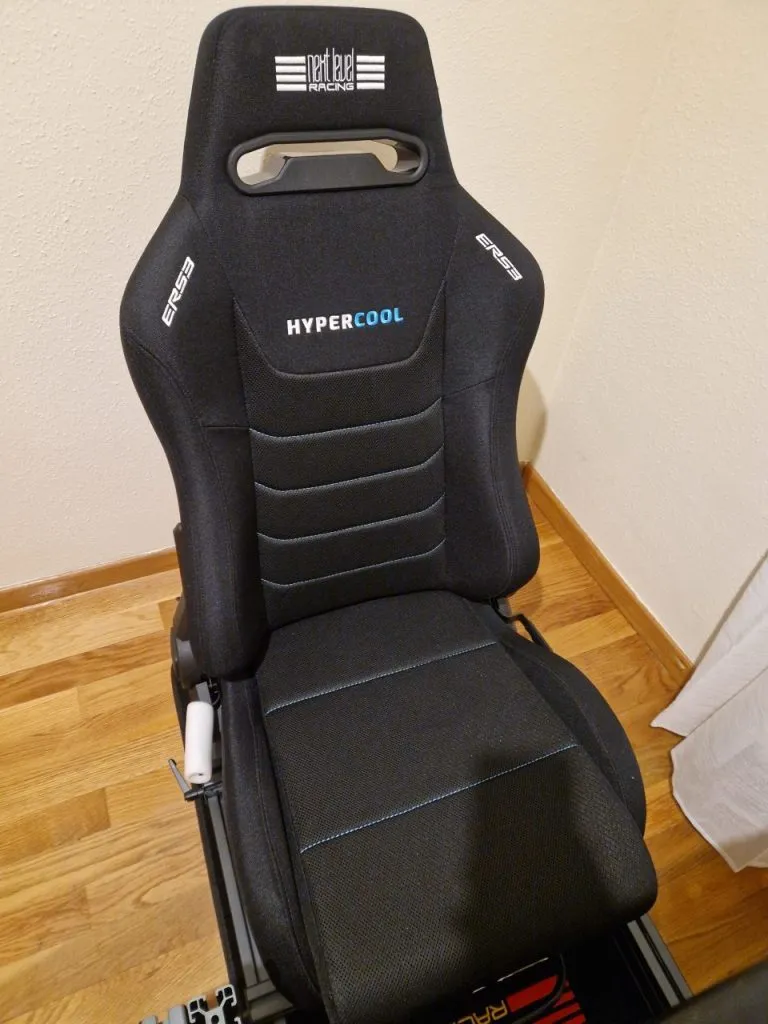
Improvements like these should be seen as incremental steps forward. If this seat helps you stay consistent during that final stint after two hours of racing under pressure, then it has fulfilled its purpose.
Conclusions
Sim racing continues to evolve, often taking inspiration from motorsport innovations. The two worlds feed into one another. In this case, ventilated seats, already common in real cars, make perfect sense for home-based simulation setups. Until now, we’ve often ended racing sessions drenched in sweat, especially in summer. With this innovation, comfort and performance both improve noticeably.


For reference, at the lowest fan speed you can feel a clear temperature drop after about five minutes. Imagine the difference at full speed during long sessions; it could be a game changer for anyone battling heat buildup.
The Next Level Racing® ERS3 HYPERCOOL is available globally since August 2025 through leading retailers, at the following prices: Global: $449USD, USA: $499USD, Europe: €449 (VAT included), UK: £399 (VAT included), Australia: $599 AUD, Japan: ¥78,000.
Click here to find out more: https://nextlevelracing.com.
Additionally, you can use our discount code to receive 5% off that price. The code is BOXTHISLAP24.
Or you can use Amazon by clicking here.
This website uses affiliate links which may earn a commission at no additional cost to you.