

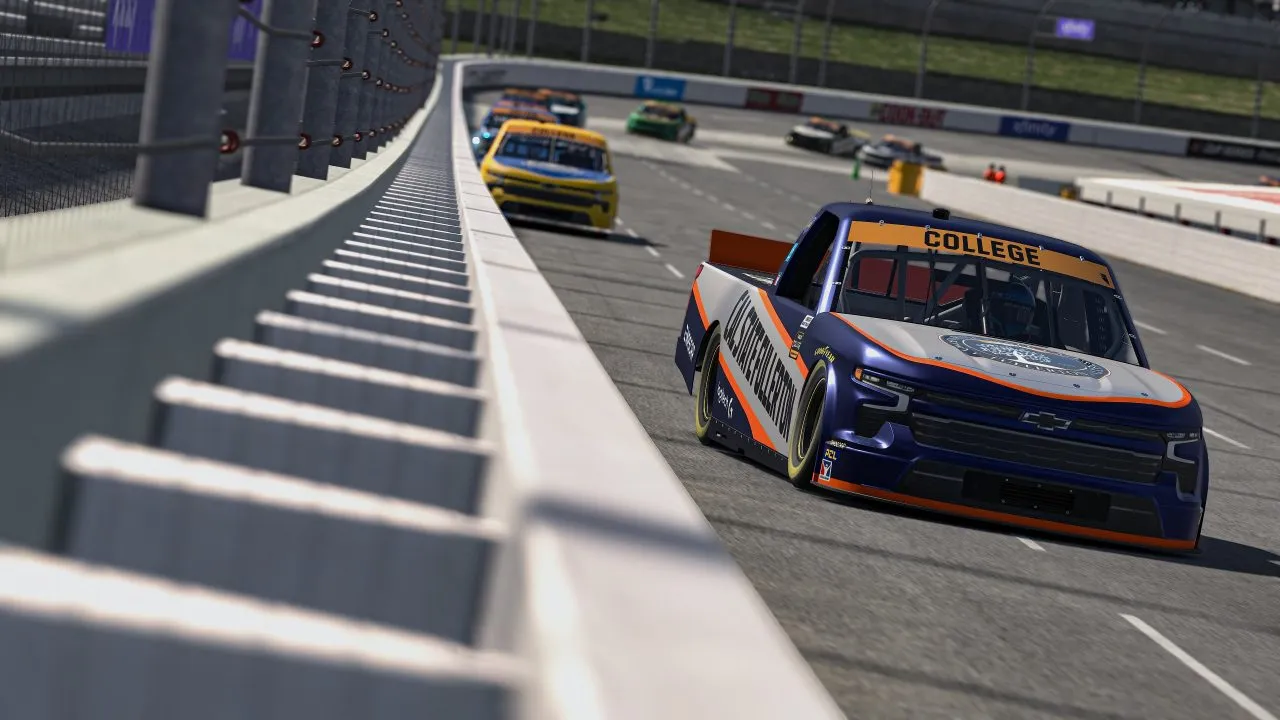

It always begins the same way. An important race, hours of preparation, and one incident that changes everything in a matter of seconds. The car is damaged, the event ends far earlier than expected, and once the adrenaline begins to fade, the driver decides to file a protest. The replay is saved, the exact moment is located, an explanation is written, and the report is submitted in the hope that someone will take the time to review what happened.
Then comes the silence.
During the following days, the driver returns to the simulator without knowing whether the reported behaviour was considered a simple mistake or something serious enough to deserve a penalty. Perhaps the same person appears in another race. Perhaps they are involved in another similar incident. The uncertainty does not restore the lost result, but it changes the way the driver sees the system. When nobody knows what happens after a protest is submitted, reporting stops feeling like a form of protection and starts to feel like an administrative formality, with no visible proof that it has achieved anything.
Eventually, a message arrives. The protest has been received, reviewed, and handled in accordance with the sporting code. Nothing more is explained. The person who submitted it does not know whether the other driver received a warning, whether they were suspended, whether they had a previous disciplinary record, or whether the case was closed without any meaningful consequence.
All they know is that somebody made a decision.
That lack of information may sound like a minor issue, but it is not. When nobody understands the criteria behind the decisions, every penalty can look arbitrary, and every apparent absence of punishment can feel like indifference. There may be warnings, restrictions, and suspensions behind many accepted protests. The problem is that the community has no way of knowing.

That is why, when a penalty becomes public, it is rarely because iRacing has decided to explain its disciplinary system. It usually becomes known because the person who received the punishment chooses to tell their side of the story. Everyone else then tries to reconstruct the case from incomplete pieces.
That is where the noise begins.
Some people believe the penalty was excessive. Others think it was too lenient. Some focus entirely on what happened on track. Others care more about what was said afterwards. Because the platform offers almost no context, the whole discussion depends on how much each person trusts the individual telling the story.
Nobody has to be deliberately lying for this to become a problem. Any personal account is incomplete by nature. Someone explaining their own penalty may sincerely believe they are telling the entire story while still leaving out important details. A driver who has been sanctioned may downplay what they said. The person who submitted the protest may overstate the seriousness of the incident. An outside observer may have no idea whether previous warnings or penalties existed.
Even an honest version of events is still only one version.
That is one of the greatest weaknesses of the current system. Disciplinary decisions are understood only when someone decides to turn them into a public story, and even then, nobody outside the platform can know whether the story is complete. The result is a community spending hours arguing about a decision whose full context is known only by iRacing.
Asking for greater transparency does not mean demanding a public list of names, penalties, and disciplinary records. A database like that could easily create more problems than it solved. It could become a tool for harassment, a permanent record of humiliation, or a way of marking someone forever because of a mistake made years earlier.
It could also encourage organised reporting campaigns against particular drivers. A person would only need to become unpopular for every future incident to be interpreted in the worst possible way. The protest system would stop being a tool for improving competition and could instead become a weapon.
Transparency should never become public shaming.
However, protecting users does not require keeping the entire process hidden. There is a wide and reasonable space between revealing every detail and explaining almost nothing.
The first improvement would be simple. When a protest is accepted, the person who submitted it should receive a slightly clearer response. There would be no need to reveal the exact duration of a suspension or provide access to the other driver’s disciplinary history. It would be enough to confirm whether the case resulted in a formal warning, a temporary restriction, or a more serious disciplinary measure.
A driver who has lost an important race because of a serious incident is not necessarily looking for revenge. Often, they simply want to know that the time spent saving footage, writing the report, and submitting the evidence was not wasted. When the response consists of a generic sentence, it is easy to feel that the complaint disappeared into a folder without any real consequence.
The next improvement should focus on the person receiving the punishment. Every user should have access to a private disciplinary history. They should be able to see which rule they broke, when the incident occurred, what measure was taken, and whether previous cases influenced the decision.

That would eliminate much of the confusion surrounding penalties that appear disproportionate. A driver may believe they are being punished severely for a single isolated incident, while the platform may be looking at a repeated pattern of behaviour. If the user can review their own record, they can better understand why a new offence has resulted in a stronger response.
A private record would also make the system more educational. A disciplinary process should not only punish. It should help people understand what they did wrong and how to avoid repeating it.
A generic reference to the sporting code is not enough. A clear description of the conduct, linked to a specific rule, would give the driver something useful to learn from. It could include the date, the type of offence, the measure applied, and the period during which that offence would continue to count as part of their disciplinary history.
This raises another question that is rarely answered clearly: how long should a previous offence continue to matter?
Should a message written five years ago affect a penalty today? Does a warning disappear after a long period of good behaviour? Are all offences weighted in the same way? Without clear criteria, every sanction feels like an isolated decision made behind a closed door.
Another useful step would be the publication of anonymised case summaries. No names, no account identifiers, no teams, and no details that could be used to identify the people involved. Only a description of the behaviour, the rule that was applied, and the resulting penalty.
For example, iRacing could describe a case in which a driver used threatening language after an accident and received a communication restriction. Another case could explain how a dangerous rejoin that caused several collisions was handled. There could also be examples involving deliberate wrecking, repeated negligence, abusive voice communication, blocking, or retaliation.
These summaries would serve as informal precedents.
They would not mean that every similar incident had to receive an identical punishment, because no two cases are exactly the same. They would, however, help the community understand which factors increase or reduce the severity of a sanction. Intent, previous offences, the seriousness of the damage, the driver’s behaviour after the incident, and whether the conduct was repeated could all be explained.
That would make it easier to understand why two similar situations might lead to different outcomes.
Consistency does not mean imposing the same punishment every time. It means being able to explain why the punishment changes.
If one driver receives a warning and another receives a suspension, there should be a recognisable reason. Perhaps one had a previous disciplinary record. Perhaps one action was deliberate. Perhaps the second driver continued the behaviour after the original incident. Without that explanation, the community is left with suspicion.
Periodic moderation reports would add another layer of transparency. iRacing could publish basic figures showing how many protests were received, how many were upheld, and which types of offences appeared most frequently. The reports could also show how many warnings, communication restrictions, short suspensions, and longer bans were issued.
No personal information would be necessary.
Those figures would allow people to look at the system as a whole rather than judging it only through individual experiences. At the moment, one driver may submit several protests and conclude that nothing ever happens. Another may receive a significant suspension and believe the platform is excessively strict.
Both views may feel completely reasonable from their individual perspectives.
Statistics would not remove every doubt, but they would reduce the space available for rumours. They would also allow the community to see whether iRacing is focusing its efforts on the problems that most directly affect racing.
If most disciplinary action is concentrated on written or spoken communication while dangerous behaviour on track rarely produces visible consequences, drivers would have a legitimate reason to question the platform’s priorities. If the figures showed that serious on-track offences were being punished regularly, they might correct the belief that such incidents are routinely ignored.
Transparency would still have to be handled carefully. A penalty must not become entertainment, and the disciplinary process must not invite a public pile-on. The information should focus on rules, criteria, and general outcomes rather than on exposing individual people.
In many ways, the current silence produces the opposite effect. It does not prevent conflict. It simply moves that conflict elsewhere.
Because there is no detailed explanation from the platform, every public case becomes a battle between competing versions. People fill the gaps with assumptions, personal loyalties, and existing prejudices. Someone appears guilty or innocent depending on who is telling the story rather than on any verifiable standard.

A disciplinary system does not need to reveal every internal discussion, but it does need to be understandable. Users should know which behaviours are punishable, how repeat offences are evaluated, what separates a warning from a suspension, and what generally happens after a protest is submitted.
Without those answers, the rules may exist, but their application feels unpredictable. The real question, therefore, is not whether every iRacing penalty should be made fully public. That would be unnecessary and potentially harmful. The more important question is how much a system can hide before it begins to lose credibility.
Publishing names would be dangerous. Explaining the criteria would not be. Confirming general outcomes, providing private disciplinary histories, publishing anonymised decisions, and sharing periodic statistics would be enough to transform the relationship between the platform and its users. Trust does not come from asking people to have faith. It comes from showing that decisions follow a recognisable logic, that similar cases receive similar treatment, and that mistakes can lead to correction rather than confusion.
When someone submits a protest, they should not feel as though they are sending evidence into a black hole. When someone receives a penalty, they should understand why it happened and what they need to change.
Privacy can be protected. The dignity of the people involved can also be protected. What should not be protected is opacity.
Because when nobody knows what happens after a report is filed, uncertainty eventually takes the place of information. And when that happens often enough, the community stops asking whether the system works.
Remember, you can join iRacing by clicking here.
It starts assuming that it does not.
This website uses affiliate links which may earn a commission at no additional cost to you.