
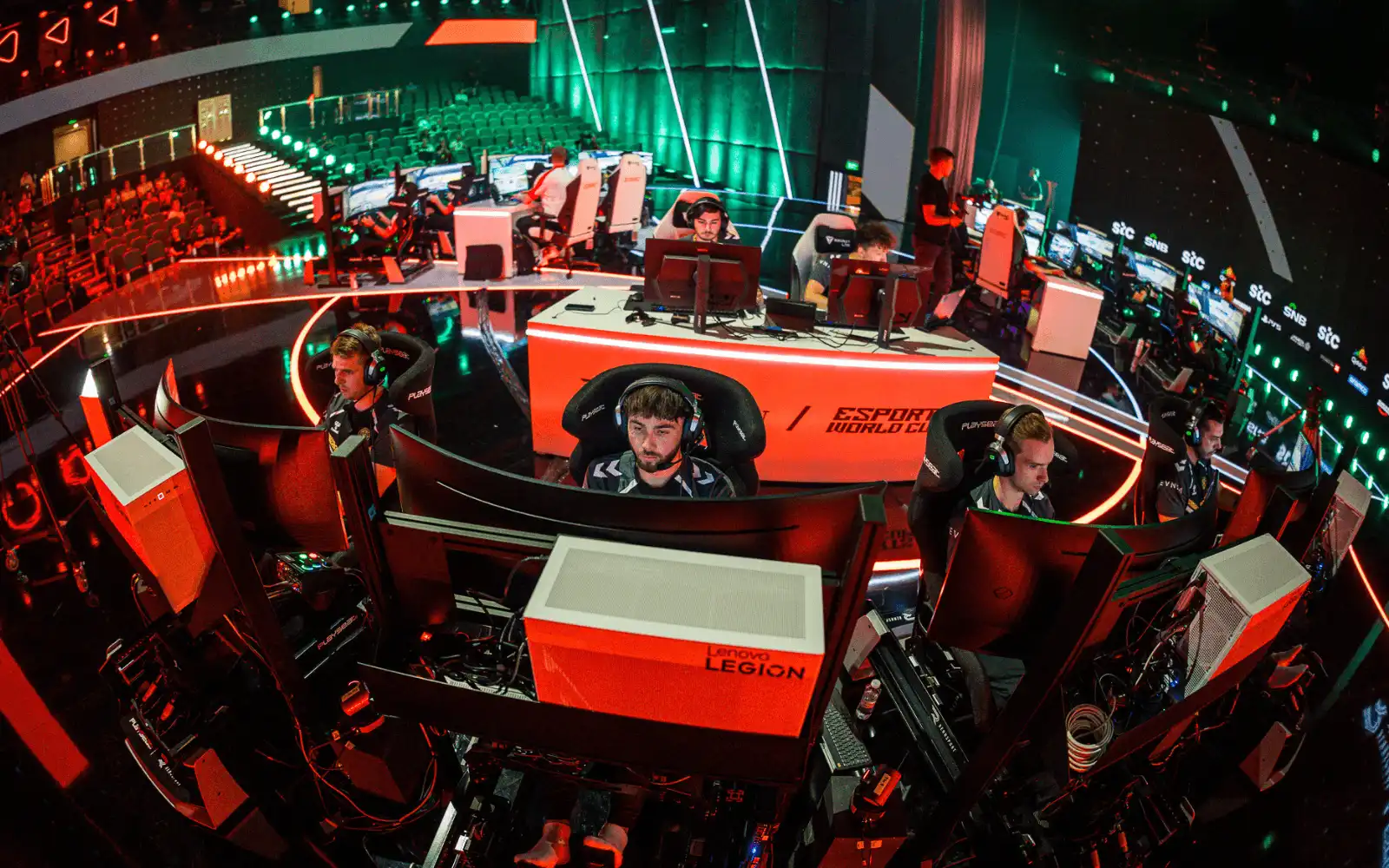

The Esports World Cup ends on 23 August with 75 million dollars handed out across 24 games. For the first time, none of them is a racing simulator. How sim racing lost the biggest stage it had. Event format, dates and prize pool figures are published by the Esports World Cup. The 2026 edition concludes on 23 August.
For two years, sim racing had a seat at the richest table in competitive gaming. The Esports World Cup selected Rennsport as its official sim racing representative for both 2024 and 2025, putting the discipline alongside Counter-Strike, League of Legends and Dota 2 at an event that has become the sport’s financial centre of gravity.
This year, that seat is gone. Rennsport was dropped from the 2026 lineup alongside StarCraft II. The racing slot went instead to Trackmania, making its debut.
Trackmania is a superb competitive game. It is not a simulator. Which means that as the 2026 Esports World Cup runs down its final weeks, the largest prize pool in esports history contains no racing simulation of any kind.
The scale of what was lost
It helps to understand exactly how big the stage was.
The 2026 edition brings together more than 2,000 players and over 200 clubs across 25 tournaments and 24 games, with a total prize pool of 75 million dollars, up from 71.5 million the year before. It runs for seven weeks, from 6 July to 23 August. After two editions in Riyadh, it has relocated to Paris for this year, with organisers describing the move as a one-year rotation rather than a permanent change.
Rennsport’s presence at that event was worth a 500,000 dollar annual injection into competitive sim racing. That money is now simply absent from the ecosystem.
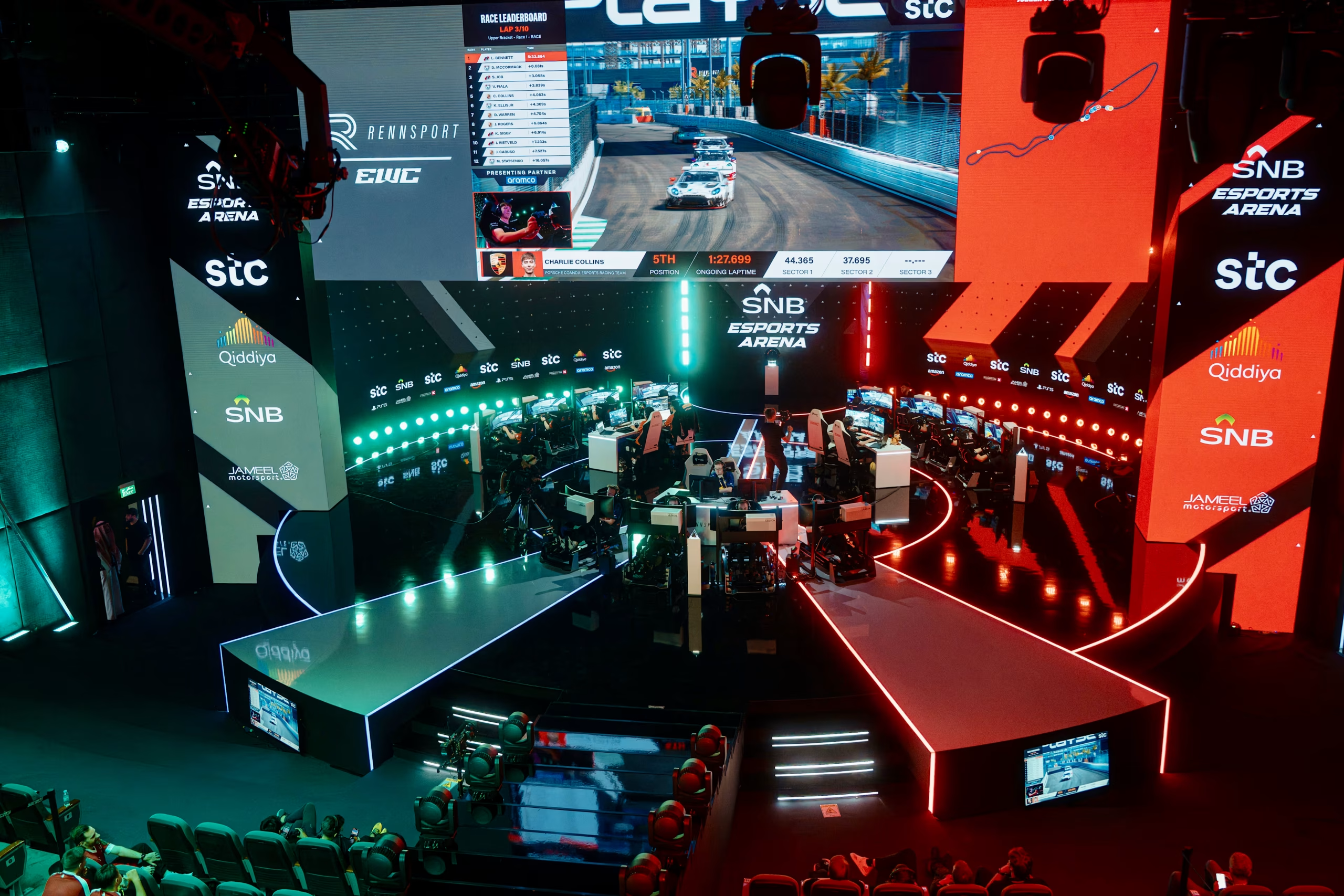
This was not a snub. The figures made the decision straightforward, and they are uncomfortable reading. Despite incentives from the Esports Foundation for organisations to field teams across multiple titles, Rennsport went backwards, dropping from 12 competing teams in 2024 to a reduced field the following year.
The viewership number is the one that really settles it. At the 2025 Esports World Cup, the sim racing broadcast peaked at 9,482 concurrent viewers. That was the lowest of any title at the entire event, by a considerable margin.
Put that next to a 500,000 dollar prize pool and the commercial logic becomes obvious. The organisers were paying flagship money for a niche audience.
The Rennsport problem
The awkward part of this story is that the title carrying sim racing’s banner was, by 2026, in serious trouble of its own.
Rennsport released on 13 November 2025, developed by Munich studio Competition Company alongside Polish developer Teyon on Unreal Engine 5. Its launch drew criticism for promised features that were not ready and a package widely judged too thin. Community sentiment soured further over the revelation that the pre-release version presented as built from scratch was in fact based on an existing engine from another developer.
Then came the publishing collapse. On 25 February 2026, French publisher Nacon was placed into insolvency, following its parent company Bigben Interactive’s failure to service part of a 43 million euro debt and the refusal of lending banks to provide funds. Nacon handled Rennsport’s console versions. The publishing agreement was terminated by mutual consent, and Competition Company moved to self-publishing.
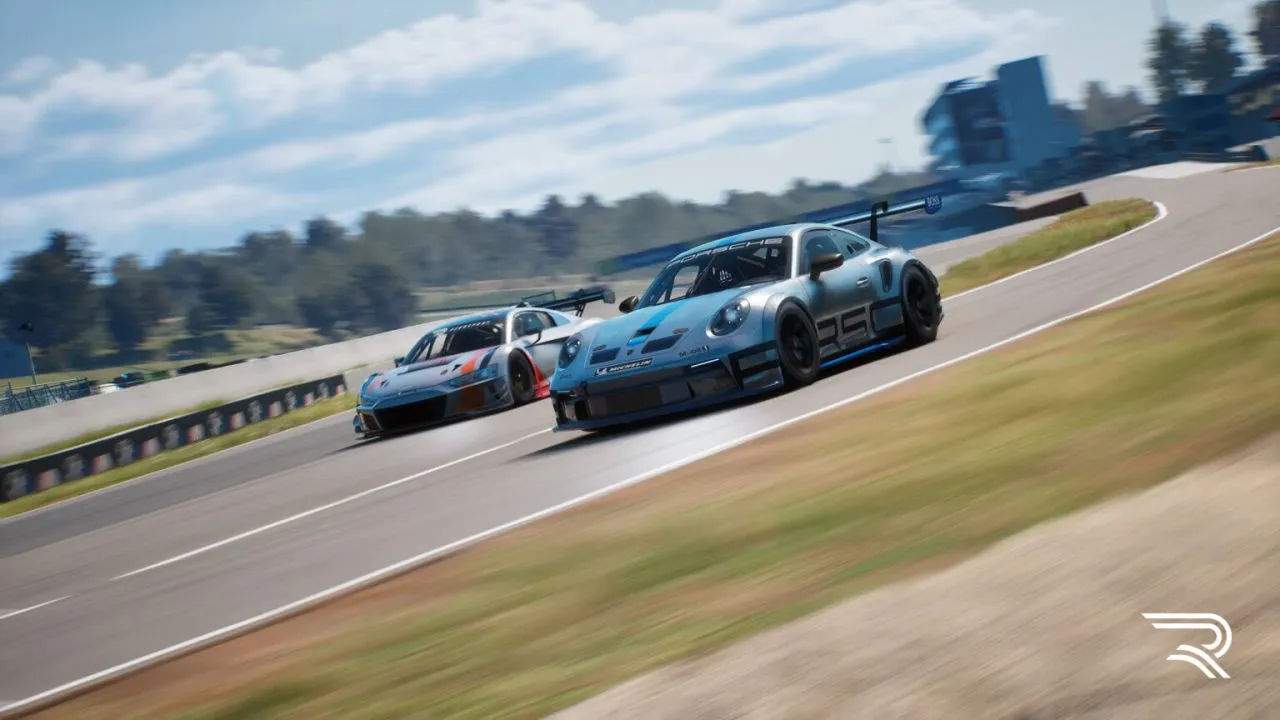
The practical consequence was paralysis. Rennsport’s first update of 2026, originally scheduled for the end of March, slipped repeatedly during the handover and did not arrive until 21 May, bringing Sebring and Laguna Seca in a free release. For a live-service competitive title, going almost half a year without a build is close to fatal.
At the Rennsport Summit in Munich, the studio was unusually candid about past mistakes and announced a campaign built around doubling content and halving the price, cutting the Deluxe Edition by 45 percent and bundling every paid content pack released up to September 2026, with compensation for existing owners.
The teams are leaving too
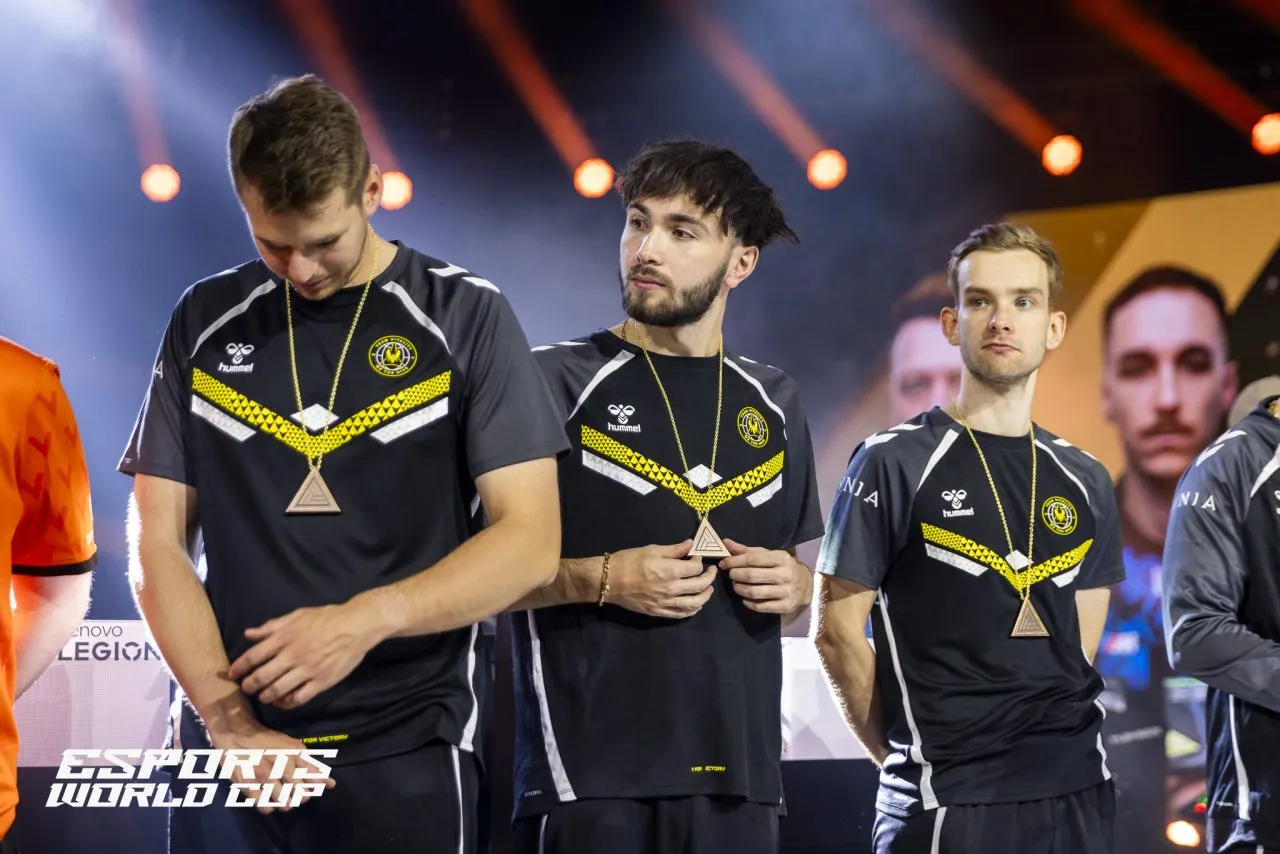
The clearest signal that this is structural rather than a one-off scheduling decision came on 21 July 2026, three weeks into the Esports World Cup that no longer features the game.
Team Vitality announced its withdrawal from Rennsport sim racing, citing a lack of foundation in the sim racing ecosystem as the reason. Vitality is not a marginal organisation. It is one of the largest esports clubs in Europe and one of the biggest earners at the Esports World Cup itself.
When a club of that size publicly states that the ecosystem does not support its investment, the problem is no longer about one game’s roadmap. Sim racing likes to tell itself a particular story: that it is the most authentic form of esports, the one with genuine crossover into real motorsport, the discipline where the skills transfer. All of that is true. Drivers have gone from sim racing seats into real cars. Manufacturers run official programmes. The competitive depth is real.
None of it produced an audience that could justify a place at the biggest event in the industry. That is the part worth sitting with. The problem is not competitive quality. It is that sim racing broadcasts are hard to watch if you are not already a sim racer. The visual language of a racing sim is nearly identical to a racing game, the strategic layers that make it fascinating are invisible without commentary, and a 45-minute race does not clip well for social media. Trackmania, whatever else you think of it, solved the spectator problem years ago.
What still exists
It is worth being precise about what has and has not disappeared, because the ecosystem is not collapsing.
- F1 Sim Racing continues with a 750,000 dollar prize pool across 12 rounds, with drivers competing under official Formula 1 team banners and the season opening at DreamHack Birmingham.
- The eNASCAR Coca-Cola iRacing Series, the Porsche TAG Heuer Esports Supercup and the IMSA Esports Global Championship all remain active.
- Rennsport’s own R1 series ran its Spring 2026 season, won by Porsche Coanda.
- Manufacturer-backed programmes and the iRacing competitive ladder are unaffected.
What has changed is the ceiling. Sim racing’s competitive scene now runs entirely on motorsport money and platform money, with nothing coming from the general esports economy. That makes it more dependent on the goodwill of car manufacturers and race series than it was two years ago, and considerably more exposed if that goodwill cools.
Where this goes
The Esports World Cup returns in 2027, host city unannounced. Whether a racing simulator comes back with it depends on a question nobody in the discipline has yet answered convincingly: how do you make sim racing worth watching for people who do not do it themselves?
iRacing has arguably come closest, not through esports but through accessibility, with a career mode and a broader outreach strategy aimed at exactly the audience the discipline has failed to convert.
The tools to fix this exist. The evidence of the last two years is that nobody has used them yet.
See you on the track!
This website uses affiliate links which may earn a commission at no additional cost to you.