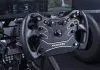


2026 has just started and, if the big shift is real, you can feel it already: sims have stopped being “a game with cars” and turned into full-on ecosystems. Some will take you out to open roads, others will make you stare at telemetry like a race engineer, and the old giants will remind you that rain doesn’t negotiate. More freedom, more layers, and yes, more ways for your setup to betray you.
The good news is you don’t need a new wheel, you don’t need to sell a kidney, and you definitely don’t need to learn Latin. You need calibration. Not “touch four sliders.” Real calibration. The kind that, when it finally clicks, makes you go, “Oh. Right. It was this.”
Let’s take it step by step, like tuning a guitar before a concert.
The golden rule of 2026
Before, with more forgiving physics or content mostly confined to circuits, you could survive with a messy brake setup or a wildly overcooked FFB. In 2026, with higher-fidelity behavior, higher refresh rates, and more varied situations (curbs, bumps, traffic, rain, open roads), your setup becomes your fingerprint.
If there’s one idea I want you to leave with, it’s this:
Calibration isn’t about being faster today. It’s about repeating the same lap tomorrow.
That repeatability is the real career mode of real life.
1. FFB: your wheel isn’t a punishment machine, it’s a translator

There are two kinds of badly calibrated FFB:
One that says nothing (you’re driving on gelatin). Another that says everything by screaming (you’re driving on a washing machine during spin cycle).
In 2026, with more detailed physics, the goal is for the wheel to speak clearly, not loudly.
How I reset my FFB when I want a clean baseline
I “close my eyes” (metaphorically, please don’t literally do it) and look for three things:
A) Center weight and natural self-return
The wheel should want to come back without fighting you.
If it snaps back aggressively, you’ll tense up. If it gives you nothing, you’ll correct too late.
B) Grip information
The important thing isn’t “feeling force,” it’s feeling when you’re losing grip.
C) No clipping
Clipping is when FFB hits the ceiling and crushes detail. It’s like listening to music at 100% volume: impressive at first, then fatigue, and all the nuance disappears.
Classic clipping sign: in long corners or over bumps, everything feels equally strong, like the sim only knows how to yell “AAAA.”
FFB checklist (no mysticism)
- Lower global FFB until fast corners still have nuance. If you’re unsure, lower it a bit more.
- Increase “detail” or “road effects” carefully. If it vibrates just for existing, you’re fooling yourself.
- Prioritize self-aligning torque (the force that tells you about grip). Everything else is seasoning.
- Do a quick test in three scenarios: a long corner, an aggressive curb, and a hard braking zone. If you understand what’s happening in all three, you’re good.
And a confession: when I calibrate it right, my first reaction isn’t “this is insane,” it’s “this is logical.” That’s a great sign. The good kind of magic often sounds boring.
2) Brake: where races are won

If the wheel is the translator, the brake is the judge. In 2026, with more simulation and higher demands, a poorly calibrated brake will steal your confidence. And without confidence, there’s no consistency, only superstition.
Two classic mistakes:
Braking by travel (as if your foot measures centimeters). Or braking by force with no reference (as if your foot is improvising jazz).
The ideal is braking by force with a clear reference, even if your pedal set isn’t top-tier.
The brake should feel like a wall with memory.
A wall that doesn’t move every lap.
Practical setup: your anchor point
The goal is for your foot to find the same “language” every time:
- Minimal deadzone (if there is one, it should be intentional, not a mystery).
- Gamma or curve: if it’s super sensitive early and then nothing, modulation becomes a nightmare. Aim for a curve that lets you control 10% to 80% without panic.
- Max brake: set it so 100% is reachable without doing an Olympic squat, but also not with a gentle pet.
A short test that never lies
On a long straight:
- Brake to 70% and release smoothly.
- Brake to 90% and release smoothly.
- Repeat 5 times.
If the car behaves differently each time for no clear reason, it’s not “new physics,” it’s your foot without a reference.
Your brake should let you repeat the same stop five times in a row without thinking.
And here’s the serious joke: if you’re clenching your teeth under braking, you’re braking wrong. Teeth are not a peripheral.
3. Position: your body is the chassis, and now the chassis matters more

2026 brings more situations: open roads, rough surfaces, changing asphalt, dynamic conditions. If you sit poorly, your brain processes worse. When your brain processes worse, your hands “compensate” with tension. And when you compensate with tension, you get the full combo: overcooked FFB, messy braking, late corrections.
Position isn’t “comfort.” It’s sustainable performance.
Three adjustments that fix most problems
A) Wheel height and distance
Wrists can rest on top of the rim with relaxed arms.
Too far and you’ll pull the wheel. Too close and you lock yourself up and lose finesse.
B) Pedals and hips
Braking should come from your leg, not your whole body.
If you slide or shove the chair under braking, your body is playing pinball with your inputs.
C) Screen and vision
Vision leads, hands obey.
If you look wrong, you turn late. Turn late, you correct. Correct, you lose rhythm. It’s dominoes.
Yes, this applies whether you’re on a circuit or cruising a beautiful free-roam road. If anything, open roads demand constant micro-adjustments, and poor posture shows up twice as fast.
4) Consistency

2026 is full of temptations: try a thousand cars, a thousand tracks, a new mode, a content roadmap that never stops. It’s wonderful. But if you change everything at once, you won’t calibrate anything. You’ll just collect sensations.
Consistency is when your setup stops being an experiment and becomes an instrument.
A human routine to avoid losing your mind
- Pick a “lighthouse car”: one you know well, one that doesn’t punish you for existing.
- Pick a “lighthouse section”: a track or sector with a fast corner, a hard braking zone, and a meaningful curb.
- Keep sessions short: 15 to 20 minutes. Adjust, return, repeat. Don’t spend two hours wrestling a slider like it’s a novel.
And something nobody wants to hear but everybody needs:
If you change FFB, don’t touch the brake the same day.
Otherwise you won’t know what improved. You’ll only know “something” changed, and your brain will invent explanations the way it invents theories when you can’t find your keys and blame the universe.
5. Final checklist (mentally tape this next to your monitor)
FFB
- No clipping in long corners and over bumps.
- Grip is readable without needing cartoon-level strength.
- Road effects at the minimum useful level, not maximum entertainment.
- Triple test: fast corner, curb, hard brake zone.
Brake
- Repeatable references: 70% and 90% without surprises.
- Gamma curve that lets you modulate 10% to 80% with control.
- 100% reachable without injury, but with intent.
Position
- Wheel: relaxed arms, fine control.
- Pedals: you’re not pushing the chair, you’re pushing the brake.
- Vision: look where you want to go, not where you already are.
Consistency
- One lighthouse car and one lighthouse section.
- One change at a time, in short sessions.
- The real goal: repeatability, not instant wow.
Calibration is the most humble act in simracing. It has no glamour. It won’t hand you a miracle lap immediately. But it gives you something better:
When you mess up, you know why. And when you get it right, you can repeat it.
See you on the track!
This website uses affiliate links which may earn a commission at no additional cost to you.