

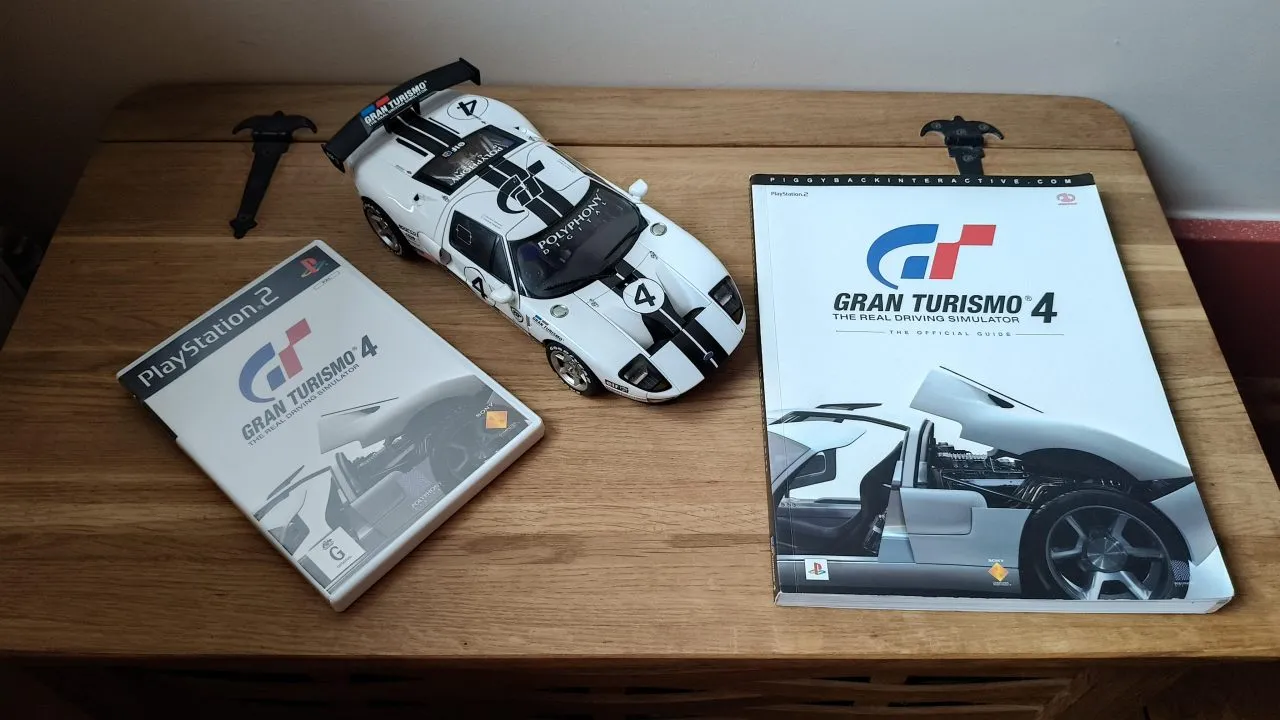

There was a time when buying a Gran Turismo game did not simply mean unlocking cars, completing licenses, or filling an impossible garage. It also meant discovering places. Places that were not on any map, that did not appear in Sunday race broadcasts, and that were not repeated across every driving franchise. They were landscapes created for one very specific purpose: to be driven.
Gran Turismo did not only lose cars, modes, or championships. It lost part of its emotional geography.
El Capitán, Citta di Aria, Seattle, Apricot Hill, Mid-Field Raceway, Grand Valley, Deep Forest, Trial Mountain. For many players, those names are not just circuits. They are memories with corners. They are entire afternoons spent learning a braking point, a blind crest, a tunnel entry, or a treacherous exit. They were digital places, yes, but they had weight. They had atmosphere. They had a personality that did not depend on an official license.
Back then, Gran Turismo was not only competing to reproduce reality better than everyone else. It allowed itself to invent reality. That was where much of its magic lived.
Header Image: Original Source Reddit
GT4 and the Golden Age of Track Design
Gran Turismo 4 is often remembered for its enormous car list, but its true greatness was not only in quantity. It was in its sense of world. That game seemed to contain an entire culture of the automobile: real circuits, urban routes, rally stages, mountain roads, and fictional racetracks that felt just as important as the official ones.
GT4 was a golden age because it still understood the circuit as a work of design, not merely as a surface to be measured.
Its original tracks worked like small pieces of playable architecture. El Capitán was a roller coaster of asphalt in Yosemite, fast and dangerous, with elevation changes that forced you to listen to the car. It was not enough to brake late. You had to feel when the suspension compressed, when the chassis went light, and when the car started to push wide before the corner had even ended.
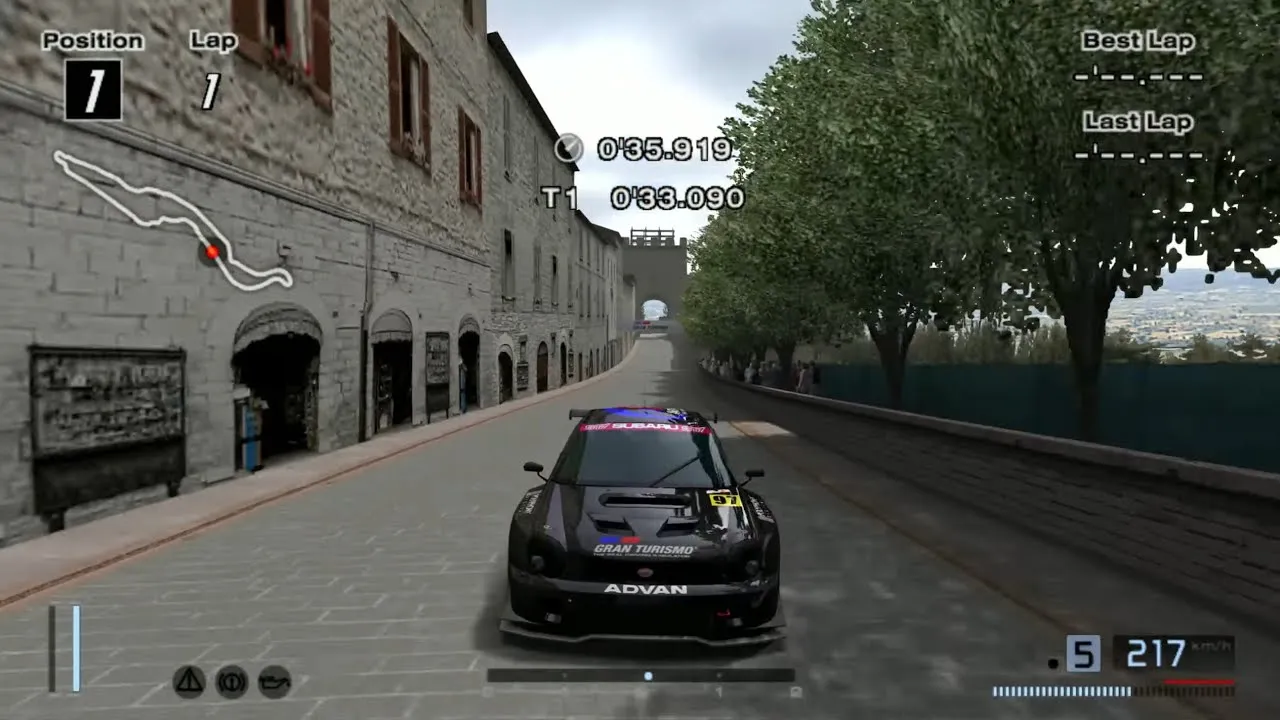
Citta di Aria was the opposite: narrow, slow, almost uncomfortable. Its stone streets did not seem built for racing, and that was precisely why they became unforgettable. There, the player was not facing a wide, clean circuit, but a city that seemed to close in over the hood. Every wall was too close. Every mistake had consequences. It was a test of patience, precision, and nerve.
Seattle brought another kind of madness. Its slopes launched cars into the air, broke aerodynamic load, and forced players to think about something that has almost disappeared from the modern repertoire: how a car lands. You had to prepare the suspension, lift slightly, correct on touchdown. It was urban, rough, and spectacular.
Apricot Hill, Mid-Field, and Autumn Ring offered a different kind of elegance. They did not need real landmarks or famous names to remain in memory. They had rhythm. They had identity. They had that difficult-to-explain quality that makes a track feel natural even when it is entirely invented.
Digital Heritage, Not Mere Nostalgia
Saying that those circuits should return is not a nostalgic whim. It is a recognition that they form part of the series’ digital heritage. A fictional circuit can be just as important as a real one if it has built memories, taught players, and shaped an identity.
Fiction can also become a place.
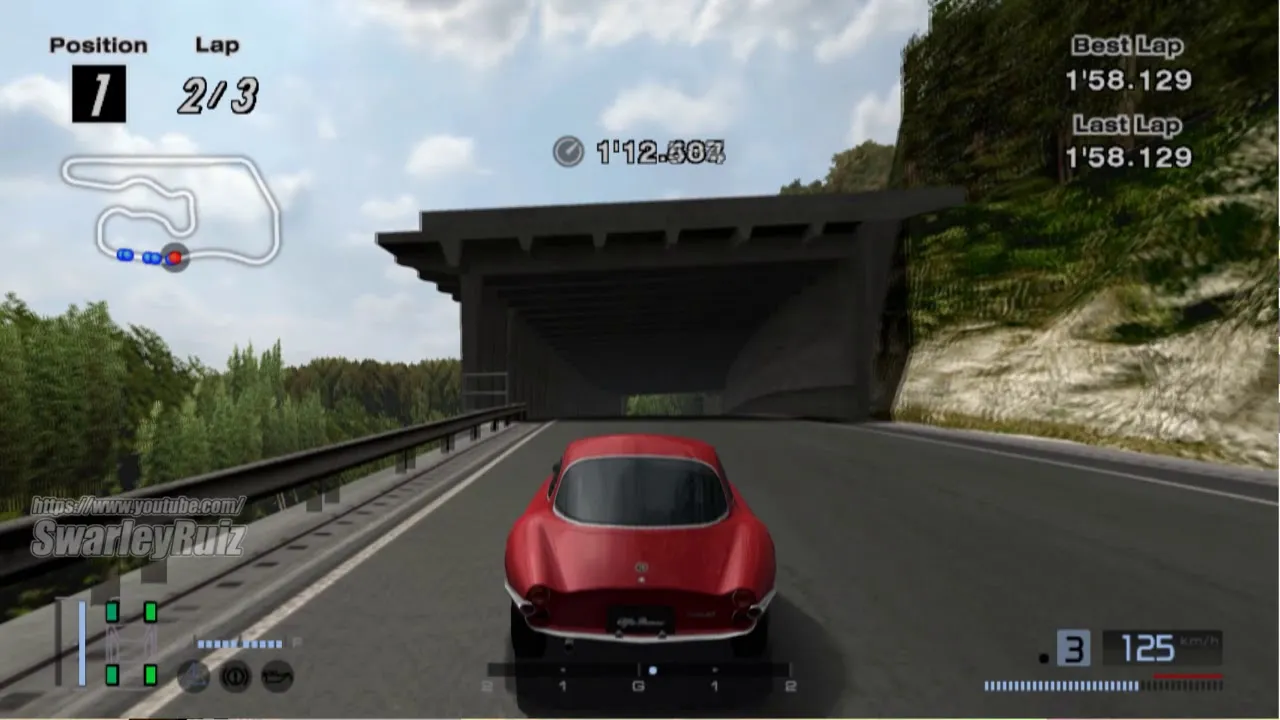
Grand Valley did not need to physically exist to become one of Gran Turismo’s great temples. Its bridge, its straights, its atmosphere of a perfect racetrack, all of it belonged to the series in a way no licensed circuit could replicate. Deep Forest and Trial Mountain worked the same way: they were original landscapes, recognizable and intimate. The moment they appeared on screen, you knew where you were.
That is the value that has slowly faded. Today, many driving games share the same mental map: Spa, Monza, Nürburgring, Laguna Seca, Suzuka, Silverstone. They are magnificent circuits, of course. Their presence is not the problem. The problem is that they have become the almost mandatory center of the genre, while original places are pushed aside, redesigned, or forgotten altogether.
When everyone tries to reproduce the same tracks with greater detail, surprise becomes narrower. The player no longer wonders what world they are about to discover, but which version of a familiar track they are going to try this time.
Laser Scanning Measures Everything Except Wonder
Laser scanning has been an impressive step forward. Thanks to that technology, modern simulators can reproduce bumps, cambers, cracks, curbs, and surface changes with a level of precision that would have seemed impossible twenty years ago. For competition, training, and technical fidelity, it is an extraordinary tool.
But precision should not be confused with imagination.
Simulating reality is not the same as creating a playable reality.
The problem appears when the industry begins to value the millimeter more than emotion. A laser-scanned real track can be flawless and still fail to awaken anything new. It can be accurate, beautiful, technically admirable, and also familiar to the point of exhaustion. Accuracy reproduces the world. Design interprets it.
The old Gran Turismo circuits did exactly that: they interpreted driving. They were not always realistic in the strictest sense, but they were believable behind the wheel. The car reacted logically. The suspension worked. Weight shifted. Tires suffered. The track spoke its own language.
A driving game cannot reproduce the G-forces of a real car or the physical fear of entering a corner too fast. That is why it has to translate those sensations. It can do so through sound, elevation, close walls, lighting changes, tunnels, jumps, and corners that make you hold your breath. The classic Gran Turismo circuits knew how to lie just enough to express an emotional truth: racing is dangerous, beautiful, and sometimes irrational.
The Domestication of the Classics
Gran Turismo 7 tried to recover part of that legacy with the return of Trial Mountain, Deep Forest, and Grand Valley. The intention was clear: to reconcile the modern series with its own memory. But for many veteran players, the result left a bitter feeling. Not because those circuits were technically poor, but because they came back changed.
Trial Mountain returned longer, wider, and better prepared for online racing. Its famous final section lost some of that delightful recklessness that once invited risk. Deep Forest kept its name, but its rhythm changed, adding sections that were more functional for overtaking and less faithful to its old flow. Grand Valley was the most extreme case: it stopped being that grand fictional autodrome, almost ceremonial in spirit, and became a coastal road inspired by California.
Visually, the result can be spectacular. But the important question is not whether it looks better. The question is whether it still feels the same.
Remastering a circuit should not mean removing its scars.
Modernization has brought width, run-off areas, more logical pit lanes, safer corners, and sections designed for large grids. All of that makes sense from a competitive point of view. However, many older circuits were not memorable because they were balanced or comfortable. They were memorable because they were strange, dangerous, narrow, or excessive. Correct them too much, and you lose the very thing that made them unique.
The City That Stopped Racing
Urban circuits may be the most understandable and painful loss. Understandable because creating a city at today’s graphical standards requires an enormous amount of work. Building a forest with repeated trees is not the same as modeling façades, shop windows, cobblestones, signs, streetlights, and unique buildings. Every street needs detail. Every corner costs money.
But it hurts because Gran Turismo had a special strength there. Citta di Aria, Costa di Amalfi, Seattle, Hong Kong, New York, and Paris were not simple backdrops. They were different ways of driving. They took the player out of the autodrome and placed them in uncomfortable, narrow, imperfect locations. Places where beauty was mixed with risk.
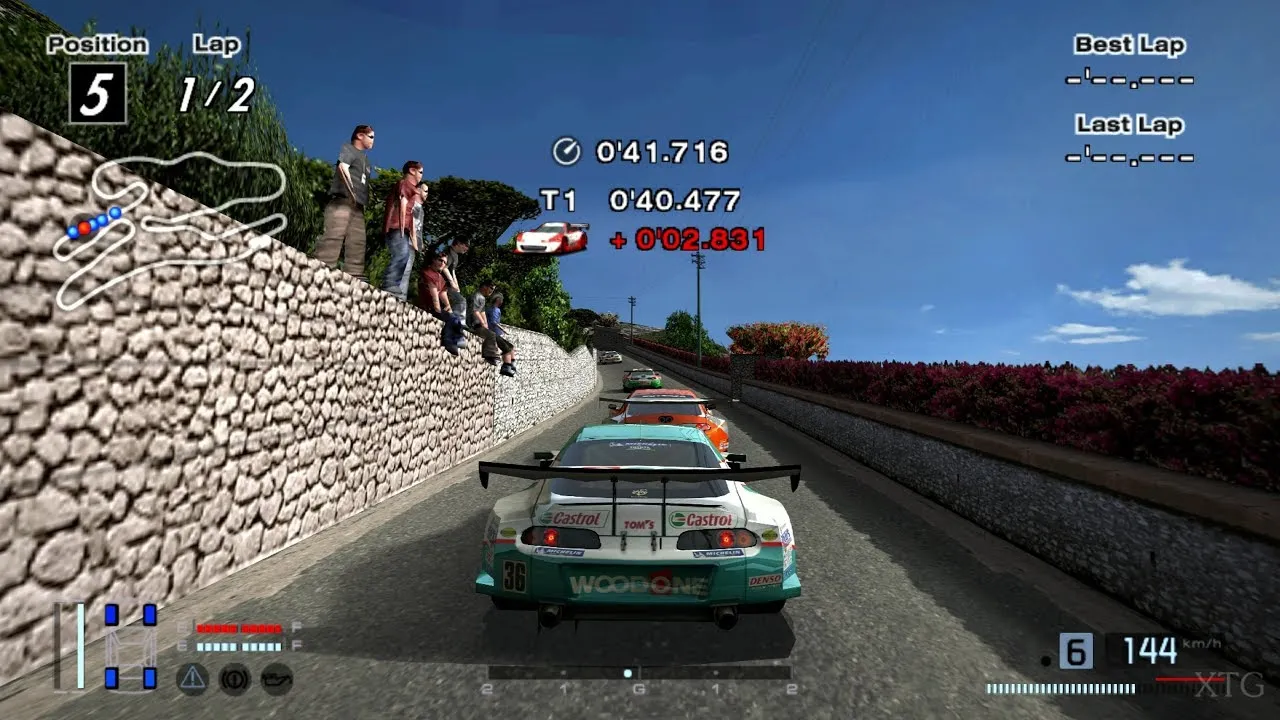
Modern online racing asks for something else: large grids, functional pit lanes, clean overtaking, clear penalties. A track like Citta di Aria, with twenty-four racing cars, would be chaos. Seattle, with its jumps and walls, would break any idea of an orderly race. To make them viable, they would have to be transformed so much that they might stop being themselves.
That is the dilemma: some tracks only work if their nature is accepted. Not everything has to serve esports. Not every circuit needs to be fair, wide, and broadcast-friendly. Some should exist simply because they are unforgettable.
The Identity Left Behind
Modern Gran Turismo has gained a lot: precision, lighting, detail, physics, presentation. Denying that would be absurd. But a series is not defined only by what it gains. It is also defined by what it chooses to leave behind.
The original circuits were an authorial signature.
Any simulator with enough budget can have Spa or Nürburgring. But only Gran Turismo could have Apricot Hill. Only Gran Turismo could take you to Mid-Field. Only Gran Turismo could turn a fictional forest, a narrow Italian town, or an impossible mountain into part of its identity.
By giving up many of those places, the series moved closer to the rest of the genre. It became more precise, yes, but also less singular. In a market where many games share cars, categories, and real circuits, difference is no longer found only in tire modeling or force feedback quality. It is found in the world each game dares to build.
And for years, Gran Turismo built one of its own.
Imagining Again
The future should not have to choose between precision and fantasy. That opposition is false. Today’s technology could be used to create original circuits with a level of physical and visual quality never seen before. A new El Capitán could take advantage of modern suspension physics, dynamic weather, irregular asphalt, and advanced sound without losing its spirit as an impossible mountain road.
A new Citta di Aria could be designed as a special event for smaller cars, without needing to fit the logic of a massive grid. Apricot Hill or Mid-Field could return not as relics, but as reminders that design is also identity.
The mission is not to copy the past, but to recover its courage.
Gran Turismo needs to remember that speed does not live only in telemetry. It also lives in the landscape, in mystery, in the corner that should not exist, in the tunnel that appears too late, in the wall that sits too close, in the jump that unsettles the car for half a second.
The decline of original tracks is not a technical tragedy. It is a cultural loss. Those circuits had a soul, even if they were made of polygons. They were destinations, not simple layouts. They were places players wanted to return to.
And perhaps that is the lesson: the most accurate simulation in the world can teach us how a car behaves, but only a great imagined circuit can make us remember why we wanted to drive it in the first place.
This website uses affiliate links which may earn a commission at no additional cost to you.





Even though I’ve only ever played GT7, I can completely relate to what you’re saying about unique tracks by relating to the great Need for Speed tracks before it went to the “fictional city” formula. Fictional racing game tracks between the 90s-early 2000s were highly memorable, not just in GT but Ridge Racer, NFS 1 to 5, etc.
Definitelyyyyyyyyy, agreeeeeeee, welllllll put,said,written & we would like the NOSTALGIA BEFORE THEY DROP THE ASTEROID ON US, BECAUSE ITS ITS IN THE WORKS AND COMING IN 2028 WHEN WE LOSE CONTROL BCUZ NO “”PHYSICAL DISCS ANYMORE””!!!🤔🤔🤔👎🏿👎🏿👎🏿
Yes bring back some of the older tracks you mention BUT at the same time please please please increase the penalty system that plagues sport mode.
GT7 completely ruined and butchered all the original tracks. RIP Grand Valley, RIP Trial Mountain, RIP Deep Forest, RIP Eiger Nordwand, RIP Tokyo R246.
Agree, especially when the tagline is “THE Real Driving Simulator.” More than racing, it should evoke the emotion of pure driving.
10000% need both midfield and apricot Hill back.
I Love Gran Turismo I Used To Play GT Untill Gt Sport And I Love The Way It Makes You Be The Driver! (I Like Classic Race Cars)
I kept my old PlayStation 2 for years just because I loved GranT4 so much. I think to date it is the best version of the series and I’ve owned each of them since the original. It is what made me purchase a PlayStation in the first place. The first time I saw the commercial for Gran Turismo I knew I had to have it and now when I see the commercials it doesn’t even make me think twice anymore because the feeling has left the game. The need to sit down and invest all the time and learning how to drive the tracks and set up the car is not there for me anymore.