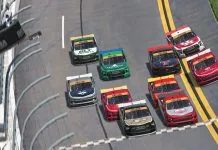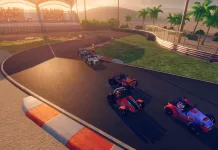


There is something almost poetic about watching iRacing, a simulator that has historically been cautious, meticulous, and maybe a little conservative, finally embrace street circuits. For years, the topic felt like taboo. One of those ideas that, when mentioned, someone would sigh and say, “Yeah… it would be incredible, but the art workload, the buildings, the tools… look, let’s talk about something else.”
And honestly, I get it. Building a street circuit is not scanning a scenic highway and adding walls. It is reconstructing an entire city with the obsessive fidelity iRacing applies to each corner. It means putting Long Beach, Adelaide, or St. Pete inside a graphics engine that was, let’s say, not particularly enthusiastic about the idea.
But something changed.
A Past Where Street Circuits Were More Myth Than Reality
For more than 15 years, iRacing walked around street circuits like someone avoiding an ex at the grocery store. There were attempts, yes, but they were “street tracks” only in spirit:
- Montreal: technically on an island-park. Pretty, but not exactly skyscraper territory.
- Belle Isle: also surrounded by greenery more than city blocks.
- Le Mans: rural French charm, not urban chaos.
- Nordschleife and Bathurst: public roads, sure, but no one thinks about buildings when driving them.
The true city circuits, with real avenues, tight corners, and full urban decoration, stayed out of reach.
The reason? The art pipeline.

Imagine modeling every building in Long Beach: the windows, signs, light posts, trash cans, cables, benches, and that random café no one notices but someone on a forum will complain about if it’s two meters off. Without automated tools, it was pure torture.
This is why Long Beach spent years in that strange limbo called “tech track.” A poetic name meaning, “Yes, it exists, but touching it gives us hives.”
Then a Pandemic Arrived… and Strangely, So Did a Solution
When the real world stopped, iRacing stopped scanning new tracks. No travel meant no new scans. So what do you do when you are stuck at home with no fresh content pipeline?
You open that drawer filled with historical debts.

Long Beach, that long-shelved project, suddenly became the perfect testing ground to learn, experiment, and most importantly, solve a problem more than a decade old.
New art tools were developed, workflows became more efficient, and techniques to replicate buildings without modeling each brick manually emerged.
When Long Beach finally released, something bigger happened: iRacing realized they could make street circuits without needing therapy afterward.
This was the turning point.
And Suddenly… Boom. A Flood of Street Circuits
I don’t know about you, but I’m still not used to the frequency with which street circuits are being announced. It’s as if someone removed a plug and now the water is blasting out.
- Adelaide arriving within days.
- Miami, a hybrid track but with walls and palm trees, which absolutely counts.
- St. Petersburg, confirmed with an estimated release window.
- Coronado, not officially announced but strongly hinted.
- And potential additions tied to the IndyCar console project: Detroit, Markham, Arlington.

It’s as if iRacing went from “Let’s not touch that” to “Bring me another street circuit, this one turned out great.”
What Does This Mean for the Future of the Sim?
- This shift is not just aesthetic. The ability to produce street circuits consistently signals three important transformations.
More Variety in Official Series
- Drivers will face environments that reward surgical precision, risk management, and a little extra bravery. Safety Rating may cry. The walls will laugh. It will be beautiful.
New Competitive Opportunities
- Many real-world championships rely heavily on urban tracks. Expanding these calendars virtually opens the door for more authentic seasons and events.
A Graphics Engine Forced to Evolve
- Street circuits demand improvements in lighting, object density, and optimization. If your GPU survived Las Vegas in other games, it may survive what’s coming here. If not, well, maybe it’s time to dust off the cooling system.
And we, as virtual racers, are about to experience one of the richest and most exciting eras of modern sim content. An era where every mistake is paid for with a kiss to the wall, and every clean lap feels like a personal triumph.
- Remember, you can join iRacing clicking here.
See you on the track!
This website uses affiliate links which may earn a commission at no additional cost to you.