

In Formula 1, strategy is always about fine margins. It’s the same kind of split-second decision-making you see on competitive platforms like GameZone, where the right move at the right time can turn the whole outcome around. In F1, one pit stop can decide a race. That strategy debate had been about two concepts, the undercut and the overcut, for years. Teams had seen them as two viable but balanced options depending on track position, tire wear and traffic.
But modern F1 has shifted that balance. What used to be a fairly balanced strategic choice is now increasingly weighted in favor of one of the parties. The undercut is more powerful, more predictable and more decisive. The overcut has turned into a situational gamble that only works under certain conditions.
So what has changed and why is it more relevant than ever in today’s racing?
The Basics: Same Concept, Different Outcomes
The undercut is basically where a driver pits before a competitor, gets on to the new rubber, and uses that advantage to gain time before the rival pits. The overcut is the opposite: staying out longer, running faster laps on worn tires while a rival pits and trying to make up time with a consistent pace and clear air.
Both are, on paper, timing and tire performance decisions. In the older eras of F1, especially when tire degradation was more gradual and consistent, both strategies could work relatively evenly depending on the circuit.
That balance has now been inverted.
Tire Behavior Has Changed the Entire Equation
One major reason for the switch in strategy is the nature of modern F1 tires. Pirelli’s current compounds are built to work within narrower performance windows, so they hit peak grip faster but also fade more quickly.
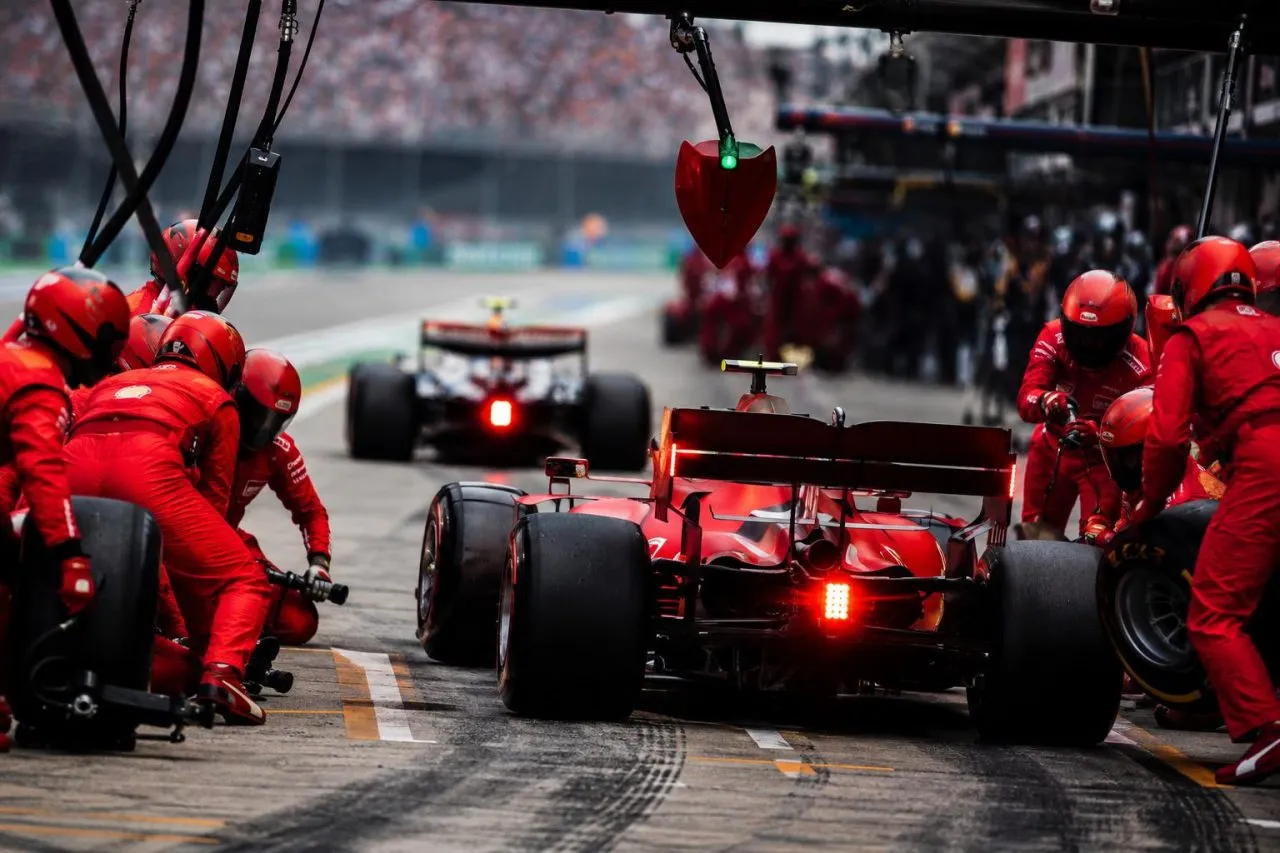
This gives a big advantage to cars with fresh tires. “As soon as a driver comes out of the pit lane, they can extract lap time gains straight away, particularly in the first two or three laps of a stint.
The overcut, however, requires a driver to wring the maximum performance from worn tires. That “extra performance” window is narrowing in today’s environment. As degradation sets in, lap times fall off more quickly and consistently, allowing less opportunity for long-run gains.
Essentially, the new tires are more valuable early in the stint than they used to be, so the undercut gets stronger.
The Role of Dirty Air and Track Position
Another big factor is aerodynamic turbulence, or dirty air. But in modern F1 cars, performance drops when you are close behind another car, even with recent rule changes designed to improve racing.
That’s important for strategy, because it takes away the biggest advantage of the overcut, which is running in clean air.
Drivers who try to overcut often end up with older tires, stuck in traffic or behind cars that have already pitted. That restricts the potential for much faster laps.
A driver who pits for fresh rubber, meanwhile, returns to the race in a more controlled environment – often with a clearer track ahead – and therefore can get maximum performance out of the tires immediately.
This renders the undercut not only a tire advantage strategy but also a track position optimization tool.
Simulation Has Reduced Strategic Gambling
Modern F1 teams depend on real-time simulation models, analyzing tire data, fuel loads, track evolution and competitor behavior within seconds. These systems are very good at predicting the optimal pit windows.
This means teams are less willing to risk overcuts unless the data is sufficient. The logic is simple: if simulations show that fresh tires are almost always quicker than long stints, then the undercut becomes the default decision.
“Earlier times had more to depend on intuition and reactive decision-making. That uncertainty resulted in more strategic diversity. Today, strategy is more data-driven, and that has unintentionally narrowed the gap between undercut and overcut effectiveness.
When the Overcut Still Works
The overcut is not dead, although the trend is toward undercuts. It still has a role to play in specific scenarios, particularly when tire conditions are unusually stable.
For example, if tires get to a “sweet spot” phase, where the degradation plateaus after the initial wear, a driver who stays out can sometimes match or even beat the pace of a driver who has just pitted. This is more likely for circuits with smooth surfaces or low degradation profiles.
Also, track position is important. If a driver is in clear air on an overcut and is able to push consistently without traffic interference, then it’s a much more viable strategy.
There are still circuits with unique characteristics, like Monaco or Suzuka-style layouts, that can lead to overcut success stories, depending on timing and race flow.
Why the Shift Matters for Modern F1 Racing
The increasing disparity between undercut and overcut strategies has wider ramifications for race developments. Pit windows are becoming more predictable, and teams are making more similar strategic decisions.
This decreases randomness but increases precision. Races are more about execution in narrow margins than strategic experimentation.” Now, instead of fighting over two equally viable options, crew chiefs work almost solely on timing the undercut perfectly.
At the same time, it puts more emphasis on qualifying and getting a good position at the start of the race, as overtaking through alternate pit strategies alone is more difficult.
This website uses affiliate links which may earn a commission at no additional cost to you.