

Gran Turismo 7 has already passed its fourth anniversary on the market, and as is tradition for Japanese studio Polyphony Digital, that can only mean one thing: the next numbered chapter of the series is already underway. July 2026 has left a trail of technical clues, corporate moves, and calendar decisions in Japan that, taken together, offer a fairly reliable map of where Gran Turismo 8 is headed. Neither Sony nor Polyphony has confirmed a release date, but the accumulated evidence suggests a project that has already left the conceptual stage and entered full-scale production.
The first hard data point comes from human resources. Polyphony Digital has simultaneously posted eighteen high-priority job openings at its Japanese studios, a volume far higher than what a team simply maintaining a live-service game in its post-launch phase would typically need. The roles include high-fidelity 3D modelers, artificial intelligence engineers, dynamic physics programmers, project directors, and content writers.
In industry terms, this points to one thing: preproduction has ended and the studio is now structuring the core codebase of the new simulator. Kazunori Yamauchi, the franchise’s longtime lead, has emphasized that the studio’s goal isn’t simply to deliver the best possible driving experience, but to “create the future through art and technology,” a statement that lines up with the active search for engineers willing to push past the limits of current hardware.
When Could It Arrive?
The franchise follows a recognizable pattern: every PlayStation generational leap has historically added around 50% more development time compared to the previous entry. The reason is the exponential complexity of laser-scanning tracks, photogrammetry for vehicle interiors, tire thermodynamics simulation, and real-time ray tracing.

Some extreme speculation points to development cycles as long as twelve years, which would push a launch toward 2030, but the strongest consensus places the realistic window between late 2026 and 2028. Some leaks, treated with skepticism within the industry itself, point to May 2027 as a specific date. Whatever the exact day turns out to be, the deciding factor doesn’t rest solely on development speed, it depends on something far harder to control: hardware.
The DRAM Crisis
This is where the most disruptive element of the whole picture appears. Runaway demand for DRAM memory from AI data centers has monopolized a large share of the world’s silicon foundry capacity throughout 2026. This supply squeeze is driving up the cost of the components needed to build next-generation consoles.
As a result, the launch of a hypothetical PlayStation 6, which some analysts had placed to coincide with the franchise’s thirtieth anniversary in December 2027, could slip into a wider window, somewhere between 2027 and 2029.
This hardware delay makes a cross-generation launch strategy almost certain. Relying solely on an early, limited install base of new consoles would be commercially unviable given the scale of the investment involved, so the most likely outcome is that Gran Turismo 8 launches simultaneously on PlayStation 5 and PlayStation 6, with a visually superior version reserved for early adopters of the new system. It’s the same formula other major studios have already used to maximize returns without sacrificing market reach.
The CEDEC 2026 Milestone
If one moment sums up the technical leap taking shape, it’s the session Polyphony Digital engineers and Sony’s visualization division delivered between July 22 and 24 at the Computer Entertainment Developers Conference (CEDEC 2026), held at Pacifico Yokohama, titled “Beyond HDR.”
To grasp the significance, it helps to revisit the format’s lighting history. Standard dynamic range (SDR) operated between 0.02 and 100 nits, a direct legacy of old cathode ray tube displays. HDR, adopted industry-wide around 2016 and by the franchise itself since 2017, raised that theoretical ceiling to 10,000 nits. The problem is that no commercial television in 2026 actually reaches that far, most top out between 1,000 and 2,000 nits, forcing developers to compress lighting data through tone mapping, which creates unwanted effects like blown-out skies and reflections, or crushed shadow detail.
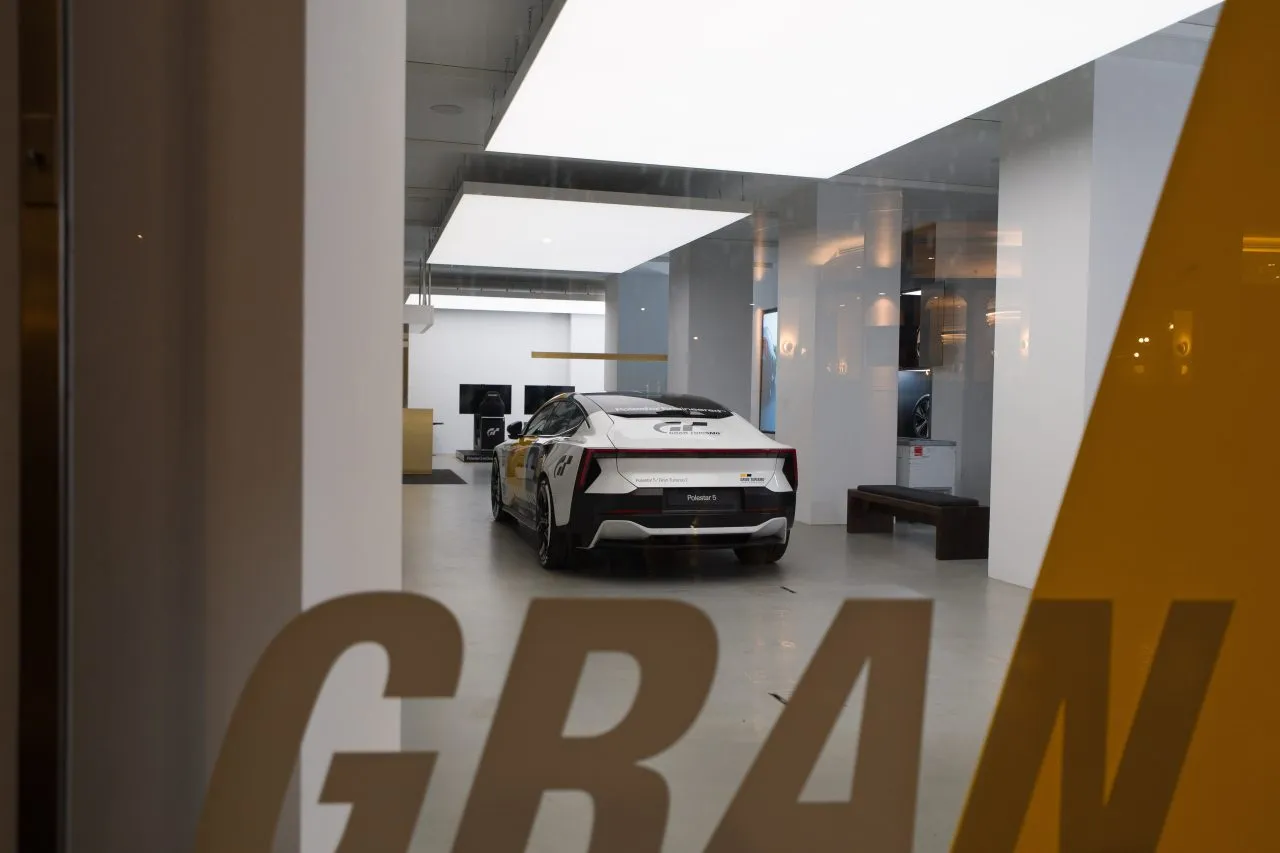
To get around this, Polyphony and Sony built a prototype RGB LED display capable of exceeding 10,000 nits. When the studio’s game engine was connected to that screen with no forced tone mapping, engineers demonstrated that the internal rendering pipeline already calculates correct photometric values at that scale. The result, described as a “tangible physical presence,” made it possible to see details for the first time, like the true gradation of sparks or the biological difference in glare between a halogen headlight and an LED one.
The technical takeaway is clear: the Gran Turismo 8 engine isn’t being built for today’s screens, it’s being built for the screens of several years from now. The studio is effectively setting the new visual reference standard for the next decade of display technology.
Artificial Intelligence and Peripherals
The leap isn’t only visual. GT Sophy, the racing AI agent that has appeared in Gran Turismo 7 during select events, has shown a reinforcement-learning ability to pull off aggressive racing lines and defensive maneuvers nearly indistinguishable from an elite human driver. Today, though, its use is limited to specific exhibitions.

Everything points to the next installment integrating an evolved version of Sophy directly into the campaign mode, replacing traditional scripted AI with rivals that behave dynamically and make more human-like mistakes. Running a full twenty-car grid this way demands significant computing power, another argument in favor of a next-generation CPU architecture.
At the same time, virtual reality and simulation peripherals, including direct-drive wheels and DualSense adaptive haptics, appear headed toward native integration with the physics engine rather than remaining a bolted-on layer.
The Testing Ground
One reliable way to anticipate the next game’s roster is to watch which vehicles the studio is adding to the current title, since every model scanned today eventually gets carried over to the next entry. Throughout 2026, the focus has fallen on two fronts: hybrid endurance hypercars and cutting-edge electric vehicles.
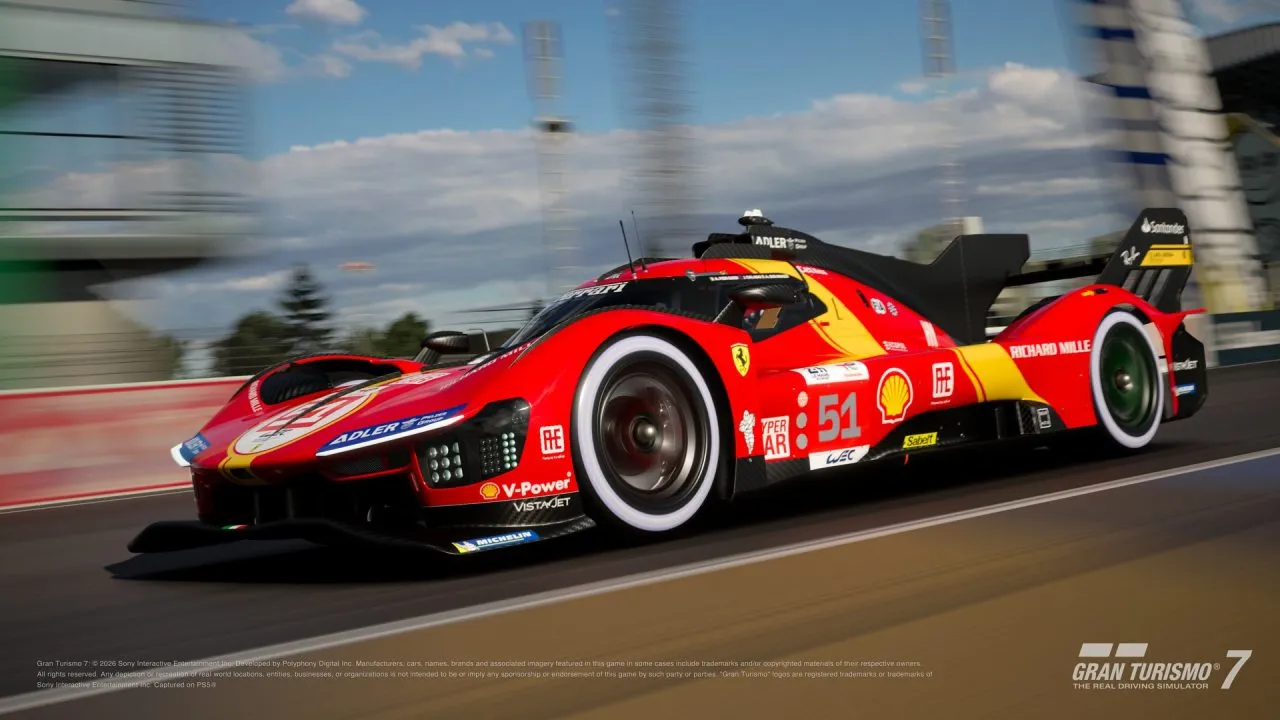
Update 1.70, released in June, added five machines from the World Endurance Championship, including the Ferrari 499P, winner of the centenary running of Le Mans, with its complex hybrid power delivery to the front axle, and the Peugeot 9X8, whose redesign with a rear wing forced a complete recalculation of its aerodynamic balance.
Months earlier, January’s update introduced the Xiaomi SU7 Ultra, a three-motor electric car producing 1,548 horsepower and capable of sub-two-second 0-100 km/h times, a major challenge for the simulator’s mass and structural rigidity modeling. It also brought the Hyundai Elantra N TC, a front-wheel-drive car that forced a full recalibration of the balance of performance across its entire class.
This growing collection of telemetry, traction, and aerodynamic data isn’t incidental: it’s the physical database the next title will be built on.
Community, Esports, and a Nod to Tokyo
The competitive side is also being prepared. Sony has pushed forward its Player Base initiative, in which selected players are 3D-scanned to appear as in-game characters, an effort to blur the line between real fans and the virtual environment.
On the esports front, Japan has strengthened its talent pipeline with national tournaments and school championships designed to guarantee a new generation of trained drivers ready for the next release. Internationally, after the safety-related cancellation of the season opener originally planned for Abu Dhabi, the 2026 Gran Turismo World Series will close its World Finals in Tokyo, the city where Polyphony Digital is based. The studio has historically used that closing stage to reveal new technology or concept previews, making this season finale the most likely setting for the first official look at Gran Turismo 8.
Taken together, the evidence, mass hiring, a game engine already validated at 10,000 nits, a constantly expanding vehicle database, and a reinforced competitive infrastructure, leaves little doubt that Gran Turismo 8 is already an industrial project in full assembly. What remains unresolved is the exact release date, and that uncertainty depends less on Polyphony Digital than on the global availability of semiconductors and the timeline for the next PlayStation.
In the meantime, every Gran Turismo 7 patch continues to function as a quiet laboratory, refining the graphical, physical, and artificial intelligence foundations that will define the next great leap in automotive simulation.
This website uses affiliate links which may earn a commission at no additional cost to you.