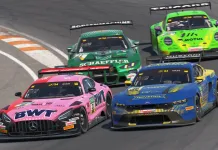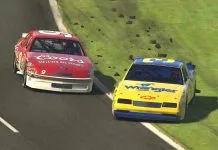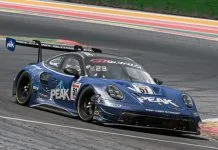


Every race felt like a documentary titled “The Day They Hit Me Again”. And the worst part? I wasn’t even doing anything reckless. At least, that’s what I told myself while watching yet another replay where someone used my rear bumper as their personal braking marker.
But eventually I realized something uncomfortable. Not everything was my fault, sure, but not everything was truly unavoidable either.
A big piece of the puzzle was spatial awareness, that mysterious sixth sense the faster drivers seem to have, where they somehow know a divebomb is coming two seconds before the other guy even thinks about it.
Look Ahead Like You Mean It
Most new drivers look at the car in front of them as if they’re waiting for it to tell a joke.
Too close, too focused, too reactive. But spatial awareness isn’t about reacting. It’s about predicting.
The moment you raise your eyes and look two, even three corners ahead, the world slows down. Not literally, of course, but your brain gets more time to prepare.

You start seeing the rhythm of the track. You notice where someone brakes a little too late,
or carries a bit too much speed, or wiggles just enough to scream “I’m about to lose it, brace yourself.”
When you look further ahead, danger stops being a surprise and starts being an RSVP’d guest.
Study the Opponent, Not the Lap Time
Every rival has a tell. Some drivers are smooth until they see a gap. Others brake like they’re trying to impress spectators in an invisible grandstand. And then there are the classics: the drivers who enter every corner as if auditioning for an action movie.
If you watch them for just one lap, really watch them, you’ll start picking up patterns:
- Do they consistently overshoot entries?
- Do they twitch when someone gets close?
- Do they treat the racing line like a philosophical suggestion?
Once you know their rhythm, you can position yourself in ways that make their mistakes less dangerous. It’s not about judging them. It’s about surviving them.
Brake Like You Know They’re About to Miss Theirs
One of the most underrated survival skills is braking early on purpose. Not because you can’t brake later, but because you know someone else will try to.
Picture this: someone behind you is clearly cooking their brakes. They’ve already outbraked themselves once, maybe twice. If you brake at your normal marker, congratulations, you’re the cushion in their emergency landing.

But if you brake just a hair earlier, the dynamics flip. You get the car stable, ready to rotate, and they fly past you like a majestic, confused bowling ball. You avoid the wreck and exit the corner clean while they reconsider their life choices.
Sometimes the best defense isn’t being fast. It’s being strategically boring.
Think Two Corners Ahead, Not Just the Next One
A common trap is treating each corner like a separate boss fight. But races are more like a chain reaction. Where you place your car now determines whether you survive what happens twelve seconds later.
If you’re entering a corner side by side with someone who loves improvisation,
ask yourself: where is this going to leave us for the next corner? If the answer is “in a terrible place,” lift early and reset the conflict. The goal is not to win one corner. The goal is to finish the lap with all four wheels attached.
Drivers who think ahead rarely collide. Drivers who only think about the moment are the ones who keep appearing in your replays as you sigh dramatically at your monitor.
The Truth About “It Wasn’t My Fault”
Here’s a gentle, annoying truth:
You can drive perfectly and still end up in someone else’s accident. But with better spatial awareness, the number of “inescapable” accidents shrinks dramatically.
It’s not about blaming the victim. It’s about increasing your toolkit. Once you start reading people, anticipating chaos, and positioning yourself with purpose, you’ll feel the stress melt away. You’ll start finishing more races. Your safety rating will relax. And your iRating will quietly thank you.
Most importantly, you’ll stop feeling like the universe has it out for you. Because now, you’re not just reacting to the race. You’re orchestrating it.
And that’s when iRacing really starts to feel like magic.
- Remember, you can join iRacing clicking here.
See you on the track!
This website uses affiliate links which may earn a commission at no additional cost to you.