


Imagine you sit down with me at a table, coffee in hand, and say:
“OK, I want to enjoy iRacing, not go broke, not get lost in licenses, calendars, cars, tracks, and if the sim can even pay me a few dollars back, even better.”
This text is exactly that: a casual, honest chat about what to buy, what not to buy, how to climb licenses without selling a kidney, and which cars and series are really worth your time.
It is not a technical bible, it is the guide I wish I had when I started.
Before anything else: three key ideas that will save you headaches
Let us start strong with the important stuff:
- Idea 1: Race whatever you want
- There is a “logical ladder” of cars, sure, but you are not forced to follow it.
- If you want to start directly with a more serious single seater like the SF23 and you have the required license, do it.
- The only thing that really matters is the license requirement, everything else is just theory and ego.
- Idea 2: iRacing pays you to race
-
- Series in Rookie, D and C classes can give you up to 4 dollars per season.
- Series in A and B classes can give you up to 7 dollars per season.Yes, you read that right. You can get some money back in credits:
- There are conditions, I will explain them later.
-
- Idea 3: the trick of buying “pieces”
- If you buy 3 to 5 pieces in one go, you get a 10% discount.
- If you buy 6 or more pieces, you get a 15% discount.We will call pieces any car or track you buy.
- That is why it makes sense to always buy in packs of 6 pieces.
- And once you reach around 40 pieces total in your account, iRacing usually gives you a permanent 20% discount on most content.
If you only remember these three things, you are already ahead of most of the grid.
How to test cars you do not own yet

There is a trick that is pure fantasy if you love trying new cars without paying extra.
The “Demo Drive” after scheduled maintenance.
Whenever iRacing performs maintenance, for a limited time you can:
- Go to the main page of the sim.
- Look for the section where you see something like “Demo Drive” with a countdown.
- Pick any car that is already in the sim (except the brand new releases of the current season).
- Select a track you already own.
- Download the car and start driving. Downloading is not the same as buying.
Practical tip: check the official maintenance announcements and mentally note the time, because 24 hours after maintenance ends is usually when the Demo Drive becomes available. That is the perfect moment to decide whether a car is worth buying for you or not.
First steps: Rookie without drama

In Rookie, you have two main worlds:
- Formulas: Formula 1600 and Formula Vee.
- Sports Cars: BMW M2 and Mazda MX-5.
My honest opinion:
- In sports cars, the friendliest car for beginners is the BMW M2.
- The MX-5 is a bit more lively at the rear, especially on cold tyres.
- The MX-5 is more fun, the M2 is more forgiving.
- If you are just starting out, I would recommend → M2.
- In formulas, neither car is super easy.
- But the Formula 1600 tends to feel slightly more intuitive than the Vee.
The good part:
All series in Rookie use base content, so you do not need to buy any tracks to get started.
My suggestion: test all four base cars. Stick with the one that makes you smile, even if it makes you sweat a little.
The famous “ladder” of cars and why you should not obsess over it
I will tell you the theoretical ladder, then I will happily tear it down.
Formulas (theory):
- Rookie: base formula cars.
- Class D: Formula 4.
- Class C: F3 / Super Formula Lights / Indy Next (IL-15).
- Class B: SF23 (F2 style car).
- Class A: the top formula in the sim.
GT and Sports Cars (theory):
- Rookie: BMW M2.
- Class D: GT4.
- Class C: new Porsche Cup.
- Class B: GT3.
- Class A: high end GTs and multiclass with prototypes.
Prototypes (theory):
- Lower classes: cars like Spec Racer Ford, Radical SR10.
- Then: LMP3 → LMP2 → GTP.
And now the important part:
My real advice: do not marry the ladder.
If you fall in love with a car you see in a race or in a video, build your plan around that car. The only thing you must respect is the license requirement. Everything else is passion, not spreadsheets.
Understanding licenses without losing your mind

Licenses in iRacing are based on two concepts:
- Safety Rating (SR)
- License class (Rookie, D, C, B, A)
To move up a class during the season:
- You need to finish with SR above 4.0 in your current class for an early promotion.
- At the end of the season, normal promotions require:
- More than 3.00 SR in your current class.
- At least 4 official races completed in that class.
The fun part is:
If you have 4.0 SR or higher in a class, you can already enter series of the next class before the season ends.
Example that feels like a cheat code:
- You start in Rookie with the MX-5 or M2.
- You keep racing until you reach Class D with SR 4.0 or higher.
- Now you can already race Class C series such as Advanced Mazda, sometimes with only base content.
- If in Class C you complete 4 races and keep your SR high, you can move up to Class B.
- You can keep racing the same series, but now with a higher license and access to new cars and series.
It is not magic, it is just understanding the system. But it feels a bit magical when you manage to climb with almost no extra spending.
Class D: the first big crossroads

Here the game gets serious. You need to decide what to buy so you do not waste money.
Option 1: cheap path to higher licenses
If your goal is: “I want to climb licenses spending zero or nearly zero”, you can:
- Keep using base cars in series where they appear.
- Choose weeks where the tracks used are base content.
With a bit of patience and good calendar planning, you can reach Class B having bought only a few very popular tracks such as:
- Road Atlanta
- Spa
- Sebring
- Interlagos
- Silverstone
Option 2: the “fun first” route
If besides climbing you want to race where most people race, there are some series in Class D that tend to have good participation:
- Toyota GR86 fixed setups.
- SimLab style GT series.
- GT4 fixed series.
Here it makes a lot of sense to buy a GT4.
Which GT4 should you buy:
- Buy the one you like the most visually and by sound.
- If you are unsure, a lot of people go for the BMW GT4 or the Mustang GT4.
In some calendars, GT4 and SimLab style series share several tracks. If you choose your purchases well, a single pack of tracks can feed multiple series.

Recommended tracks in Class D based on popularity:
- Spa
- Daytona
- Miami
- Mount Panorama (Bathurst)
Then add whatever you like most, maybe avoiding less popular tracks like Portland if you want to maximise full grids.
Checking participation so you do not race alone
Something that happens a lot:
You buy a car and a track, join the session all excited and then you see five people in total.
To avoid that:
- There are websites with participation statistics by series and hour.
- They let you see:
- How many splits were formed at each time.
- How many drivers usually join per race.
Use those stats especially for “doubtful” series such as:
- BMW M Power Challenge.
- Clio Cup.
- Global Sports Car Challenge.
- Rain themed series with 100 percent wet races using GT3 cars.
The idea is simple. Before committing to a niche series, check if there are actually people racing it.
Formulas in Class D: the reign of Formula 4

If you want to go down the single seater route, the key Class D car is the Formula 4.
With this car you get:
- One Formula 4 fixed setup series.
- Several regional series (Europe, America, Asia).
My favourite combo in Class D formulas would be:
- Buy the Formula 4.
- Add tracks that appear in multiple F4 series, for example:
- Miami
- Suzuka
- And three more tracks you love that are repeated in the calendar.
Adelaide also appears a couple of times, but being a newer track I would personally wait a bit to confirm if people flock to it every season or not.
Class C: where the serious toys start

Sports Cars: the new Porsche Cup
Let me be blunt:
In Class C, the new Porsche Cup is going to attract a lot of participation.
Yes, there is some drama about traction control and ABS, but none of that changes the fact that:
- It is fast.
- It is demanding.
- It attracts very competitive drivers.
If you want to dive into that category:
- Buy the new Porsche Cup.
- Consider tracks like:
- Miami
- Spa
- Interlagos
- Daytona
- Mount Panorama
Prototypes: LMP3 and multiclass
If you love high downforce cars, in Class C you will find:
- LMP3 fixed setup series.
- Multiclass series with LMP3 + GT4.
The calendars are often quite similar, which is great because:
- Buying a few strategic tracks lets you race both series.
Key tracks for these categories:
- Daytona
- Miami
- Mount Panorama
- Two additional tracks you really like that fit into both calendars.
Remember that the GT4 you bought in Class D probably works here too, and on top of that you also have Advanced Mazda with base content and healthy participation.
Formulas in Class C: three fantastic options
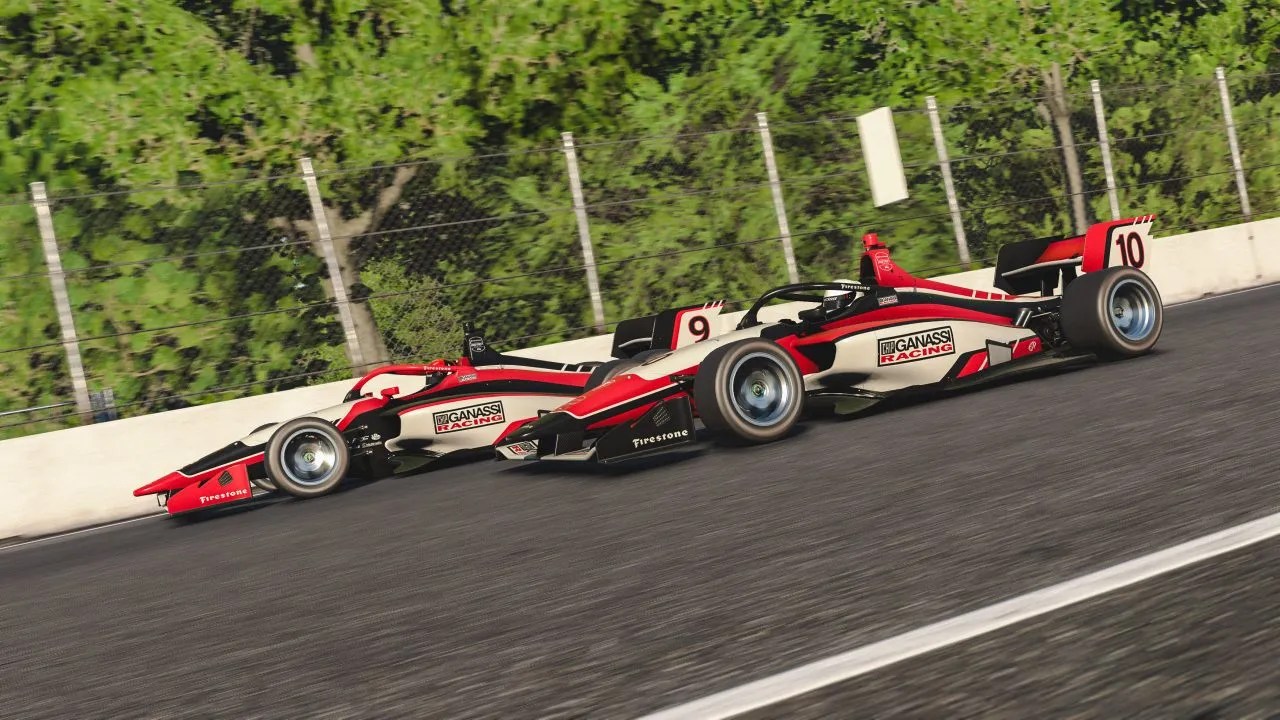
Here you have three single seaters that are truly worth it:
- Dallara F3.
- Super Formula Lights (SFL).
- Indy Next (IL-15).
F3 and SFL usually have very decent participation. Indy Next was a pleasant surprise, with people racing at almost all times.
If you want to optimise your track purchases, you can share circuits across these categories:
- Silverstone
- Road America
- Zandvoort
- Barcelona
- Mexico
Then you can complete your pack with, for example:
- For F3: Mount Panorama, Suzuka, Miami.
- For SFL: Monza or Spa.
That way you build a small but powerful library of tracks that supports half a season of single seaters.
Class B: GT3, big prototypes and the SF23

Here you are finally in serious territory.
Prototypes: LMP2 and GTP
If endurance is your thing:
- You can go for the LMP2 (Dallara P217).
- Or you can step into GTPs like Porsche, Cadillac, Acura or Ferrari.
The good part is:
- With an LMP2 or a GTP from Class B you can race:
- Dedicated prototype series.
- The big multiclass series in Class A (IMSA style) with GT3, LMP2 and GTP.
Tracks that shine in these calendars include:
- Daytona
- Miami
- Portimao
- Monza
- Mount Panorama
As comparatively less popular options, tracks like Aragon and Jerez sometimes have smaller grids than classics like Watkins Glen or Red Bull Ring.
GT3: the jungle
In Class B you will find:
- GT3 fixed setup series.
- Regional GT3 series for Europe, America and Asia.
You will probably spend half your iRacing life in GT3, so:
- Buy the GT3 that truly excites you.
- Do not buy only based on the current “meta”. Balance of performance changes.
Recently, cars like the Aston Martin and the Mustang GT3 have been strong, but this can change from season to season.
Tracks that appear again and again in GT3 calendars:
- Miami
- Daytona
- Portimao
- Monza
- Mount Panorama
Formulas: the SF23
If you are following the single seater path, the logical and very fun step in Class B is:
The Super Formula SF23
It is a modern F2 style car, agile and very technical. You buy the car and then choose around five tracks from its calendar.
If you are not sure which tracks to pick, just start with your favourites and avoid leaving COTA as your only option. It is a great track but tough, especially with this car.
Nordschleife, endurance and “special” series

There is always that one person who says:
“Just give me Nordschleife and I am happy.”
Important detail:
- When you see something like “Nurburgring Combined”, it means you need two tracks:
- The modern GP layout.
- The classic Nordschleife layout.
For Combined events you have to own both tracks.
Besides that, there are:
- Weekly endurance series with 2 hour races on weekends.
- Special events such as:
- 24 hours of Spa.
- 24 hours of Daytona.
- 12 hours of Mount Panorama.
- Indy 500.
- Daytona 500.
They are probably the best and the worst of iRacing at the same time. Best for the experience, worst for the stress and the state of your nerves when you finish.
Oval: discovering that turning only left can be awesome
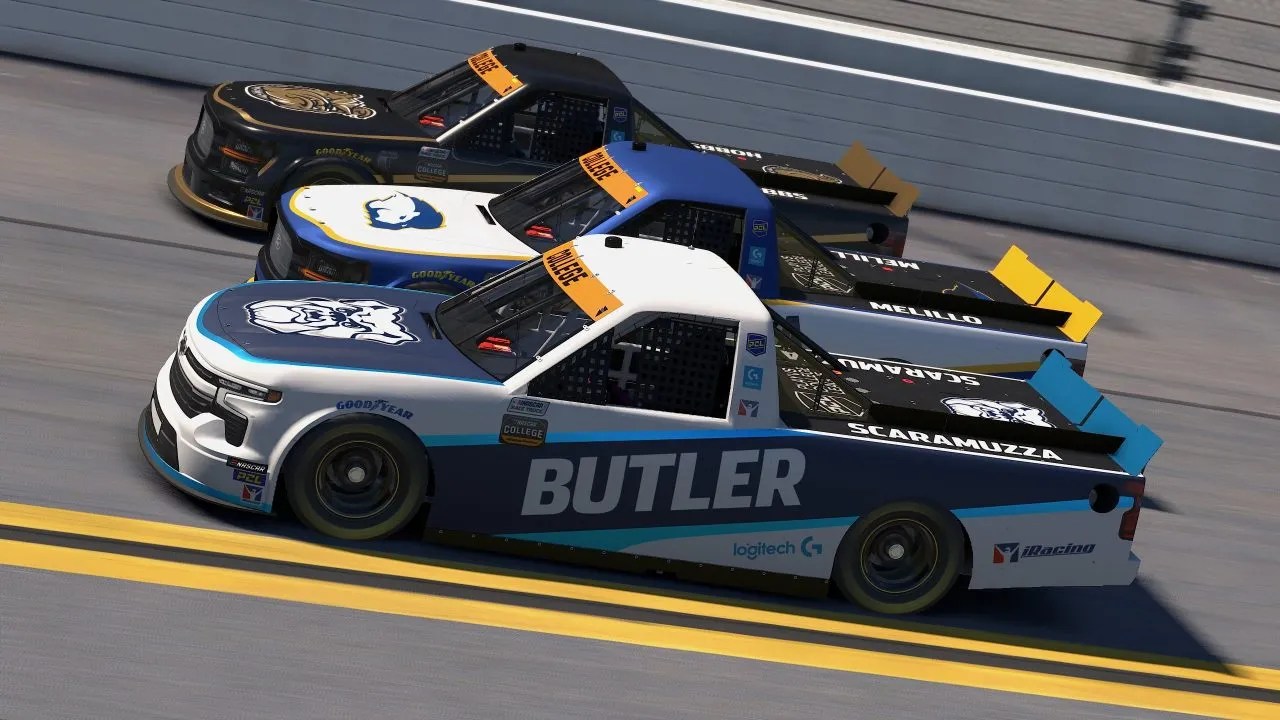
If oval racing calls your name, here is the essential without drowning you in every possible series.
By the time you reach Class C in oval, you are entering the world of “real NASCAR”. For example:
- NASCAR Class C fixed with trucks.
- GT4 fixed in combined road and oval calendars.
- IndyCar fixed in road and oval formats.
- Xfinity in Class B.
- Next Gen in Class A fixed.
Tracks that show up a lot in these calendars:
- Daytona (you usually get both oval and road layouts in the same purchase).
- Indianapolis.
- Atlanta (with old and new configurations bundled together).
- Some road courses like Mexico, where running NASCAR is surprisingly fun.
And a beautiful bit of madness:
There are seasons where you race the top NASCAR class at Bristol on dirt. That is peak United States energy.
How iRacing pays you to race

Let us talk about the internal money, which I know you are curious about.
iRacing gives you in game credits (not real cash) if you meet these requirements:
- You must complete 8 out of the 12 weeks in the same official series.
- In each of those weeks you need to finish at least one race.
- In that race you must complete at least half the laps of the leader.
Maximum rewards per season:
- 4 dollars if you meet the participation requirement in:
- Rookie, D and C series.
- 7 dollars if you meet it in:
- B and A series.
You cannot mix fixed and open for the same series. Each one counts separately:
- GT3 Open is one thing.
- GT3 Fixed is another.
- Formula 4 America is one.
- Formula 4 Europe is another.
Those dollars can only be used to buy more content inside iRacing.
How to save money when buying content

Now, the mental spreadsheet that saves you real money.
1. The subscription itself
Golden rule: If you are going to renew, do it during strong sales like Black Friday.
- Even if you still have months left on your current sub, renewing adds time to the end. You do not lose the remaining months.
- That means you can “stack” years at a better price.
2. Cars and tracks: the six piece trick
To sum it up:
- 3 to 5 pieces in one purchase → 10 percent discount.
- 6 or more pieces in one purchase → 15 percent discount.
So:
Do not buy 5 pieces. Buy 6.
It makes no sense to stop at 5 when adding one more lets you hit the maximum discount.
The ideal strategy:
- Keep a list of content you truly want for the future.
- When that list reaches 6 items you really plan to use, you buy them in one shot.
- Then you repeat: 6, 6, 6, instead of random single purchases.
And remember:
Once you have around 40 pieces in total, iRacing usually gives you a flat 20 percent discount on cars and tracks. From that point, impulse buys hurt a little less.
iRacing as a hobby, not a job
I want you to keep this in mind:
- You do not have to optimise everything.
- You are not in a company, you are in a hobby.
- You do not need to farm every possible dollar as if it were overtime pay.
My personal recipe would be:
- Pick one or two branches that you really love.
Formulas, GTs, prototypes, oval, endurance, Nordschleife. Whatever makes you check the clock because you cannot wait for race time. - Build your content library around two things:
- Decent participation.
- Tracks you genuinely enjoy and would happily race every season.
- Buy in packs of 6 pieces when you can.
- If you naturally complete participation requirements and earn some dollars back, perfect.
Above all, remember the real objective:
Have fun, learn, and enjoy good races.
If this guide helps you save some money, climb licenses without stress, and find one or two series you are genuinely excited to race every week, then mission accomplished.
- Remember, you can join iRacing clicking here.
See you on track.
This website uses affiliate links which may earn a commission at no additional cost to you.


